
Microwave vacuum drying chamber is equipment for removing moisture and solvents from powders, granules and compact samples at reduced pressure, when heat is supplied by the energy of a microwave field, and not just from heated surfaces. A combination of vacuum and volumetric heating is required where conventional convective drying produces either too high a temperature, too long a cycle, or a noticeable spread of residual moisture across the load.
The practical question is usually formulated as follows: is the installation suitable for a particular material and how to choose a mode so that the result is repeated from sample to sample. Below we discuss the principle of operation, the meaning of the main parameters, the limitations of the method and the data that needs to be prepared for test drying. Numerical values of power, residual pressure and temperature are taken from the passport of a specific model; general discussions about the physics of the process do not replace them.
Why convective drying is not always suitable for powder testing
Convective drying transfers heat through the surface of the layer. Further, moisture must pass from the internal regions to the surface due to diffusion, and heat in the opposite direction. As long as the layer is thin and loose, the difference is small. But with an increase in bulk density and layer thickness, a gradient appears: the surface is already dry and overheated, and the middle of the load is still wet.
Then side effects are included. A compacted crust may form on the surface, slowing down the release of steam; dissolved components migrate to the surface and concentrate there, changing the composition throughout the sample volume; At high temperatures, oxidation, decomposition or sintering begins. The result is a material that is formally “dry”, but heterogeneous in moisture, dispersion and surface condition.
A vacuum solves part of the problem: with reduced pressure, water boils at a lower temperature, so the process is smoother. However, vacuum itself does not accelerate the supply of energy into the layer - with conductive heating from the shelves, heat still spreads from the surface. Microwave heating changes the picture: energy is released in the volume of the material in proportion to its dielectric losses, and the temperature gradient decreases. That is why the combination of vacuum and microwave field makes it possible to shorten the cycle without raising the sample temperature to values dangerous for the phase composition.
This immediately implies a limitation. Volumetric heating only works where the material absorbs microwave energy. If the sample is almost transparent to the field, it will heat up slowly, and the heat will come mainly from the substrate, walls and residual moisture. Therefore, the first thing you should find out about the material is how it behaves in the field, and not just what temperature it can withstand.
A useful sign when choosing a method: if, during atmospheric drying, the sample loses flowability, becomes crusty or changes color, and the vacuum oven copes, but too slowly, combined heating is worth checking. If, upon drying, the material ceases to noticeably heat up in the field, the gain from microwave energy will be limited.
How does a microwave vacuum drying chamber work?
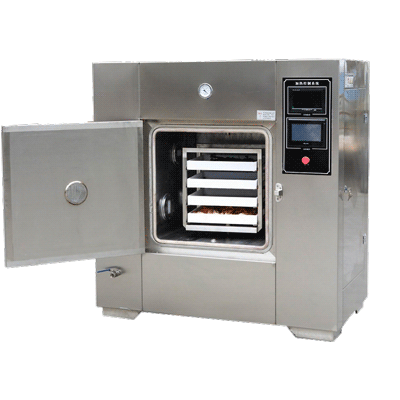
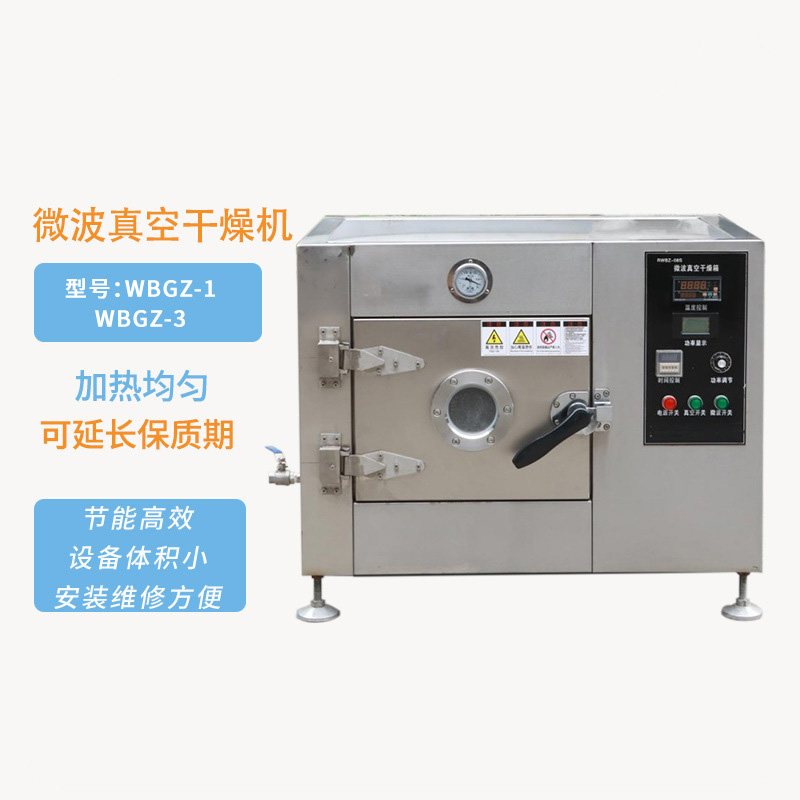
The installation combines three subsystems, and the drying mode is determined by the “slowest” of them. If the vacuum system pumps out steam faster than the material releases it, it is not the drying speed that increases, but the load on the pump and trap. If microwave power is applied faster than the steam can escape, excess pressure arises in the layer, leading to foaming and ejection of the material. The components and available modes are described in the card microwave vacuum drying chamber TENCAN.
Chamber, seals and vacuum path
The working chamber is a sealed volume with a door seal, an pumping pipe and a vapor-gas mixture outlet unit. In practice, it is not so much the geometric features that are important as the condition of the seals, the cleanliness of the pipes and the material of the internal surfaces: abrasive powders and aggressive vapors gradually wear out and contaminate the path. Some of the moisture and solvent goes into the condenser or cold trap; if the trap is full or its temperature is insufficient, the pressure in the chamber increases and drying slows down, although the generator continues to operate.
Hence the rule of thumb: vacuum stability over time is the same regime parameter as power. A gradual drop in vacuum towards the end of the cycle often does not indicate the properties of the material, but rather the saturation of the trap or air leakage through the seal.
Microwave generator and field distribution
The source of microwave energy is connected to the chamber by a waveguide. The field inside the chamber is not perfectly uniform: standing waves and areas with increased and decreased intensity are formed. A field stirrer, rotating table or special loading geometry reduces unevenness, but does not eliminate it completely. Therefore, the location of the sample in the chamber and its shape affect the result no less than the set power.
This has two consequences. First: a thin layer distributed over a large area dries differently than the same mass collected in a heap. Second, the edges and corners of the load, as well as the edges of the substrate, can overheat. For a laboratory test, this means that the mode must be checked on the loading geometry that will be used in the future, and not transfer the parameters selected for other dishes or another volume.
Temperature and pressure measurement
A key difference that is often overlooked: the temperature of the workspace of the setup and the temperature of the sample itself are not the same thing. The sensor indicating the temperature in the chamber does not measure the temperature of the powder, especially inside the volume. In a microwave field, conventional metal thermocouples behave differently, so fiber-optic sensors, infrared pyrometers, or indirect methods are used to control the temperature of the material. What exactly is implemented in a particular model must be checked against its description: this determines the extent to which temperature readings can be used as a criterion for stopping the process.
Pressure is also measured in the chamber, not inside the layer. As long as steam escapes freely, these values are close; When foaming, filming on the surface or dense laying occurs, the difference becomes significant.
Mode parameters and what each of them changes
The drying mode is not one number, but a set of interrelated conditions. Below are those that most often determine the result, and indicate what information about them needs to be clarified for a specific installation.
Residual pressure
The reduced pressure lowers the boiling point of the liquid, so drying is smoother. However, too deep a vacuum is not always useful: at very low pressures, heat transfer from the walls and substrate to the sample decreases, and if the material absorbs microwave energy poorly, it may cool faster than it warms up. In addition, light dust fractions are carried away by a stream of steam during a sudden release of pressure. A reasonable approach is to select pressure together with power, and not separately.
Power and its profile over time
Power determines the rate at which energy is supplied. Constant maximum power is rarely optimal: at the beginning of the cycle, when there is a lot of moisture, the material absorbs energy well; as it dries, the absorption drops, and the same power begins to go into overheating of individual areas, the substrate or dry edges. Therefore, in practice, a stepped or pulsed profile is used: higher power at the first stage, a decrease towards the end, sometimes short switching on with pauses to equalize the moisture and temperature inside the layer.
Temperature and material limitations
The range is determined not by the installation, but by the material: the temperature of decomposition, glass transition, phase transition, loss of volatile components. In a vacuum, the process can be carried out at a lower temperature than at atmospheric pressure, but this does not eliminate local overheating. Therefore, it is useful to determine the permissible interval and stopping condition in advance, rather than relying on the “maximum installation temperature.”
Loading weight, layer thickness and bulk density
These three quantities are interconnected. For the same mass of powder, a thin layer dries faster and more evenly, but requires a larger area and is more likely to overheat at the edges. Tight packing slows down steam release and increases the risk of foaming. Bulk density determines how much material actually fits into the volume and how the field is distributed. That is why, when moving from a trial sample to a larger batch, you cannot simply multiply the power: the geometry of the load changes, and therefore the distribution of energy.
Compatibility of substrate and dishes
The dish and substrate participate in the process rather than simply holding the sample. Materials with noticeable dielectric losses themselves heat up in the field and can dry out the lower layers faster than the upper ones. Metal equipment in the microwave field is unacceptable unless the design of the chamber provides otherwise. Ceramics, glass and fluoropolymers behave differently, and a thin cuvette and a massive bowl give a different thermal background. Before choosing equipment, it is worth checking what materials are approved by the manufacturer and how they affect the field distribution.
Time and criterion for finishing drying
Drying “by time” is convenient, but unstable: the initial moisture content fluctuates, and the same time gives a different residue. A more reliable combined criterion is the achievement of a given residual pressure at a fixed power, stabilization of weight loss during control weighings, or temperature sensor readings. Which one is applicable depends on what measurements a particular model supports.
The material dictates the mode more than the settings
Aqueous suspensions and wet sediments
Water absorbs microwave energy well, so water systems usually heat up quickly and evenly. The main risks here are foaming and carryover of fine fractions during intense vaporization, as well as migration of dissolved salts to the surface. Reducing the power at the first stage and moderate layer thickness help.
Organic solvents and flammable vapors
Distillation of organic solvents under vacuum reduces the temperature of the process, but does not eliminate safety requirements: vapors of flammable liquids mixed with air form explosive atmospheres. If the documentation for a specific model does not indicate the appropriate design and protective measures - for example, working with inert gas, oxygen control, explosion-proof components - such tasks cannot be solved “by default”. This is a case where the question should be addressed to the supplier before the experiment rather than after.
Heat sensitive and oxidizing powders
For metal nanopowders, some hydroxides, organic pigments and pharmaceutical substances, not only temperature, but also the environment is important. The vacuum reduces the partial pressure of oxygen, but residual air remains in the chamber and in the pores of the powder; If necessary, pre-purge with inert gas is used. It is impossible to say that a vacuum completely eliminates oxidation.
Low dielectric loss materials
If a substance weakly absorbs microwave energy, drying occurs mainly due to residual moisture and external heat. After removing the main part of the liquid, the process practically stops. In such cases, selecting a substrate, working with a smaller sample, or combining it with conductive heating helps, but the decision is made based on trial results and not on general considerations. Sometimes it makes more sense to choose a different drying method.
Mixtures and multicomponent systems
In a mixture, the components absorb energy differently. One of them can heat up and give off heat to its neighbors, and volatile substances can leave earlier than the main mass. Therefore, for multicomponent powders, it is especially important to check not only the residual moisture, but also the uniformity of the composition after drying. If components tend to separate during evaporation, this will be detected by comparing samples from different loading areas.
Drying in the general sample preparation chain
A microwave vacuum drying chamber rarely works alone. The typical sequence is: pre-grinding or homogenization, wet grinding if necessary, then drying, then re-dry grinding or sieving and analysis. The place of drying in this chain affects the result more than it seems.
Drying the material before grinding results in a more free-flowing product and reduces sticking in the mill. If drying after wet grinding, it is important to prevent agglomeration when removing liquid: particles brought together during drying often form strong aggregates, which then have to be broken down by disagglomeration. That is why the drying mode and subsequent processing are considered together.
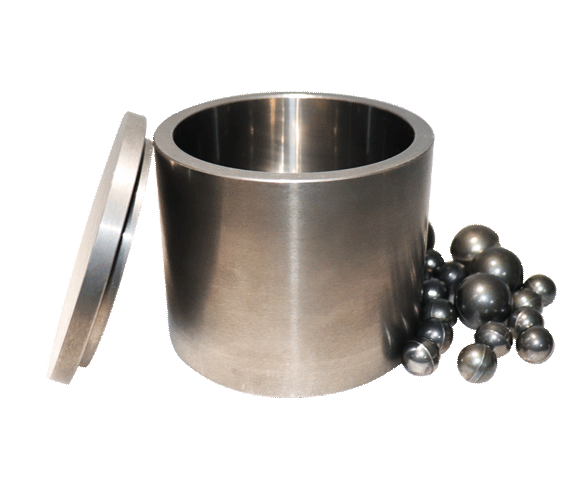
The issue of impurities deserves special attention. Drying does not remove contaminants introduced in previous stages. If grinding was performed in a tungsten carbide grinding bowl, wear of the walls and grinding media may introduce tungsten and cobalt into the sample. Tungsten Carbide Grinding Bowl for Planetary Mill refers specifically to the grinding stage and is not intended for installation in a drying chamber. The choice of beaker material is a compromise between hardness, wear, and the acceptable level of impurities for a particular analysis.
The practical conclusion is simple: before selecting a drying mode, it is worth describing the entire sample route - from the starting material to the analytical sample. Then it becomes clear what properties need to be preserved (dispersity, phase composition, flowability) and what contaminants may have already appeared. A general list of equipment directions is given on the website TENCAN, and the characteristics of a particular model are in its card.
Observations and their possible causes
Below are typical situations encountered when practicing the regime. This is not a diagnosis of a specific malfunction: the same symptom may have different causes, and the conclusion is drawn based on the measurement results.
| Observation | Possible reason | What to check |
|---|---|---|
| The weight has stopped decreasing, but the moisture content is higher than normal | Residual moisture is bound in the pores or retained by hygroscopic material | Sample storage conditions, method for determining moisture, the need for a deeper vacuum or a different temperature |
| Local melting or darkening | Uneven field, overheating of loading edges, too high power at the end of the cycle | Load geometry, power profile, position and substrate material |
| Foaming and powder ejection | The energy supply is too fast, the steam does not have time to escape | Power of the first stage, layer thickness, state of the trap and tract |
| Increase in pressure in the chamber when the pump is running | Saturation of the condenser or trap, air leaks, condensation in the path | Seals, trap temperature, volume of condensed liquid |
| Odor or color change | Thermal decomposition or interaction with substrate material | Permissible temperature range, inert environment, compatibility of dishes |
What can only be confirmed by testing
Calculation and general considerations help narrow the range, but do not replace testing. The minimum set of checks for a new material looks like this:
- drying curve: weight loss versus time at fixed power and pressure;
- residual moisture after the cycle, determined by the laboratory method;
- comparison of particle size distribution before and after drying - assessment of agglomeration;
- checking the phase composition if the material is temperature sensitive;
- visual assessment of color, flowability and presence of crust;
- control of impurities if the sample passes through metal or ceramic components;
- repeatability: at least two to three cycles on identical samples;
- Storage behavior: tendency to re-absorb moisture.
This set answers the main question - whether the mode is reproduced - and allows you to separate the influence of the material from the influence of the setting.
What to prepare before test drying
The more complete the initial data, the fewer iterations will be required. It is useful to collect the following in advance:
- name and origin of the material, as well as information about its hazardous properties;
- initial moisture content or solvent content and method for their determination;
- weight of the sample, expected layer thickness and substrate area;
- temperature limitations: decomposition, phase transitions, loss of volatile components;
- required residual humidity and tolerance for it;
- list of solvents and their compatibility with chamber and path materials;
- requirements for dispersion and inadmissibility of agglomeration;
- material of the substrate and dishes in which the sample will be dried;
- required productivity: one-time sample or a series of samples;
- process stopping criterion adopted in the laboratory.
This information is not needed for formality: it is used to select the power profile, pressure and loading geometry, and also determine whether the capabilities of a particular model are sufficient.
Frequently asked questions
Does microwave drying replace vacuum cabinet drying?
Not always. For large batches and materials sensitive to field unevenness, a conduction-heated vacuum cabinet remains convenient and predictable. Microwave drying wins where a short cycle and volumetric heating at a moderate temperature are needed. The choice is determined by the task, not by a general rule.
Can flammable solvents be dried?
Only if the model and its equipment allow such work, and the laboratory provides appropriate safety measures. Vacuum stripping in itself does not eliminate the risk of the formation of an explosive mixture of vapors and air, so the issue is resolved according to the documentation for the specific design of the installation.
Does the mode guarantee a certain particle size?
No. Drying does not crush the material: it can only preserve or, conversely, worsen the dispersion due to agglomeration. The final particle size is determined by the grinding stage and drying conditions together.
How accurately can you set the residual humidity?
Accuracy does not depend on a single set point, but on the repeatability of the entire cycle: identical sample weight, loading geometry, power profile and vacuum system condition. The tolerance for residual moisture is determined by the laboratory control method and the repeatability of the process, and not by the passport value of the device.
Practical selection conditions
The selection of a mode for a powder sample comes down to a sequence of decisions: determine whether the material absorbs microwave energy and what its temperature limit is; select sample weight and layer thickness; set pressure and power profile; agree on the criteria for ending the process. Each step is verified by measurement rather than by assumption, and is recorded along with the conditions under which it was obtained.
For trial grinding and subsequent drying, it is useful to inform the supplier in advance about the material, initial moisture content, required moisture content, acceptable solvents and the required one-time sample. This is enough to evaluate the applicability of a particular model and plan the first cycle without relying on general promises. Further adjustments are made based on the actual results of weighings and analyzes of the laboratory itself.