
Laboratory flotation begins with a question that is broader than “what machine to buy”: is it possible to stably separate minerals on a given sample, what parameters influence this, and which of them can be repeated in the next experiment. Laboratory flotation machine TENCAN — a tool for such research, not a scaled-down replica of an industrial cascade. Equipment manufacturer - Changsha Tianchuang Powder Technology Co., Ltd.; The article deals with a laboratory flotation machine presented in product card TENCAN.
The problem of laboratory flotation and the boundaries of the method
Flotation separates particles based on their ability to attach to the liquid-gas interface. Hydrophobic particles stick to air bubbles and rise into the foam layer, while hydrophilic particles remain in the pulp. This is not enough for laboratory testing: it is important to understand at what coarseness the minerals are exposed, what reagents and what environment provide selectivity, how stable the foam front is, and what proportion of the valuable component can be converted into a concentrate at a given purity.
A laboratory flotation machine provides controlled hydrodynamics and the ability to repeat experiments. But it does not compensate for poor sample representativeness, improper material preparation, or uncertain reagent conditions. If the original sample is heterogeneous and the particle size is not characterized, even a carefully performed experiment is difficult to interpret. Therefore, laboratory flotation is not one “successful” feed, but a series of experiments with fixed conditions and an understandable mass balance.
The method has limitations. Flotation is sensitive to mineralogy, surface oxidation state, slurries, water quality and temperature. Particles that are too large may not be well retained by the bubble, while particles that are too thin may be absorbed into the foam product by mechanical capture. The reagent mode does not automatically transfer from one sample to another. Finally, the laboratory result shows the fundamental possibility of separation, but does not prove that the same regime will give the same result in a larger apparatus.
In the product card TENCAN laboratory flotation machine indicated; Specific values for chamber capacity, rotation speed range, air flow and power should be checked with the current specification of the selected modification. There are no such numerical parameters in the materials provided, so the principles of selection and verification are discussed below, and not the passport data of a specific design.
How does a laboratory flotation machine work?
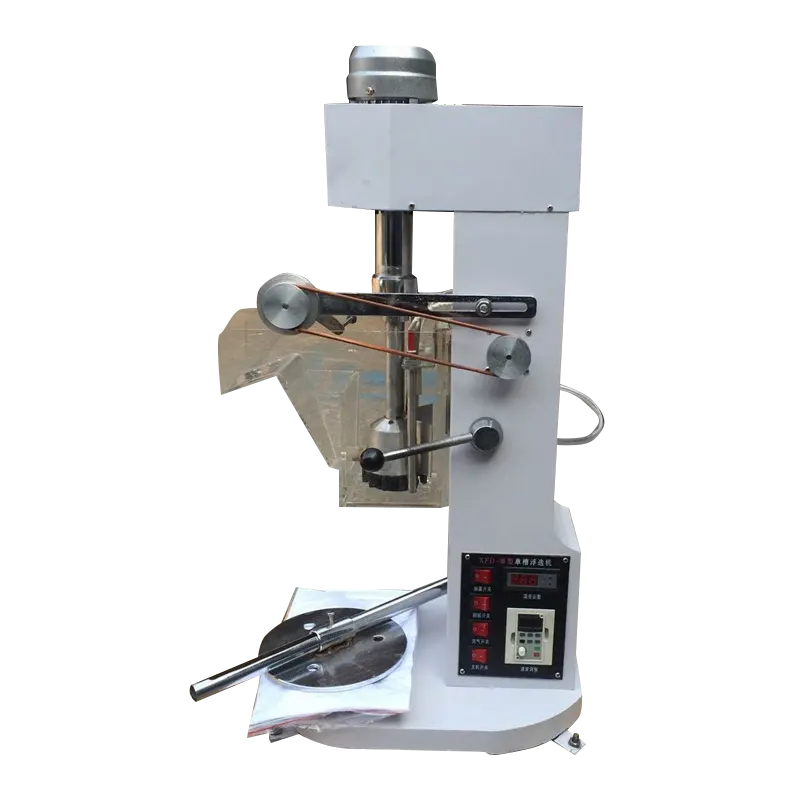
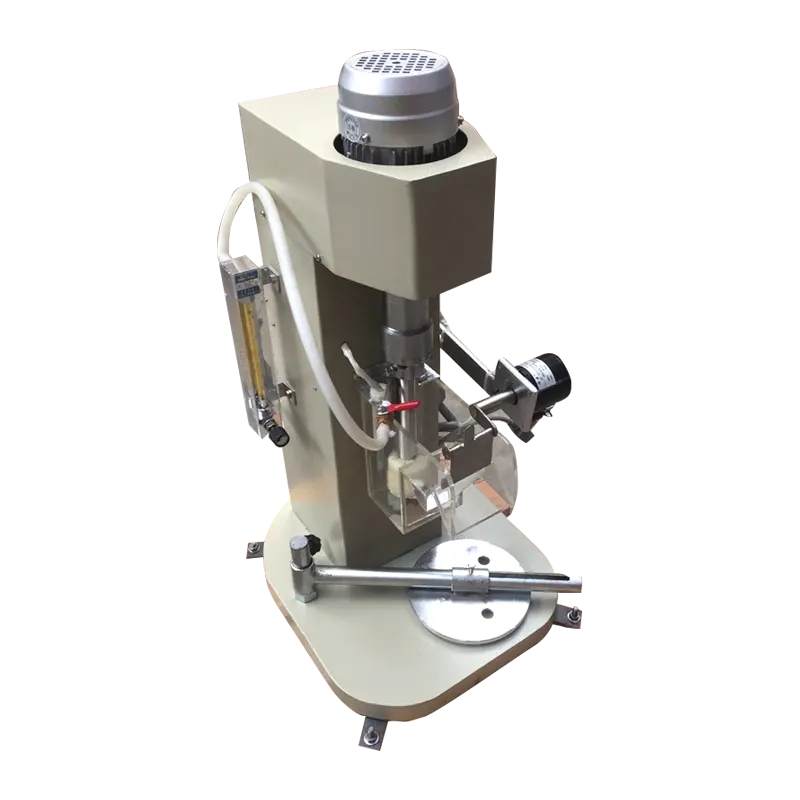
A typical laboratory flotation machine includes a pulp chamber, a driven agitator, an air supply unit, a foam removal system, and controls. The layout can be different, so when choosing, it is important to look not only at the name, but also at how exactly aeration, mixing and concentrate removal are implemented. What is important for a laboratory is not “large” indicators, but repeatability and ease of monitoring the process.
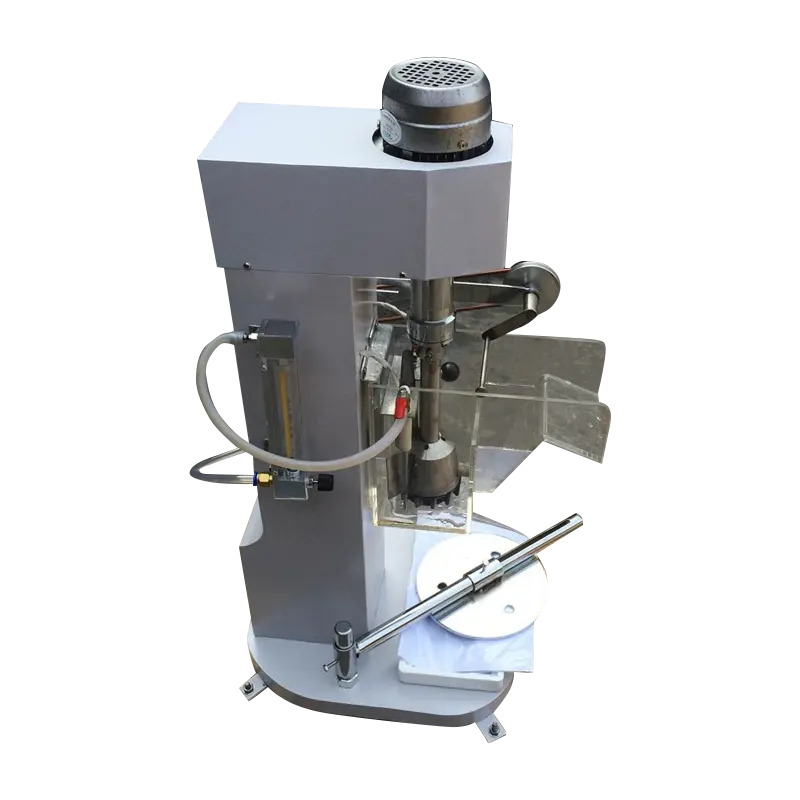
Chamber, rotor and stator
The chamber sets the working volume and shape of the flow. The mixing element must maintain particles in suspension, but not create excessive vortex, which entrains large or aggregated particles into the foam. The rotor and stator influence the shear intensity and air dispersion. The higher the peripheral speed, the more active the mixing and the smaller the bubbles, but at the same time the mechanical carryover also increases. For brittle materials, excess shear may not be desirable.
In laboratory practice, it is important that the chamber is easy to empty, wash and inspect. Clearances, bottom shape and impeller position must be reproducible after assembly. If the position of the stirring element changes after cleaning, it becomes more difficult to compare experiments. Therefore, before a series of tests, it is useful to check the assembly according to the instructions and fix the initial position of the adjustable elements.
Aeration and foam removal
Air flow is a major factor, but cannot be considered separately from mixing and slurry properties. At low flow rates, the foam layer may be thin and extraction may be incomplete. With excess air, foam volume increases, entrement increases and selectivity deteriorates. In a laboratory machine, it is desirable to be able to smoothly set and repeat the air flow, and not just turn on the “open-closed” flow.
Foam removal can be manual or mechanical. Manual removal gives more freedom, but is more dependent on the operator. A mechanical scraper improves repeatability if its frequency and position are set equally. Foam depth, drain threshold height and removal frequency are the same mode parameters as speed and reagents; they need to be written down, otherwise comparison of experiences becomes meaningless.
Materials, cleaning and safety
Materials of parts in contact with pulp and reagents must be specified for a specific model. The resistance of the chamber, seals and piping to the intended reagents, as well as acceptable cleaning methods, should be clarified. Regular rinsing with water does not always remove residual collector or foaming agent; when moving to another sample, this may give a false effect. Issues of chemical compatibility and waste disposal are resolved according to the passport and internal laboratory procedures, and not according to general assumptions.
Parameters that determine reproducibility
In laboratory flotation, the result depends not on one “main” regulator, but on a set of conditions. Below are parameters that are useful to record in the protocol. Their specific values are selected experimentally and cannot be assigned only by the name of the machine.
| Parameter | What does it affect? | What to record |
|---|---|---|
| Sample weight | Solid-liquid ratio, representativeness | Weight, size, moisture content of the starting material |
| Pulp Density | Probability of particle contact with bubbles, viscosity | Mass of solid, volume of liquid, method of preparation |
| Rotational speed | Particle suspension, shear, air dispersion | Setpoint value and actual measurement, if available |
| Air flow | Gas content, bubble size, foam stability | Method of assignment and control, position of the regulatory body |
| Reagent mode | Surface hydrophobicity, selectivity | Reagents, order of introduction, concentrations, conditioning time |
| pH and temperature | Surface condition, solubility of reagents | Measurement method, sampling point, permissible deviation |
| Flotation time | Extraction completeness and concentrate purity | Start and end times, method of product selection |
| Foam mode | Particle removal, concentrate yield | Foam depth, removal frequency, scraper position |
Speed and air flow
Rotation speed and air flow are related. Increasing the speed with a constant air supply can change the size of the bubbles and the nature of the foam; a change in air flow at the same speed changes the gas content and the height of the foam layer. Therefore, when comparing experiments, you should not change both parameters at the same time if the goal is to understand the reason for the differences. It is better to use a sequential plan: first stabilize the hydrodynamics, then vary the reagent regime or time.
You should not transfer “optimal” speed from one car to another without checking. The geometry of the chamber, the diameter of the mixing element and the method of air supply determine the actual hydrodynamics. Even the same number of revolutions in different devices does not guarantee the same mixing intensity.
Sample weight, chamber volume and pulp density
The volume of the chamber, the working load and the mass of the solid are different values. The nominal volume of the chamber does not mean that the same amount of pulp can be loaded into it: there must be a free side for foam. The working load depends on the pulp density and mixing requirements. The mass of the sample, in turn, is determined by the task: for balance experiments, a sufficient sample is needed so that the analyzes of the products are representative, but too large a load can worsen the hydrodynamics in the laboratory chamber.
It is convenient to control the pulp density by the mass of the solid and the volume of the liquid phase, and not just by visual density. When preparing the pulp, it is important to consider the moisture content of the starting material and the water already contained in the sample. If these data are not recorded, the actual density may differ from the calculated density.
Time, pH and temperature
The flotation time determines how much material has time to turn into a foam product. Increasing the time often increases recovery, but can reduce concentrate quality due to the removal of aggregates and cuttings. Therefore, it is correct to compare the result not by one concentrate yield, but by a set of indicators: extraction, mass fraction of a valuable component, yield and mass balance.
pH and temperature affect the condition of the surface and reagents. They need to be measured at an understandable point and in the same way. If pH is adjusted with acid or alkali, local variations in addition and mixing time must be taken into account. Laboratory temperature can also affect viscosity and foaming, especially during long runs.
Sample preparation: what cannot be corrected by adjustment
Representativeness of the sample is the first condition for a meaningful result. If a handful of material is sampled from the surface layer, it may not reflect the average grade and grade. Before flotation, it is useful to characterize the feed material: mass fraction of valuable minerals, particle size distribution, presence of slurries and degree of oxidation. These data help explain why a regimen that worked on one test did not do the same on another.
Size is closely related to opening. Aggregates that are too large are not separated selectively, particles that are too thin lose selectivity due to mechanical entrapment and high specific surface area. Grinding before flotation is usually carried out in an aqueous environment; It is important not to confuse the concepts of dry and wet grinding. Dry grinding can change the surface condition and particle agglomeration, while wet grinding requires control of density and time. For flotation, it is the pulp that is fed into the chamber that is important, and not just the size of the powder before mixing with water.
The quality of water and the procedure for introducing reagents are often underestimated. Residues from flocculants, oils or cleaning agents may alter foaming. A freshly prepared reagent solution and a solution that has stood for several days may behave differently. If there are several researchers in the laboratory, a single protocol for the preparation of pulp and solutions is useful: what kind of water, what temperature, how long does the conditioning take, in what sequence are the reagents added.
You should not try to “correct” an unrepresentative sample by increasing the air flow or changing the speed. The machine does not create mineralogy or compensate for lack of opening. First, the preparation of the material is checked, then the hydrodynamics and reagent regime.
How to choose a laboratory flotation machine TENCAN
Selection begins with a task, not with a list of characteristics. You need to understand whether this will be a single experiment, a series with varying reagents, balance tests, or a demonstration for training. This determines the required capacity of the chamber, the ease of foam removal, the need to record parameters and the acceptable difficulty of cleaning. IN laboratory flotation machine card TENCAN the design and configuration of the selected modification should be clarified, and the general directions of the equipment should be clarified website TENCAN.
Volume and configuration
The chamber volume is selected based on the sample weight and the required number of products. For a small sample, a large chamber is inconvenient: the pulp depth is small, the foam layer is difficult to control, and losses during selection increase. For a large sample, a small chamber will require too high a pulp density or will not provide representativeness. If interchangeable chambers are provided, it is useful to clarify how they are attached, how easily they move from one volume to another, and whether the position of the mixing element is maintained.
It is necessary to clarify whether the machine is single-chamber or multi-chamber, how the foam removal is organized and whether it is possible to work with an overflow. For laboratory tasks, it is not the productivity “per hour” that is important, but the ability to conduct comparable experiments with an understandable selection of products.
Managing and registering parameters
Smooth adjustment of rotation speed and air flow simplifies the search for a mode. The presence of indications and timers reduces operator dependence, but does not replace the recording of actual conditions. If the machine is not equipped with an air flow sensor, it is useful to provide an external rotameter or other monitoring method. Separate instruments are usually used for pH and temperature; It is important that the selection points are convenient and do not disrupt the course of the experiment.
When choosing, it is worth checking how easily the machine enters the specified mode and repeats it after turning off. If the adjustment has a large backlash or non-locking positions, comparison of series becomes more difficult. For the laboratory, noise levels, bench stability and access to moving parts are also important, taking into account local safety requirements.
Reagent Compatibility and Maintenance
Before purchasing, you need to check the materials of the chamber, mixing element, seals and foam removal elements, as well as acceptable cleaning agents. Some reagents require special durability of parts and good ventilation; This is a question not only of equipment, but also of laboratory organization. Replaceable parts, accessible seals and clear disassembly procedures extend service life and reduce the risk of cross-contamination between samples.
It is helpful to request assembly and cleaning instructions, a diagram of the location of components, and a list of consumables. If you plan to work with different materials, it is worth discussing the possibility of using interchangeable cameras or inserts, but only with confirmed compatibility with a specific model. Do not assume that any grinding bowl or planetary mill accessory is automatically suitable for a flotation machine: they are different devices and different tasks.
From a laboratory sample to an enlarged test
A laboratory result cannot be scaled by simple mass multiplication. When moving to a larger apparatus, the hydrodynamics, residence time, air distribution and foam removal conditions change. For a correct comparison, they strive for geometric and dynamic similarity, but in practice, complete coincidence is difficult to achieve. Therefore, an enlarged inspection is needed as a separate stage, and not as a formality.
When transferring the mode, not only the speed and air consumption are recorded, but also specific indicators: air consumption per pulp volume, residence time, pulp density, reagent dosages per solid mass. It is useful to conduct a balance experiment with the selection of the chamber product, concentrate and intermediate fractions. If the balance doesn't add up, it may be due to sampling loss, sample underrepresentation, or analytical error rather than a faulty machine.
You should not promise that a laboratory flotation machine will immediately give the design parameters. Its goal is to obtain reproducible data on the behavior of the sample and determine directions for further work. Technological evaluation requires a series of experiments, sensitivity analysis and testing in a large-scale installation.
Mock test program and questions for the provider
It is convenient to construct a practice test as a short program. First, the goal is formulated: to check the fundamental floatability, compare reagents, evaluate the effect of size, or obtain material for balance. A representative sample is then prepared and characterized. After this, a basic mode is set, in which the machine operates stably, and only then is it varied one factor at a time. For each experiment, the mass of products, conditions and analysis results are recorded.
The minimum set for the protocol: date, operator, weight of the initial sample, size, pulp density, chamber volume, rotation speed, air flow, reagents and the order of their introduction, pH, temperature, conditioning and flotation time, foam depth, method of removing the concentrate. If some parameter is not controlled, this should also be noted: lack of data does not equal stability.
It is worth asking specific questions to the supplier. What materials come into contact with the pulp and reagents? How is air flow regulated and how is it controlled? Are there replaceable chambers and how is repeatability of the mixing element installation ensured? How is the draining and removal of foam organized? What seals and wear parts are included? What documents and instructions are provided? Is it possible to get advice on the regimen for a specific test without presenting it as a guaranteed result? Answers help separate technically verifiable solutions from generic promises.
To request a trial grinding or flotation test, it is helpful to provide: the type of material and its origin, the required separation task, the initial size, the presence of slurries and oxidation, the expected sample weight, available reagents, water and temperature restrictions, and what parameters need to be measured. The clearer the initial conditions, the less likely it is that the test will be reduced to a random set of conditions.
Laboratory flotation machine TENCAN in such work occupies a central place, but its choice is inseparable from the methodology. First, the task and sample preparation are determined, then the machine design and control ranges are determined, after which a series of experiments is carried out with fixation of conditions. This order does not produce a “beautiful” single result, but data that can be checked, repeated and discussed with technologists.