
A laboratory conical ball mill is equipment for fine grinding of samples, and not a universal unit for any stage of material preparation. The practical question usually sounds like this: how to select a mode in order to obtain a representative sample of the required size, without overheating the material and without introducing unwanted impurities. The answer begins not with a list of revolutions, but with a description of the sample and the purpose of the analysis.
In line TENCAN (Changsha Tianchuang Powder Technology Co., Ltd.) laboratory conical ball mill is provided as a separate grinding position. IN laboratory conical ball mill card Provides product details and images; specific model parameters should be checked against current documentation and not transferred from another mill. Below are some guidelines for selection and questions to ask before you try grinding. Where a number is needed for a specific model, it must be taken from the passport and confirmed with the manufacturer.
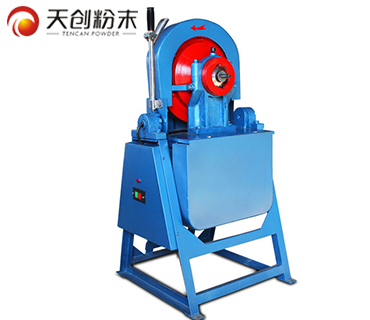
From sampling task to conical mill selection
The first difference worth noting is that grinding, disagglomeration and mixing are different operations. A ball mill reduces particle size through impact and abrasion of the grinding media. Disagglomeration breaks down loose conglomerates without necessarily reducing the primary particles. Mixing only redistributes the components. If a laboratory expects one device to perform all three tasks without testing, the result is difficult to reproduce.
A laboratory conical ball mill is appropriate where controlled grinding of a relatively small sample is required and it is possible to operate in batch mode. It should not be considered a replacement for a crusher for large pieces, a bead mill for very fine dispersion, or a mixer for dry bulk compositions. The name indicates the category of equipment but does not guarantee suitability for any material.
Before choosing a mode, it is useful to answer a few questions. What is the initial particle size and how are the particles distributed? What size size is needed for analysis and by what method will it be measured? What is the mass of the sample in one experiment and how many experiments are expected? Is the material brittle, viscous, fibrous, prone to agglomeration or thermal decomposition? Is contact with metal, ceramics, or polymer acceptable? Is dry grinding necessary or is liquid acceptable? Are there temperature and time restrictions?
If the source material is in large pieces, crushing may be necessary first. If submicron fineness is required, a ball mill alone may not be sufficient and the result will be highly dependent on the medium and subsequent deagglomeration. Achieving a certain particle size cannot be promised just by the name of the mill: the fineness depends on the material, the initial distribution, the grinding media, the load, the medium, the time and the method of measurement.
For hazardous substances, discussion of selections is not a substitute for guidance on safe operation. Unconfirmed formulations, temperatures and pressures for such materials should not be requested or published. The purpose of the article is to outline engineering criteria, and not to provide universal instructions for a specific chemical process.
How does a laboratory conical ball mill work?
In a drum ball mill, the grinding drum rotates and there are grinding media inside it. At moderate rotational speeds, bodies rise up the wall and then roll or fall, creating a combination of abrasion and impact. If the rotation speed is too high, the grinding media may be pressed against the wall and stop doing useful work. Therefore, speed cannot be assessed separately from drum diameter, loading and material properties.
Conical geometry is not just an external feature. It affects the loading movement and the distribution of material in the working volume, however, the specific implementation depends on the design of the unit, drive and unloading. One cannot conclude from the name alone that there are advantages over a cylindrical mill for any process. You should look at the drawing, passport and test results on comparable material.
The laboratory nature of the setup means that small samples are involved and repeatability is required. In an industrial mill, the performance and stability of a continuous flow are often important; in a laboratory mill, the representativeness of the sample, the ability to clean, and the reproducibility of the regime are often important. Therefore, transferring parameters from one installation to another without checking is incorrect.
In laboratory practice, it is useful to distinguish between several variables: mass of material, mass and size of grinding media, degree of filling of the drum, rotation speed, grinding duration, and environment. If you change several variables at once, the reason for the change in the result will remain unclear. It is better to start by fixing the methodology and a small series of experiments in which one factor changes.
It is also worth clarifying whether the selected model provides temperature control, what kind of unloading is used and how cleaning is organized. These issues are no less important than the nominal volume of the drum. For cone mill TENCAN specific decisions should be supported by the product card and documentation, not general assumptions about drum mills.
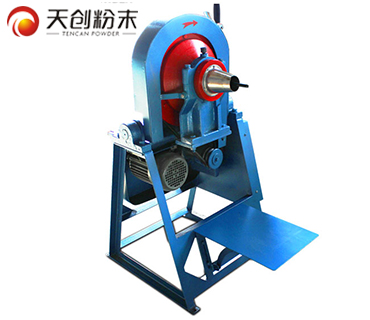
Loading, grinding media and speed: what determines the result
In specifications, different quantities are often placed side by side, which are easy to confuse. The volume of the drum is a geometric capacity. Working load - the amount of material and grinding media allowed for a specific mode. Sample mass - how much of the starting substance was taken into the experiment. Productivity - how much material is processed in a time, and it depends on the required size. If you mix these concepts, you can choose an installation that is formally suitable in volume, but does not allow you to obtain a representative sample.
| Concept | What does it mean | What to clarify |
|---|---|---|
| Drum volume | Geometric capacity of the grinding chamber | Useful volume, presence of lining, permissible degree of filling |
| Workload | Weight of grinding media and material permissible in mode | Not to be confused with full drum volume |
| Sample weight | Amount of starting material in one experiment | Bulk density, humidity, representativeness |
| Performance | Amount of processed material per time | Depends on size, mode and number of stages |
| Size | Particle size after grinding | Measurement method, agglomerates, distribution |
Grinding media are a key element, but they cannot be selected solely on the basis of “bigger and heavier”. Larger, denser bodies provide a stronger impact, but can increase wear and heat. Small bodies increase the number of contacts and promote abrasion, but their mass may not be sufficient for effective destruction. The material of the grinding media must be compatible with the sample material and not create unacceptable contamination.
Rotation speed should be considered in conjunction with drum diameter and fill level. Exceeding a certain regime leads to the fact that the load stops rolling effectively. A reduced speed can give preferential abrasion, but extend the process over time. For a specific model of laboratory conical ball mill, the permissible range and method of setting the speed should be specified in the documentation.
Grinding time is not an infinite reserve. Once a certain size has been reached, further processing may have more of an effect on agglomeration, heat and contamination than on true size reduction. In addition, prolonged grinding increases wear. Therefore, it is useful to construct a time-size curve for your material, rather than assigning time by analogy with another sample.
The ratio of the mass of grinding media to the mass of powder is an important parameter, but it cannot be taken from someone else’s technique without verification. It depends on the density of the material, the required size, chamber volume and permissible temperature. For a laboratory sample, it is better to start with a conservative regime, check for homogeneity and then change one parameter per trial.
Dry and wet grinding, overheating and particle size control
Dry grinding is simpler from the point of view of subsequent sample preparation: there is no need to separate the liquid and dry the material. However, dry powders are prone to agglomeration, sticking to walls and dust formation. Dust fractions can distort the sample, and sticking can reduce the payload. Additionally, dry grinding sometimes heats up the material more due to friction and limited heat dissipation.
Wet grinding can improve dispersion and reduce dust formation, but introduces new variables: the nature of the liquid, the viscosity of the suspension, interaction with the material, corrosion, and the need for separation and drying. The liquid must not dissolve or react with the sample. After wet grinding, it is important to demonstrate that the measured particle size refers to primary particles and not just aggregates that will break down in preparation for analysis.
Overheating is one of the most common practical problems. Mechanical energy is partially converted into heat, so even in the absence of external heating, the temperature of the sample can increase. Air cooling and liquid nitrogen cooling are different solutions. If the description specifies air cooling, this does not make the process cryogenic. The temperature of the installation's working space is also not equal to the measured temperature of the sample: the powder can heat up locally, and the sensor shows a different point.
For temperature-sensitive materials, the permissible range and control method should be determined in advance. You cannot promise the safety of a substance just because the mill has a refrigerated housing. You need to understand where the temperature is measured, how quickly the heat is released, and how long the grind lasts. If there is no data, it is better to check the parameter with the manufacturer and check it in a controlled experiment.
Size control requires comparability of methods. Laser diffraction, sieve analysis and microscopy provide different insights into particle distribution. Dry powder may contain agglomerates, which the device perceives as large particles. A wet sample requires proper dispersion, but too much exposure can destroy the aggregates. Therefore, the grinding result should be accompanied by a description of the sample preparation method and measurement conditions.
Typical minimum catalog sizes are not guaranteed for any material. It applies to specific conditions and does not replace testing on a specific sample. If the target size is critical, it is useful to agree on the measurement procedure and acceptance criteria in advance rather than relying on a visual assessment.
Wear, impurities and compatibility of grinding equipment
When grinding, wear occurs on the grinding media, lining and seals. This is not necessarily immediately noticeable, but the introduction of impurities may affect subsequent chemical or structural analysis. The higher the energy of the process, the hardness of the material and the duration, the more serious the issue. There is no instrument material that provides “zero contamination” for any sample; you can only reduce the unwanted contribution or make it controllable.
The choice of material depends on the task. Metal bodies and linings may be appropriate for durable materials but require assessment of metal transfer. Ceramic and zirconia have different properties, but also wear out. Tungsten carbide is characterized by high hardness and density, but this does not mean universal inertness. The decision is made based on a combination of sample material, acceptable impurities, loading and purification conditions.
Polymer tooling is interesting where it is necessary to reduce contact with metal or avoid certain chemical interactions. In materials TENCAN presented separately PTFE grinding drum. By name and section, this is a drum for a roller mill, and not a universal bowl for any ball mill. It cannot be automatically transferred to a cone mill: compatibility in terms of geometry, mounting, speed, load and temperature must be confirmed by the manufacturer.
PTFE is chemically resistant and useful for some applications, but it is softer than metal and ceramic, has low thermal conductivity, and is prone to warping under certain loads. Therefore, discussion of such a drum must include not only inertia, but also wear, cleaning, temperature tolerance and mechanical compatibility. If the product card does not contain the required confirmation, it cannot be considered a replacement item for the selected mill.
Cleaning between samples is part of the technique. Insufficient cleaning results in cross-contamination, while too aggressive cleaning can damage the surface. For control, it is useful to perform a blank experiment and compare it with the background. If analysis of trace quantities is planned, the issue of instrument material and cleaning procedures must be decided before a series of experiments.
Thus, the grinding drum, lining and grinding media are considered as a single system. You cannot choose them only by a beautiful description or price. First, sample requirements and acceptable impurities are recorded, then compatibility with a specific equipment model is checked.
Reproducibility, batch progression and trial grinding
Reproducibility starts with the protocol. It must record the sample weight, initial particle size, type and weight of grinding media, equipment material, degree of filling, speed, time, medium, temperature and measurement method. If any one of these variables changes from trial to trial without recording, the comparison of results becomes unreliable. The representativeness of the original sample and the method of its selection are especially often underestimated.
The transition from one laboratory sample to a series is not a simple mass multiplication. As the load increases, the ratio of material to grinding media, heat transfer, the nature of the load movement and the time to achieve the same size change. For a conical ball mill, it is necessary to confirm that the selected mode remains within the acceptable range and does not simply maintain the same speed. If the installation allows you to change only one parameter, this limitation must be taken into account in advance.
Before the series, it is useful to carry out a small plan of experiments. For example, test two loads and two times with fixed grinding media, then evaluate the repeatability of the best option. If the material is prone to agglomeration, dry and wet modes or different disagglomeration methods are additionally compared before measurement. You should not change the grinding media material, speed and time at the same time: the reason for the improvement or deterioration will be unclear.
For trial grinding, the manufacturer or equipment supplier usually needs to be informed of: the name of the material and its nature, the initial size, the desired size and method of control, the weight of the sample, the permissibility of wet grinding, temperature restrictions, requirements for the absence of impurities, available time and cleaning features. It is useful to indicate whether the task is a one-time task or is intended to be a regular series, and which parameters should remain unchanged.
Before launching, it is worth clarifying the list of documentation: what is the working volume, what grinding media are acceptable, how the speed is set, is there temperature control, what materials are in contact with the sample, how the material is unloaded and how cleaning is carried out. If you are going to be working with multiple materials, you need a plan to prevent cross-contamination. If the material is hazardous, you must follow local regulations and equipment documentation rather than general recommendations from the article.
The practical conclusion is simple: a laboratory conical ball mill requires selection for the sample, and not just for the desired size. First, the material and purpose are described, then the design, equipment and mode are checked, after which the result is confirmed by measurement. This approach reduces the risk of overheating, wear and non-reproducible results. Additional information about equipment directions TENCAN can be found at main page of the site, and the parameters of the selected model are in its current card.