
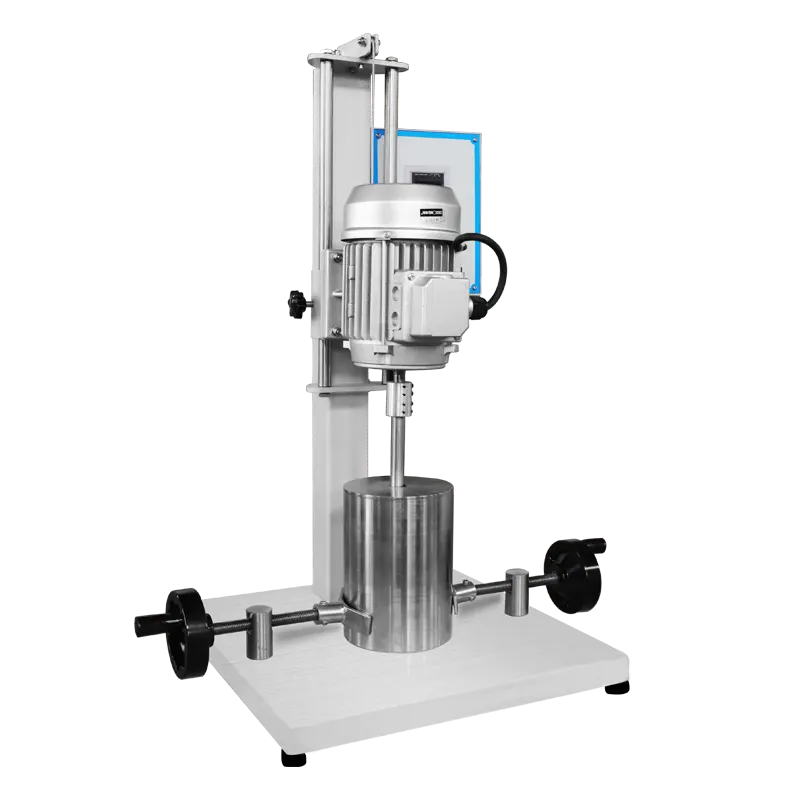
A laboratory bead mill is a machine with a stirred grinding medium designed for fine grinding, dispersing and deagglomeration of powders in a liquid medium. In the catalog TENCAN presented laboratory bead mill; its card serves as a starting point for selecting a configuration, but does not replace testing of a specific sample. The practical question is usually not “which mill is the most powerful”, but “which mode will give the desired particle distribution with acceptable heating and contamination.”
For a researcher, reproducibility is important; for a materials engineer, preservation of product properties is important; for a laboratory worker, ease of cleaning and safety are important; for an equipment selector, matching the task to the capabilities of the installation is important. These interests do not always coincide. Therefore, one practical line is considered below: how to move from the properties of the sample to the grinding mode and testing of grinding media, without replacing testing with guesswork.
Problem statement: what should change in the sample
Before choosing a mode, you need to separate several goals: reduce the median particle size, narrow the size distribution, destroy agglomerates, obtain a stable suspension, maintain the crystalline or chemical form, and not introduce unwanted impurities. The formulation “fine grinding is needed” is too broad: it does not show what exactly is being controlled - d50, d90, the upper limit of fineness, the proportion of particles less than a given threshold, or the rheological behavior of the suspension.
The initial particle size and strength set the energy barrier. Soft agglomerated powder may require preferential disagglomeration, while tough primary particles require more intensive grinding. The presence of liquid, its viscosity, powder wettability and tendency to swell affect the transport of grinding media and heat dissipation. You cannot transfer the result obtained on one material to another just because the name of the class of substances is the same.
The mass of the sample is also a technical parameter. A load that is too small may be lower than the working volume of the chamber and result in unstable circulation; too high will result in drive overload, heating and incomplete mixing. For a laboratory sample, it is useful to specify in advance the dry mass, liquid volume, acceptable loss of material, and how the sample will be collected for size analysis.
- What is the target indicator: d50, d90, the proportion of agglomerates, stability of the suspension or preservation of the phase composition.
- What initial particle size and what measurement method are used.
- What temperature is permissible for the sample and for the solvent.
- Which materials of the chamber, rotor, seals and grinding media are unacceptable due to chemical compatibility.
- What are the requirements for cleaning and transfer between batches?
How does a laboratory bead mill work?
The working chamber contains a grinding medium - small bodies that are driven by a rotor or mixing element. Sample particles enter the zone between moving bodies and walls, where shear loads, impacts and abrasion act. The separator holds the grinding media in the chamber and passes the suspension. If the installation operates in flow mode, the suspension passes through the chamber; in circulation mode, it returns to the container and passes through the grinding zone many times.
The fundamental difference from a planetary ball mill with grinding bowls is the nature of the movement and the typical size of the grinding media. The bead mill is more often used for wet dispersion and fine grinding, where not only impact, but also shear effects are important. The drum mill with large balls and the roller crusher solve other problems; they cannot be considered as interchangeable options only on the basis of “grinding”.
For a laboratory setup, it is especially important to understand whether the process is batch or recirculating, how the flow is controlled, where the temperature sensors are located, and how the sample is collected. Not only the result depends on this, but also the possibility of its repetition. The same grinding time in different configurations does not guarantee the same specific energy, so modes should be compared based on a set of conditions, and not on one number on the timer.
What defines a mode: parameters that cannot be considered separately
The grinding result depends on the combination of “grinding media - chamber geometry - speed - suspension - time”. Trying to adjust just the speed or just the size of the bodies often moves the problem to another area: the size improves, but heat, wear, or contamination increases. For orientation, it is useful to divide the parameters by meaning.
| Parameter | What does it change? | What to clarify |
|---|---|---|
| Diameter and density of grinding media | Number of contacts, impact energy, separator retention | Compatible with chamber, cage clearance and fouling requirements |
| Filling the chamber with grinding media | Energy saturation, wear, heat generation | Recommendations for a specific camera, not a general aspect ratio |
| Rotor speed | Strain rate, power, heating | Permissible range and thermal conditions of installation |
| Time or consumption of suspension | Energy dose and particle distribution width | Periodic or circulation mode |
| Dry matter content and viscosity | Suspension stability, mobility of bodies, heat removal | Rheology, dispersant and permissible temperature |
Smaller grinding media create more contact, but are more difficult to retain by the separator and may not break down strong aggregates. Large bodies provide greater impact, but increase wear and risk of damage to sensitive materials. The density of the material of the bodies affects inertia and energy, but is not the only criterion: hardness, shape, chemical resistance and surface cleanliness are important.
The filling of the chamber cannot be selected only according to the principle “more bodies - faster grinding”. With excessive filling, mobility decreases, the load on the drive and heat generation increase; if it is insufficient, the number of effective contacts decreases. Similarly, the rotation speed has a working range: after a certain value, the increase in grinding can become insignificant, but heating and wear can become significant. These limits are determined by the design of a particular installation.
The properties of a suspension are often underestimated. A medium that is too viscous dampens the movement of bodies and makes it difficult to remove heat; too diluted - promotes sedimentation and instability. Powder wetting, order of addition, and type of dispersant can change the result more than a small adjustment in speed. Therefore, the grinding mode and the suspension recipe are checked together, recording all additives and the mixing order.
Grinding media: material, size, wear and transfer of impurities
Grinding media are a consumable element, but they determine the nature of the contact and the possible transfer of impurities. One catalog may contain different designs: ceramics, zirconium dioxide, steel, coated materials. None of them are universally “inert”: resistance depends on the solvent, temperature, abrasiveness of the sample and process duration. The phrase “zero pollution” without an analysis of the wear mass and sensitivity of the method has no technical meaning.
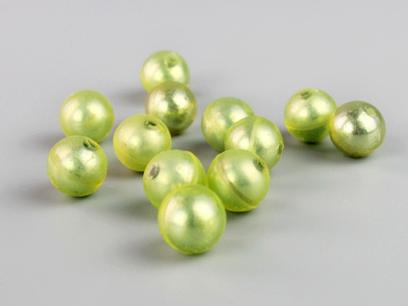
As an example of execution on the site TENCAN given grinding balls with iron core and polyurethane coating. The core sets the mass and inertia, the coating forms the working surface. This combination can be useful where a certain balance of density and surface properties is required, but applicability to a particular bead mill must be checked by diameter, density, cage clearance, coating chemical compatibility and wear tolerance. Being in the same directory section does not in itself prove compatibility.
When selecting bodies, it is helpful to ask four questions. Will the separator hold this diameter? Will the drive and bearings support the weight of the load? Is the coating or material compatible with solvent and temperature? Is it possible to clean the bodies and chamber in such a way as to prevent carryover from the previous batch? If these questions are not answered in the documentation, testing should include contamination control and not just particle size measurement.
Heating and Cooling: Where "Room Temperature" Ends
Most of the supplied mechanical energy is converted into heat. Heat can change the viscosity of the suspension, cause evaporation of the solvent, degradation of the dispersant, or changes in the surface of the particles. Therefore, temperature is the same mode parameter as speed and time. It is important to distinguish between the temperature of the working chamber, the temperature of the suspension at the outlet and the temperature of the sample after collection: they are not the same thing.
Air cooling removes heat from the case, but does not replace liquid thermostatting, if it is provided for by the design. A cooling jacket or external chiller can maintain the temperature of the coolant, but local overheating in the grinding zone remains. Conventional heat removal cannot be called a cryogenic process: cryogenic grinding is a separate technical task with a different hardware organization and safety measures.
If the temperature rises faster than expected, a fault should not be declared automatically. Possible causes are increased load, high viscosity, too intense operation, insufficient heat dissipation, incorrect sensor location or prolonged circulation. They check not just one reason, but a combination: power, flow, inlet and outlet temperatures, condition of the grinding media. Without diagnostic data, a specific failure is not considered proven.
Wet and dry grinding, comminution and deagglomeration
For laboratory bead mills, wet grinding is typical: the powder is dispersed in a liquid, which facilitates the transport of particles, reduces dusting and allows obtaining a stable suspension. However, the wet process adds liquid preparation and removal steps, as well as requirements for solvent compatibility with the materials of construction. The possibility of dry grinding and its limitations must be clarified in the documentation of a specific installation, and not transferred from another model.
Dry grinding can be accompanied by agglomeration, sticking to the walls and uneven distribution. Wet grinding does not guarantee the absence of aggregates: the result depends on wetting, dispersant and energy. In addition, comminution of primary particles and disagglomeration are not the same thing. If the task is to break up loose aggregates, excess energy can change the surface of the particles and degrade the properties of the product.
A bead mill is not a mixer in the household sense. Mixing of components, homogenization and grinding can occur in one apparatus, but they cannot be considered interchangeable operations. If only uniform distribution of the additive is required without changing the size, the mode is selected differently. Understanding the purpose helps avoid overgrinding and unnecessary heating.
How to check the mode and move on to a larger batch
The trial grind should be planned as an experiment and not as a demonstration of maximum power. First, one initial suspension is prepared and divided into parts in order to compare modes with the same composition. Then change one factor at a time: type or size of grinding media, fill, speed, time or flow. For each mode, the temperature, power consumption, appearance, size and weight of the extracted product are recorded. Size measurement must be carried out using a consistent method, otherwise the comparison becomes meaningless.
The transition from a laboratory sample to a larger batch is not a linear increase in time. The geometry of the chamber, heat dissipation, circulation path and the ratio of the volume of suspension to the volume of grinding media may change. If a result is achieved in a laboratory setup, this does not prove its repetition on another scale. It is wise to maintain the specific conditions and check them on an intermediate load, controlling the temperature and particle distribution.
To request a trial grind, it is helpful to have the following information ready::
- the chemical nature of the material, the original size and the method of its measurement;
- target particle size or suspension property;
- dry matter mass and liquid phase volume;
- solvent, dispersant and procedure for their introduction;
- permissible temperature range and sensitivity to heat;
- requirements for chamber and grinding media materials, unacceptable impurities;
- available sample volume and the need to return material;
- requirements for cleaning between products and work safety class.
The choice of a laboratory bead mill and grinding media is made not based on one record indicator, but on the reproducibility of the result, acceptable contamination, thermal conditions, ease of cleaning and the availability of documentation. If the initial data is incomplete, it is more correct to start with a small test and clarify the conditions than to prescribe a regimen by analogy. In the catalog TENCAN can be verified equipment directionshowever, the final configuration must be confirmed by sample testing and product requirements.