
Laboratory agate mill is equipment for preparing low-mass samples, where sample safety is often more important than throughput. In the catalog TENCAN it is classified as other grinding equipment: this is a class of devices that perform tasks that are inconvenient for planetary or drum mills due to energy or the risk of introducing impurities. The practical question with which the selection begins is usually formulated as follows: how to grind the sample to the desired particle size distribution without overheating it or changing the chemical composition.
There is no single answer, since the result is determined not by one characteristic of the machine, but by a combination of conditions: the nature of the material, the initial size, the mass of the sample, the type of subsequent analysis, the permissible level of impurities and sensitivity to temperature and moisture. Below we talk about the selection criteria and the meaning of the parameters; numerical values for a specific model should be checked with the product card and checked with the supplier.
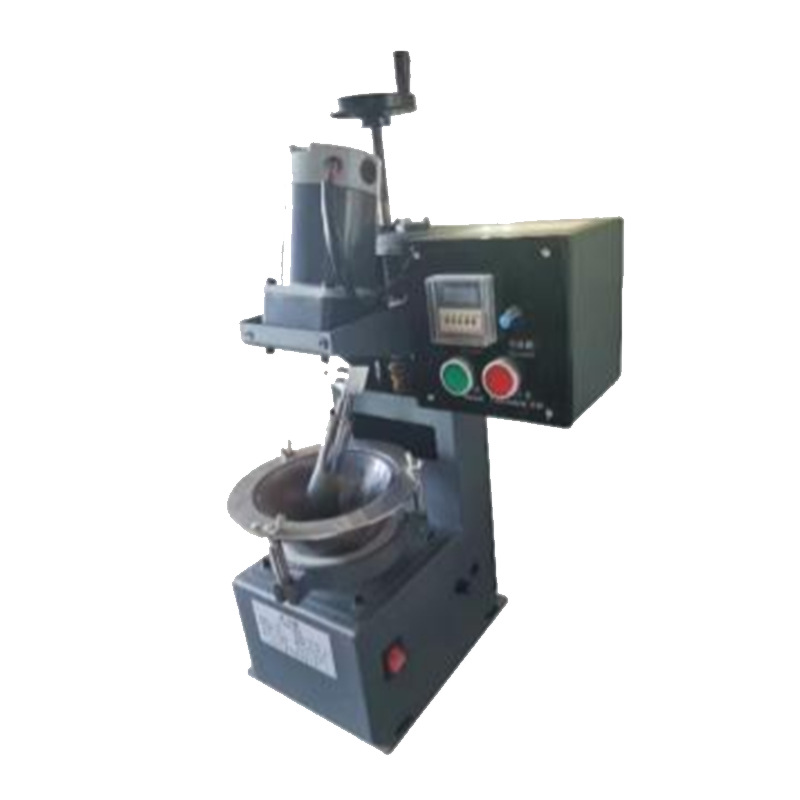
When is an agate mill appropriate, and when is another machine solving the problem?
The selection of grinding equipment begins with a sample, not with a catalogue. The frame is set by four parameters: sample weight, initial size, target size, and acceptable addition of impurities. Two additional conditions are temperature, if the material is sensitive to it, and environment, if wet grinding is intended. It is these conditions, and not the rated rotation speed, that determine whether a laboratory agate mill is suitable.
The strength of the agate design is the combination of a fairly hard and chemically relatively inert working surface with moderate impact energy on the material. The sample does not receive the same shock and shear loads as in a high-energy planetary mill, and heats up less. The weak point is the small mass of the processed material and the fragility of the agate itself, which does not withstand shock loads well.
The practical limits of applicability are as follows. If the sample arrives in the form of a piece measuring centimeters, you need to start with crushing - for example, on a jaw or roller crusher - and only then move on to abrasion. An agate mill does not replace a crusher: an attempt to destroy a large piece in an agate chamber leads to accelerated wear of the working surface, and sometimes to its damage. If it is necessary to obtain hundreds of grams or kilograms of powder, the problem is solved using a drum or planetary mill; laboratory agate version is designed for samples measured in grams.
The mode cannot be transferred from one class of equipment to another. A bead mill, a drum on rollers and a roller crusher are different devices with different mechanics of particle destruction, and seemingly similar output coarseness values do not mean that the mode is reproduced. Product card Laboratory agate mill describes laboratory execution; Before choosing a mode, you should make sure that the design, volume of the working chamber and acceptable grinding methods correspond to the specific task.
Properties of agate and what they mean in practice
Agate is a fine-fibered variety of chalcedony, that is, cryptocrystalline silicon dioxide SiO2. For the practice of sample preparation, four of its properties are significant: Mohs hardness of approximately 6.5–7, density of about 2.6 g/cm³, low thermal conductivity and tendency to brittle fracture. These are general mineralogical characteristics of the material, and not the passport data of a specific model, but very specific conclusions follow from them.
Hardness means that the agate work surface wears out more slowly than most structural steels used in grinding units when working with soft to medium-hard materials. Under such conditions, the metal surface becomes “greasy” faster and carries iron into the sample. The absence of iron, chromium, nickel and cobalt in agate is a significant advantage if the sample is subsequently analyzed for these elements.
The reverse side is silicon. It is part of the agate itself, so when determining silicon in a sample, the contribution of the chamber material must be assessed separately, especially if the sample is abrasive or the grinding time is long. Natural agate is not perfectly homogeneous: it contains inclusions and coloring impurities (iron, manganese, aluminum), and different batches may differ in the composition of microimpurities. Therefore, the expression “zero contamination” is not applicable to the agate chamber: it is more correct to say that the impurity profile is shifted towards silicon and, to a lesser extent, the impurity elements of the mineral itself.
Low thermal conductivity is important when grinding: the heat generated by friction and deformation is removed from the contact zone slowly. This does not make the agate a “hot” material in itself, but it does explain why even with moderate drive power, local heating of the sample can be noticeable. Fragility means that agate is sensitive to impact and point loading: large and very hard particles accelerate wear, and sudden temperature changes during cleaning can lead to cracks.
What agate doesn't solve
There are classes of materials for which an agate chamber is not a good choice, regardless of the mode. Viscous and plastic materials - metals, many polymers, waxy and fatty substances - are deformed under load rather than destroyed: they stick to the working surfaces, and grinding turns into mixing. They use cutting mills or cryogenic cooling, which increases fragility.
Hard abrasives - corundum, silicon carbide, zirconium dioxide, as well as samples with a high content of quartz - dramatically increase the wear of any grinding surface. In such cases, a chamber made of zirconium dioxide or tungsten carbide is sometimes chosen, but these materials do not provide “zero” contamination: each of them shifts the composition of impurities in its own direction. Finally, the agate mill is not suitable for large pieces and for large sample masses - this is a limitation of the design, not the mode.
Dry and wet grinding: where is the border?
The choice between dry and wet grinding is a choice between two sets of problems, not between a “best” and a “worst” option. With dry grinding, no liquid is introduced into the chamber: no drying is required, there is no risk of dissolution or hydrolysis of sample components, and there is less risk of contamination from the solvent. But dry grinding is prone to agglomeration: small particles stick together, stick to the walls and working element, accumulate an electrostatic charge, and generate dust during unloading. Part of the sample is lost on the walls, and the fine fraction may be underrepresented in the sample sample.
Wet grinding uses liquid as a dispersion medium. It reduces particle clumping, removes some of the heat and makes the suspension more homogeneous, which usually improves the reproducibility of the result with small fractions. However, a separation and drying step is introduced, and with it the risk of contamination from the solvent and the risk of interaction of the liquid with the sample material. The solvent is selected so that it does not react with either the sample or the working surface: water is unsuitable for materials prone to hydrolysis or swelling, and acids and alkalis are not used in contact with the silicate surface. Organic solvents require consideration of volatility, fire safety and disposal.
Significant limitation: wet grinding is possible only where it is permitted by the design and documentation of a particular product. If the card does not confirm operation with liquid, this mode cannot be considered applicable by default.
The distinction between grinding and disagglomeration requires special attention. If the primary particles are already small but aggregated, the decrease in median size after treatment may reflect disruption of the aggregates rather than the particles themselves. The measurement result in this case is greatly influenced by the preparation of the suspension - the intensity of ultrasonic treatment, the introduction of surfactants, and the holding time. It is incorrect to compare particle size values obtained with different sample preparations.
Key selection parameters and their meaning
Most of the errors when choosing a mode are related not to technology, but to terminology. The volume of the grinding chamber, workload, sample weight and productivity are different values, and substituting one for the other leads to incorrect expectations. It is useful to agree on definitions before starting work.
| Term | What does it mean | Common mistake |
|---|---|---|
| Grinding chamber volume | Total internal volume of the working part | Take it as the amount of material that can be loaded at one time |
| Workload | Fraction of volume occupied by material and working fluids in operating mode | Transfer fill share from one machine to another |
| Sample weight | Sample weight in one load | Confused with performance over time |
| Performance | Amount of prepared material per unit of time | Consider it constant and independent of the material |
| Target size | Specified particle size distribution | Compare values obtained by different measurement methods |
The table records the meaning of the terms, and not the passport values: the numerical restrictions for a specific model are taken from its documentation. The point of workload is that the material and working fluids must have room to move. Overloading the chamber reduces the effectiveness of the impact and increases heating, underloading reduces the number of contacts and lengthens the grinding.
Grinding time is a non-linear parameter. In the first stages, the particle size decreases quickly, then the process slows down, and a further increase in time leads mainly to an increase in temperature and to the accumulation of impurities from wear. Doubling the time does not mean doubling the fineness, therefore, in trial grinding, the time is changed in steps and after each step both the coarseness and the composition are controlled.
Size: What to Expect and What to Measure
The achievable fineness depends on the material more than on the machine. Brittle and hard materials break down faster, viscous materials break down more slowly and with the formation of aggregates. The result is influenced by the initial size, mode, time, ratio of sample and working fluids, as well as the measurement method. Sieve analysis, laser diffraction, sedimentation and microscopy give different numbers for the same powder; D50 values obtained by different methods are not directly comparable.
The approximate minimum size specified in the catalog refers to a specific material and a specific mode. For a random sample, it is not guaranteed and requires testing in a test grind. The practical selection criterion is not “the smallest number”, but reproducibility: the result must be repeated from sample to sample under the same mode and the same measurement technique.
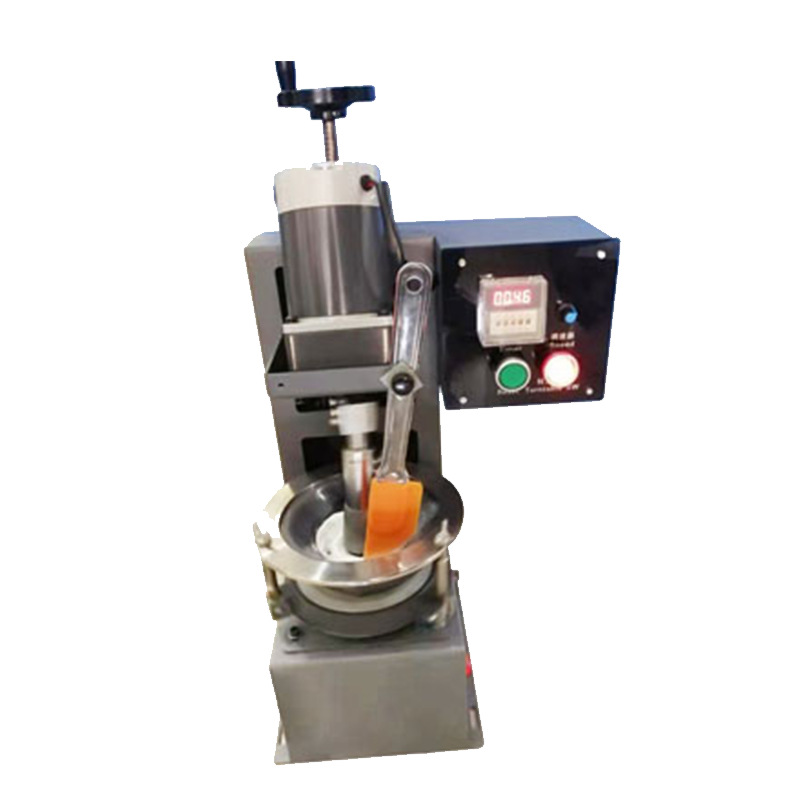
Overheating, cooling and temperature-sensitive samples
During grinding, mechanical energy is partially converted into heat. Sources of heating are friction of particles against each other and against working surfaces, impacts, plastic deformation. The greater the energy supplied per unit mass, the more noticeable the heating, so high-energy modes are more dangerous for heat-sensitive materials.
Air cooling and liquid nitrogen cooling are not the same thing. The first means that the body and work area release heat to the surrounding air; in this case, the temperature of the working space of the installation is not equal to the temperature of the sample. Inside the load, at the points of contact, the local temperature may be higher than that measured in the chamber, and it is not worth judging the heating of the sample based on the sensor readings. Conventional air cooling cannot be called a cryogenic process.
Cryogenic cooling is used when a material behaves plastically at room temperature or is prone to agglomeration: deep cooling increases brittleness and facilitates destruction. If the product documentation does not confirm the supply of refrigerant to the work area, the corresponding mode is not provided for this installation.
Signs of sample overheating include sintering and enlargement of aggregates, color changes, sticking to working surfaces, loss of volatile components, and for some materials, phase transformations. However, the same phenomena can be caused by humidity, the nature of the sample, or insufficient cleaning, so one should not draw a conclusion about overheating: a control sample is needed. Intermittent operation with pauses, reducing one-time loading, reducing the time of one cycle and, where permissible, wet grinding as a heat sink help reduce the heat load.
Wear, contamination and cleaning
The introduction of impurities during grinding has several sources, and it is useful to distinguish them: wear of the working surface, wear of the grinding media (if they are provided for in the design), cross-contamination from previous samples, contamination from liquids, from unloading tools and from laboratory air. It is difficult to assess the contribution of each source separately, but the total contribution is measurable.
A practical method is blank grinding: the working chamber is processed without a sample in the same mode, after which the washouts or a control sample are analyzed for the elements of interest. The second method is to weigh the working elements before and after a series of grindings and compare the change in mass with the mass of the resulting powder. The third is to analyze the sample before and after grinding using the same method. All three approaches provide an order-of-magnitude estimate rather than an absolute truth, but they do distinguish between acceptable and unacceptable levels.
The material of the chamber determines the profile of impurities, not their absence. Agate primarily contributes silicon. Stainless steel - iron, chrome, nickel; zirconium dioxide - zirconium and yttrium; tungsten carbide - tungsten and cobalt; corundum - aluminum. The choice is made based on which element is critical for subsequent analysis, and not on the principle of “the hardest material.” For example, stainless steel grinding drum refers to roller ball mills - this is a different class of equipment, and its characteristics do not transfer to the agate mill.
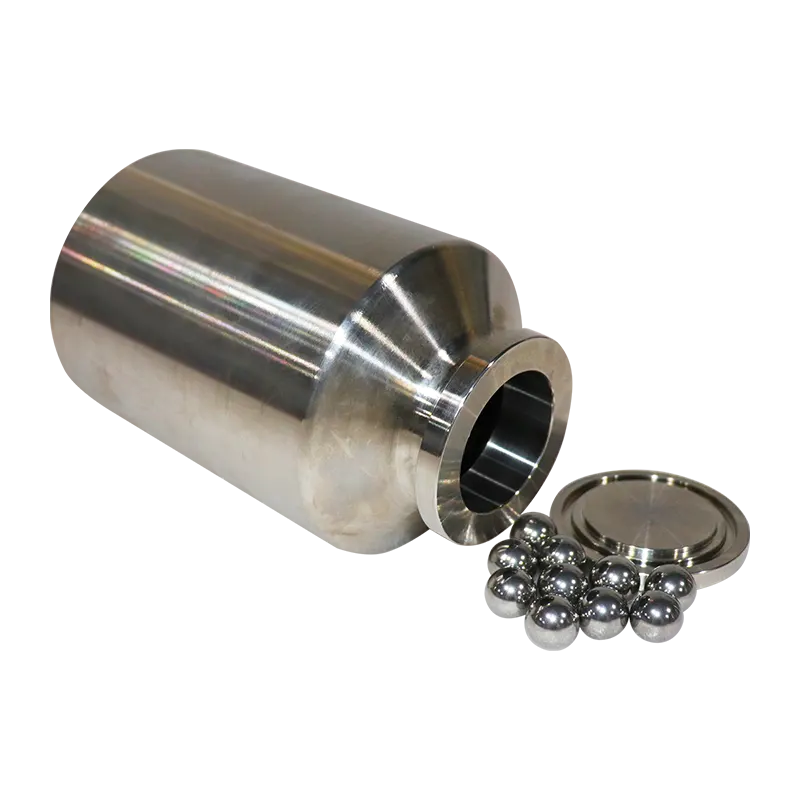
Cleaning affects cross-contamination more than is commonly thought. For silicate working surfaces, use soft mechanical means - brushes, dry or slightly damp wiping material - avoiding abrasive pastes, concentrated acids and alkalis. A sharp temperature change, for example hot water immediately after cold water, is undesirable for agate. After cleaning, the surface is dried and stored closed. The effectiveness of purification is checked with blank samples, especially when moving from samples with a high content of analyte elements to background ones.
The intensity of wear depends on the abrasiveness of the sample, grinding duration, single load and mode. There is no universal rule “agate for everything”: for each task it is useful to decide in advance what is more important - the minimum addition of silicon, minimum wear, or the speed of sample preparation.
From a single sample to a series: what to check before trial grinding
Reproducibility is more important than a single successful result. If the technique involves a series of samples, the mode must give comparable results when repeated, and the sample itself must be representative: large pieces cannot be discarded, and samples must be selected after averaging.
When moving to a larger batch, not only the mass changes. Another machine - a planetary or drum mill - has a different energy density, a different impurity profile and a different particle size distribution. The result obtained on an agate mill cannot be mechanically transferred to large equipment: scaling requires a separate check, at least in terms of size and impurity content.
To ensure a meaningful trial grind, it is helpful to gather the following information in advance::
- sample material and its basic composition, including elements that cannot be introduced;
- nature of the material: brittle, viscous, prone to agglomeration, containing volatile components;
- initial size and the method by which it is determined;
- target size (D50, D90 or upper limit) and control method;
- weight of one sample and number of samples in a series;
- intended grinding method - dry or wet - and acceptable liquid;
- permissible limits of impurities for specific elements;
- temperature restrictions and sensitivity to moisture;
- cleaning requirements between samples, including transfer between different materials;
- type of subsequent analysis: X-ray phase, elemental, granulometric, thermal.
It is convenient to build a trial grind in stages:
- blank grinding without sample and control sample analysis for critical elements;
- grinding an inert reference material to evaluate equipment behavior and wear;
- grinding a real sample with stepwise changes in time and load;
- measuring particle size using the same method at each stage;
- control of the composition after grinding and comparison with the original sample;
- repeated grindings under the same conditions to assess reproducibility;
- scaling check if different mass or other equipment is expected in the future.
The agate mill is a sample preparation tool, not a universal solution. Its advantages appear where the mass of the sample is small, and preservation of the composition and moderate heating are more important than productivity. Where large volumes or work with viscous and particularly abrasive materials are required, it is better to choose a different class of equipment. Checking the regime on a real sample, assessing both the particle size and impurities, gives more than any comparison of passport numbers. Additional information about grinding equipment and consumables is available on the website TENCAN.