
Laboratory vibrating ball mill is equipment for quickly grinding a small sample in a closed grinding bowl. Such a machine is chosen when the powder is needed for chemical analysis, X-ray diffraction, measurement of particle size distribution, sintering or pressing, and there is no point in spending hours grinding in a drum. TENCAN (Changsha Tianchuang Powder Technology Co., Ltd.) produces a line of grinding equipment, including laboratory vibrating ball mill; available designs, glasses and operating parameters are indicated in its card.
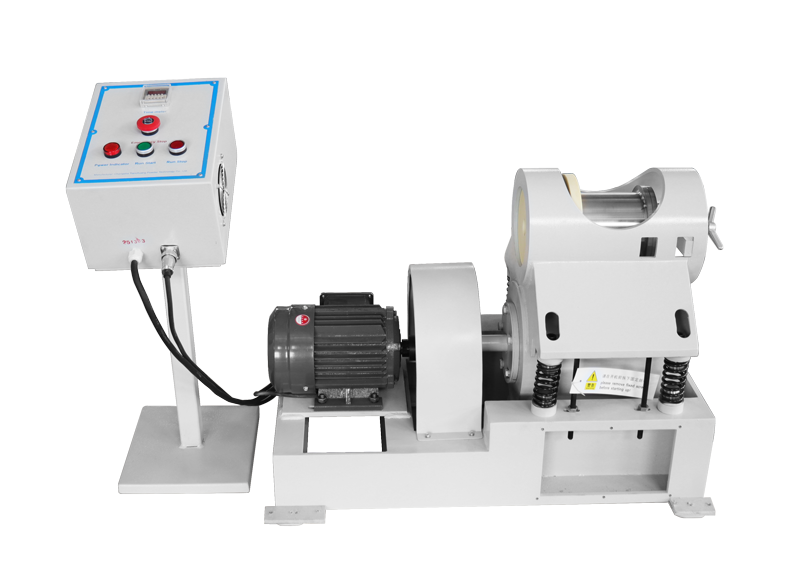
Practical complexity almost never comes down to choosing a “machine in general.” The result is determined by the mode and equipment: the mass of the sample, the size and material of the grinding media, the frequency and duration of processing, as well as how much the material heats up and how prone it is to contamination. These conditions are discussed below - from the principle of operation to information that should be reported to the manufacturer before trial grinding.
How does a laboratory vibrating ball mill work?
The grinding bowl with grinding media is fixed on a vibrating unit. The drive creates oscillations with a relatively high frequency and low amplitude, so the balls and cylinders inside the glass move differently than during normal rotation of the drum: they receive frequent short impulses, hit the walls and each other, rub, roll and constantly change the direction of movement. It is the combination of impact and abrasion that ensures a rapid increase in thinness with a small mass of the sample.
The energy of one collision here is low, but the number of collisions per unit time is high, so the dose of mechanical energy is accumulated in minutes, not hours. Hence two practical features. Firstly, grinding is sensitive to overload: as soon as the free volume of the glass is filled with sample, the shock is absorbed and a significant part of the energy is converted into heat. Secondly, a short processing time is convenient for materials that are undesirable to be kept in contact with grinding media and cup material for a long time.
Design and movement of grinding media
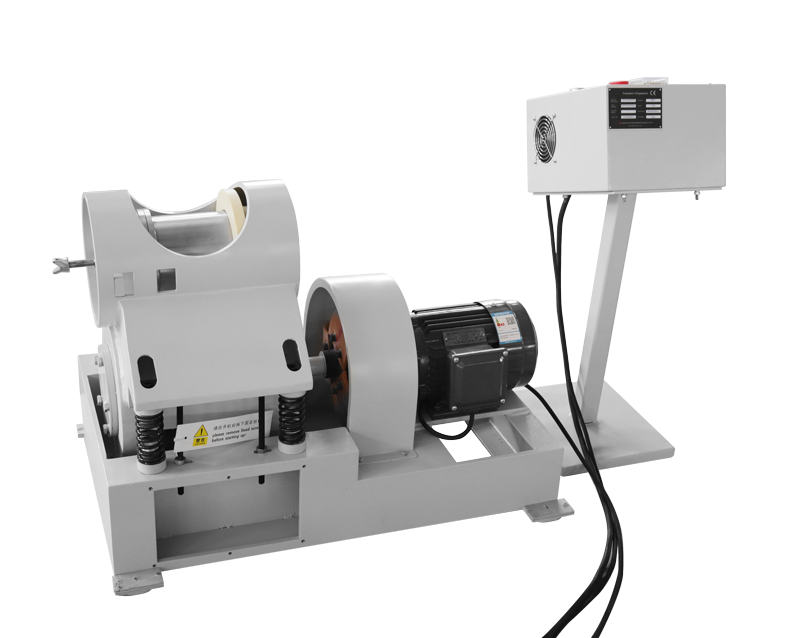
A typical installation consists of: a drive with an unbalanced mass or an eccentric, elastic elements holding the working platform, a clamping device for a glass, a timer and a control panel, a housing protected from dust and noise. An essential detail is the clamp: a glass that is not fastened tightly enough loses some energy in moving, gets hot at the contact points and works less reproducibly. Before each series, the condition of the elastic elements, fastenings and seals of the glass is checked, since the repeatability of the result from sample to sample depends on them.
The trajectory of the grinding bodies depends on the filling of the glass, the mass ratio of the “body: sample”, the viscosity of the medium during wet grinding and the shape of the bodies. Balls give a more pronounced impact, cylinders - more abrasive action. A mixture of bodies of different diameters often works more efficiently than a single-size load: large bodies destroy the original particles, small ones ensure additional grinding and uniformity. But such a mixture is more difficult to reproduce and requires a separate description in the methodology.
How does a vibration mill differ from a planetary and drum mill?
Confusion between types of grinding equipment leads to incorrect expectations. A planetary ball mill also uses cups with grinding media, but the cup rotates simultaneously around its own axis and around the common axis of the apparatus, so the bodies move in a field of centrifugal forces with high accelerations. This is a different energy mode: it allows for very high thinness and even mechanical alloying, but it places more stringent requirements on the strength of the glass and heat dissipation.
A drum ball mill, for example a drum on driven rollers, rotates slowly and operates with large volumes: bodies rise along the wall and roll down, destruction occurs mainly due to impact when falling. This is equipment for long-term grinding and batch enlargement, and not for quick preparation of a single sample. A bead mill with a stirring shaft is most often used for suspensions and fine dispersion, and a roller crusher is used for preliminary crushing of lump material. All these machines solve different problems, and it is impossible to replace one with another “by name”. It is convenient to navigate in the directions of the equipment on the site TENCAN.
Separately, it is worth mentioning reproducibility. A laboratory vibration mill is valuable not only because of its speed, but also because the cycle parameters are set and repeated: the same samples, the same equipment and the same time give comparable results. If the sample mass or glass is changed between cycles, comparison of series becomes meaningless, and differences in size will reflect not the properties of the material, but a change in the experimental conditions.
Loading, beaker volume and sample weight
The first thing that should be separated when selecting is three different quantities: the volume of one grinding bowl, the total volume of all the bowls of the installation and the working load. The working load includes both the grinding media and the sample, so “a glass of N liters” does not mean that N liters of powder can be poured into it. The mass of sample that can actually be crushed in one cycle depends on the density of the material, the size of the grinding media and the required fineness.
If the sample occupies almost all the free space between the bodies, grinding slows down. The bodies lose freedom of movement, the impacts become viscous, a significant part of the energy goes into heating and plastic deformation, and the wear of the glass and grinding bodies increases. Outwardly, it looks like “the mill has stopped grinding”: the fineness remains almost unchanged after the next cycle. It is more correct to reduce the sample mass or move to a larger glass than to increase the processing time.
The reverse error is too small a sample. Then a noticeable proportion of collisions occurs at the “body-body” and “body-wall” contacts, which do not crush the material, but only wear out the equipment. In this case, impurities are considered relative to the mass of the sample, therefore, with a small sample, the contribution of the glass material to the composition of the sample becomes more noticeable. For samples where trace impurities are monitored, this effect must be assessed separately.
Practical procedure: determine the required mass of the finished powder, taking into account losses for loading, unloading and selection, then select the volume of the glass so that the sample occupies only part of the free volume, and the rest is left for the movement of the grinding media. Specific recommendations for filling depend on the material and design of the glass, so they are clarified in the installation manual and confirmed by trial grinding, and not transferred from someone else’s method.
Grinding media, frequency and time: grinding energy management
A brittle material breaks down faster, the higher the collision energy and the more often they occur. This can be controlled by three levers: the size and density of the grinding media, the oscillation mode and the duration of processing. These parameters are not independent - increasing any of them increases productivity, wear, and heating.
Diameter and material of grinding media
Large bodies carry greater kinetic energy and confidently destroy large initial particles, but leave fewer contact points, so regrinding is slower. Small bodies provide many contacts and work better on fine fractions, but are not able to effectively destroy large grains. Hence the usual practice: do not start with very small bodies if the starting material is large, and do not try to obtain a submicron powder with one large ball. The density of the material of the bodies is also important: with the same diameter, a denser body transfers more energy.
Frequency and amplitude of oscillations
Frequency determines how many collisions occur per unit time, and amplitude determines the distance that bodies travel between collisions. Increasing the frequency usually increases the grinding speed, but at the same time increases heating and wear of the equipment; an increase in amplitude makes the impact stronger, which is useful for durable materials and harmful for heat-sensitive ones. The optimal mode is a compromise between the required fineness and the permissible heating of the sample, and not the maximum value on the scale.
Duration and intermittent mode
The dependence of fineness on time is nonlinear: at first the increase is rapid, then it slows down, and after a certain point, further processing almost does not reduce particles, but accumulates structural defects, increases the temperature and increases contamination. In addition, fine particles are prone to re-aggregation. Intermittent mode - working in short intervals with pauses - helps limit heat, but the overall processing time increases.
Dry and wet grinding: choice of medium and consequences
Dry grinding is simpler: after processing, the powder is ready for sifting or analysis; there is no need to separate the liquid and dry the material. However, a dry environment produces dust, adhesion to walls and grinding bodies, and fine particles aggregate. Wet grinding, in which liquid is added to the beaker, reduces dust formation, reduces aggregation and often allows for faster achievement of small particle sizes, but adds separation and drying steps, and the liquid can react with the material or leach out individual components.
| Criterion | Dry grinding | Wet grinding |
|---|---|---|
| Aggregation of fine particles | More pronounced, sticking possible | Usually weaker due to liquid medium |
| Dust formation | Requires dust protection and careful unloading | Minimum |
| Preparing for analysis | The powder is ready immediately | Requires filtration, washing and drying |
| Risk of chemical interaction | Limited by moisture and gas in the glass | Depends on the selected liquid |
| Heat dissipation | Worse, sample heating is more noticeable | Usually better |
| Introduction of impurities | Wear of glass and bodies, possible dust loss | Wear of the glass and bodies, possible losses with liquid |
The choice of environment is a choice not only of technology, but also of the subsequent methodology. If the ultimate goal is elemental determination or phase analysis, it is important that the liquid does not introduce the components being determined and is completely removed. If the material is sensitive to moisture or oxidation, wet grinding in water is not suitable, and operation in an inert environment requires appropriate design of the glass and confirmation from the manufacturer. Wet grinding is not automatically “finer”: much depends on the viscosity of the suspension, the liquid:powder ratio and whether the too thick medium dampens the movement of the grinding media.
Sometimes technological additives are introduced into the liquid phase to reduce aggregation or stabilize the suspension. Such decisions change the composition of the medium and can affect the result of the analysis, so they are used only after testing on a specific material and taking into account the requirements of the method.
Material of the bowl and grinding media: wear, impurities, cleaning
Equipment affects the result no less than the mode. The material of the bowl and grinding media is selected according to three criteria: hardness relative to the sample material, resistance to impact loads and the permissible level of impurities. There is no absolutely inert material: any “sample-equipment” pair wears out, the only question is how significant this wear is for the task.
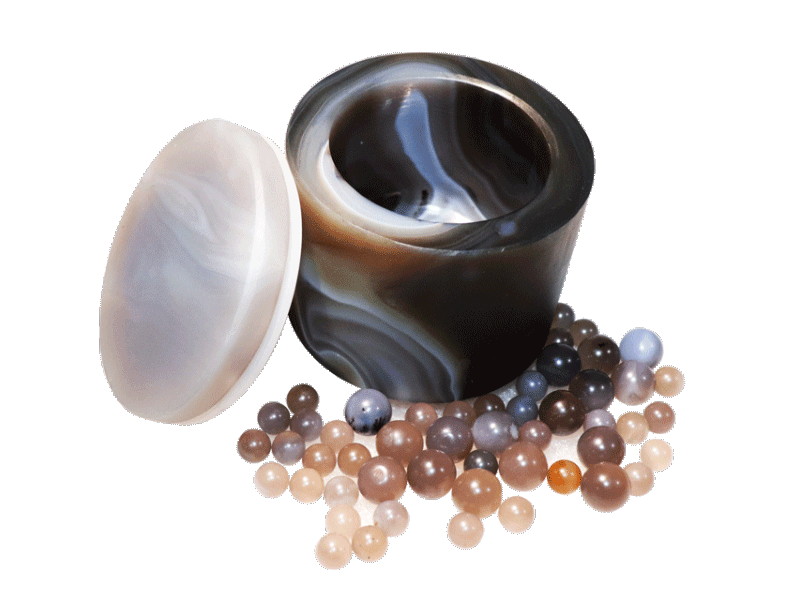
Agate is a dense natural material based on silicon dioxide. It is hard, has good resistance to abrasive wear and is therefore used where metal contamination is not acceptable. The limitations are also known: agate is fragile, does not withstand strong impacts and temperature changes, and its basis is silica, which is important to consider when analyzing materials containing silicon. Agate glass requires careful cleaning and is not suitable for very high impact energy applications.
In the catalog TENCAN agate grinding bowl for planetary mill presented as belonging to planetary equipment. This does not mean automatic compatibility with the vibratory mill: mounting dimensions, mounting method and permissible loads differ for different types of machines. Before using a specific cup on a vibration installation, compatibility must be confirmed with the manufacturer using the documentation for both positions.
Other common tooling materials: zirconium dioxide - high density and fracture toughness, but wear and tear and possible addition of zirconium; tungsten carbide - very high hardness and density, used when maximum impact energy is needed, but contains a binder and therefore is not neutral; oxide ceramics, similar in behavior to corundum; stainless steel - affordable and impact-resistant, but introduces iron, chromium and nickel; polymers like polyamide and fluoroplastic provide a minimum of metal impurities, but transfer almost no impact energy. The choice is always a compromise between grinding energy and sample purity.
Cleaning bowls and grinding media is a separate source of errors. The remains of the previous sample are transferred to the next one if the glass is washed formally; harsh abrasives change the surface microrelief and can accelerate wear; Moisture after washing affects dry grinding. For batch work, it is wise to assign tooling to a specific type of material and keep a record of the processing so that cross-contamination can be assessed if necessary.
Heating, cooling and achievable fineness
Mechanical energy that was not used to destroy particles is converted into heat. Therefore, long-term work without pauses increases the temperature of the sample, and with it the risk of sintering, decomposition, phase transitions and changes in material properties increases. It is impossible to estimate heating by the body temperature: the temperature of the working space of the installation and the temperature of the powder inside the glass are different values, and it is not always possible to measure the second directly.
Air cooling reduces the temperature of the components and partially removes heat from the glass, but does not turn the process into a cryogenic one. Cooling with liquid nitrogen is a fundamentally different mode: it is used for elastic, viscous or heat-sensitive materials, which at normal temperatures are not crushed, but deformed, and it requires appropriate equipment design and compliance with safety rules. The presence of such an option for a specific model must be confirmed according to the documentation: a casing or fan does not mean the ability to work with liquid nitrogen.
Achievable fineness is not a passport guarantee. It depends on the initial particle size, hardness and brittleness of the material, mode, equipment and measurement method. Sieve analysis, laser diffraction, and specific surface area give different numbers for the same powder, so the result is always reported with the method. The catalog value as a typical minimum refers to a specific material and conditions; For a specific sample, the size is determined by experiment. For aggregating materials, the measured size of the aggregate is not equal to the size of the primary particles, and the sample is dispersed according to the accepted procedure before measurement.
Checking the result and moving on to a larger batch
It makes sense to plan a trial grind as an experiment rather than a one-time operation. It is useful to establish in advance what will be considered success: median particle size and distribution width, absence of foreign phases, acceptable addition of impurities, retention of material properties, cycle-to-cycle reproducibility. Without these criteria, it is impossible to understand whether the regime has improved or simply changed.
When moving from a single sample to a batch, the processing time cannot be increased proportionally. A large glass and a large sample mass mean a different energy distribution, different heat dissipation and different grinding kinetics. Sometimes it makes more sense to do a few grinds in smaller beakers and combine the powder after checking for uniformity, rather than trying to get it all in one go. For each new batch it is worth repeating at least a reduced size control.
What to tell the manufacturer before trial grinding
- sample material, its hardness, brittleness or tendency to plastic deformation;
- initial particle size and required final result indicating the control method;
- mass of sample per cycle and required amount of finished powder;
- preferred grinding option - dry or wet - and media restrictions;
- sensitivity of the material to heat and the need for cooling or pauses;
- acceptable impurities and preferred material of the bowl and grinding media;
- requirements for the atmosphere in the glass, if any;
- the required reproducibility and the planned number of repeat cycles.
This information allows you to select the glass, grinding media and starting mode intelligently, and not brute-force. After the trial grinding, it is worth saving the protocol: filling the glass, mass ratio, mode, time and pauses, the result of measuring the coarseness. Such a protocol is the only reliable basis for repeating the result and for subsequent scaling.
Installation maintenance also affects reproducibility. Worn elastic elements, loose clamps, deformed bowls and worn-out grinding media change the energy of the process, so their condition must be checked periodically. Before ordering equipment, it is useful to clarify which bowls and grinding media the manufacturer supplies for a specific mill design, and check them with the requirements of the method.