
What Is a Lab Roll Ball Mill?
If you're working in a lab or small-scale production setting, you've likely faced the challenge of grinding a few kilograms of material without investing in a massive industrial machine. Enter the lab roll ball mill — a compact, reliable, and surprisingly powerful piece of equipment that's been a staple in research facilities for decades.
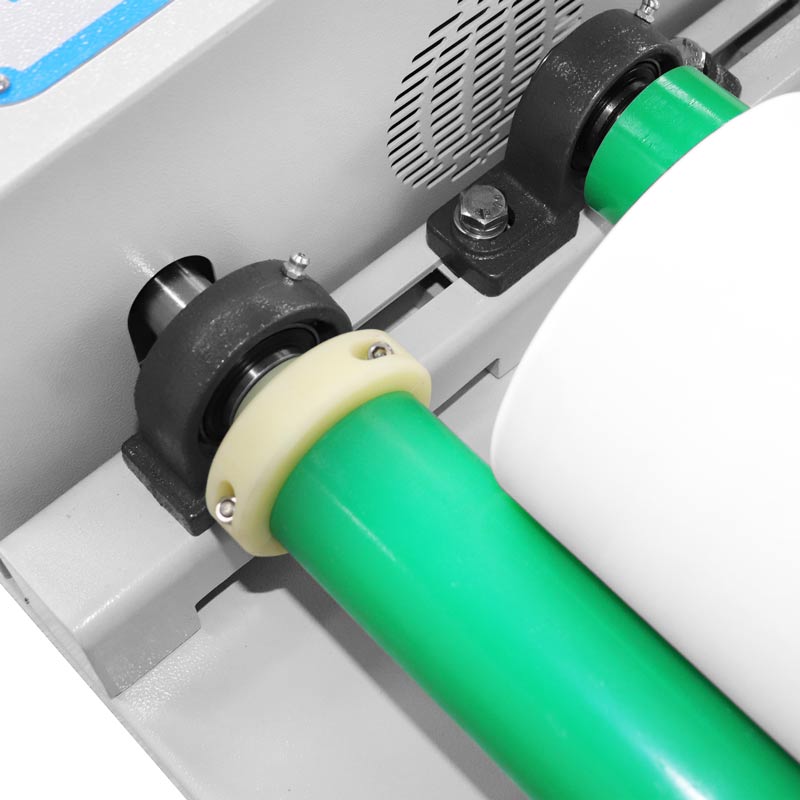
At its core, a lab roll ball mill is a simple device: a horizontal cylinder (the jar) is placed on two rotating rollers. As the rollers turn, the jar rotates, causing the grinding media inside—usually ceramic or steel balls—to tumble and grind the material. It's the same principle used in large industrial ball mills, but scaled down for precision and flexibility.
Why Choose a Roll Ball Mill for Your Lab?
You might wonder: why not just use a planetary ball mill or a stirrer? Good question. The roll ball mill has some unique advantages:
Gentle Yet Effective Grinding
Unlike planetary mills that can generate extremely high impact forces, a roll ball mill provides a more uniform and gentle tumbling action. This is ideal for materials that are sensitive to excessive heat or mechanical stress, such as certain pharmaceuticals, ceramics, or energetic materials.
Multi-Jar Capability
Most lab roll ball mills come with multiple stations. For example, TENCAN offers models with 2, 4, or even 8 working stations, allowing you to grind several samples simultaneously under identical conditions. This is a huge time-saver for process optimization or quality control.
Dry and Wet Grinding
You can run both dry and wet grinding processes in the same machine. Just swap the jar type and media. Need to grind a dry powder for XRD analysis? No problem. Want to prepare a slurry for coating? Easy.
Key Features of TENCAN Lab Roll Ball Mills
When you choose a lab roll ball mill from TENCAN (Changsha Tianchuang Powder Technology Co., Ltd.), you're getting over 20 years of engineering expertise. Here's what sets them apart:
- Robust construction: Heavy-duty steel frame with powder coating, designed for long-term use.
- Adjustable speed: Variable frequency drive allows you to fine-tune the rotation speed for optimal grinding efficiency.
- Easy operation: Simple controls, quick jar loading/unloading, and low noise levels.
- Wide jar compatibility: Accepts jars from 0.5L to 20L in materials like stainless steel, alumina, zirconia, nylon, PTFE, and more.
- Safety features: Protective guards and emergency stop ensure safe operation.
Applications Across Industries
The lab roll ball mill is incredibly versatile. Here are just a few areas where it shines:
- Ceramics and glass: Grinding frits, glazes, and ceramic powders.
- Battery materials: Mixing and milling cathode/anode powders for R&D.
- Minerals and mining: Sample preparation for assay testing.
- Pharmaceuticals: Fine grinding of active ingredients.
- Chemicals: Homogenizing pigments, catalysts, and additives.
How to Select the Right Lab Roll Ball Mill
Choosing the right model depends on your throughput and sample size:
| Model | Max Jar Capacity | Number of Stations | Typical Use |
|---|---|---|---|
| Light-duty roll ball mill | 2L | 1–2 | Small batch research |
| Standard lab roll ball mill | 5L | 2–4 | General lab work |
| Large roll ball mill | 20L | 4–8 | Pilot-scale production |
For more details, you can explore the lab roll ball mill product page directly.
Tips for Optimal Grinding Performance
Getting the best results isn't just about the machine—it's about how you use it. Here are a few pointers:
- Choose the right media: For hard materials, use zirconia or alumina balls. For softer materials, stainless steel or agate may work better.
- Don't overfill: Fill the jar to about 30–50% of its volume with media, and then add material to fill the voids.
- Use the right speed: Too slow and the balls won't cascade; too fast and they'll stick to the wall. A speed of 50–70% of critical speed is usually ideal.
- Consider wet grinding: Adding a liquid (water, alcohol, etc.) can reduce heat and prevent agglomeration.
Conclusion
The lab roll ball mill is a workhorse of the small-scale powder processing world. It's simple, affordable, and effective. Whether you're developing a new battery material, preparing ceramic samples, or mixing pigments, a quality roll ball mill from TENCAN will serve you faithfully for years. Browse their lab roll ball mill series to find the perfect match for your lab.