
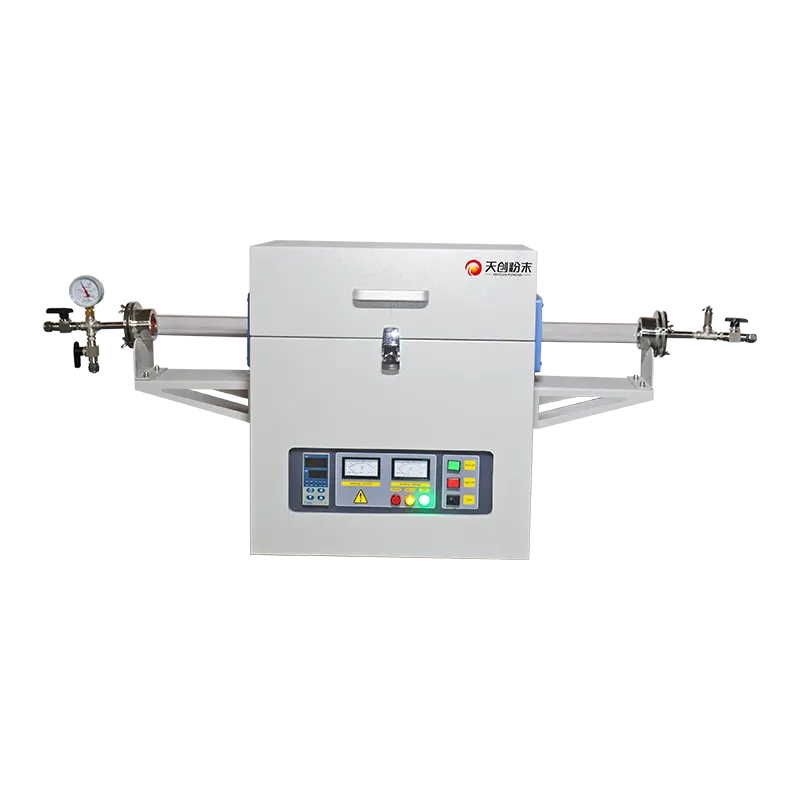
Horizontal tube furnace TENCAN — installation for controlled heating of a sample in a working tube rather than in an open chamber. This arrangement makes it possible to organize a directed gas flow, place the sample in a boat or crucible, and limit the reaction zone. The practical question is usually not “what kind of furnace is needed in general,” but “what design and what mode will a particular sample withstand.” Therefore, the selection begins with the powder, compact or part to be processed, and only then proceeds to the installation parameters.
In the card horizontal tube furnace TENCAN information about a specific version is provided. They must be read together with the task: the same name of the equipment class does not mean the same pipes, heaters, gas circuits and permissible modes. Below is the selection logic, which helps to formulate the requirements for the furnace and not to confuse the passport capabilities with the expected result on the sample.
Why is the mode selected based on the sample and not on the maximum temperature?
The first thing that influences the choice is not the name of the material, but its condition and the purpose of processing. A powder with a high specific surface area, a compact, a large part or a thin film perceives heat differently. Bulk density, moisture content, presence of binder and susceptibility to oxidation are important for powder. For a compact - porosity, residual stresses and permissible rate of temperature rise. For a massive part - thermal inertia and the risk of cracks during cooling. The same oven setting can produce different results if the load, layer thickness, or position of the sample in the tube is changed.
The second question is what exactly should happen to the sample. Drying, bond burnout, annealing, reduction, sintering and melting have different demands on temperature, time and atmosphere. When drying, the main thing is to remove moisture without cracking; when organic matter burns out, there is sufficient gas exchange and removal of decomposition products; during sintering - reproducible thermal profile and cleanliness of the environment. If the goal is formulated only as “heat to temperature,” some of the limitations go unnoticed.
The third factor is the permissible changes in the sample itself. The powder may sinter into agglomerates, lose dispersibility, or react with the boat material. The compact may become deformed, become coated with soot, or develop unwanted porosity. For some materials, not only the final state is critical, but also the rate at which the temperature ranges pass. Therefore, when choosing a furnace, it is useful to write down in advance: the initial mass, particle size distribution or size of the part, moisture and volatile content, permissible contact with the tooling material and the required atmosphere.
The maximum temperature specified for the oven is not yet the operating mode for a particular sample. The passport value refers to installation capabilities, and not to a guarantee of preservation of the properties of the sample. In addition, long-term work and short-term peaking are not the same thing. If the task requires stable holding, the long-term permissible temperature, the condition of the heaters, pipes and seals, as well as the regulation margin are important. This data is looked at in the documentation for a specific design, and is not transferred from another model.
How does a horizontal tube furnace work and what determines the result?
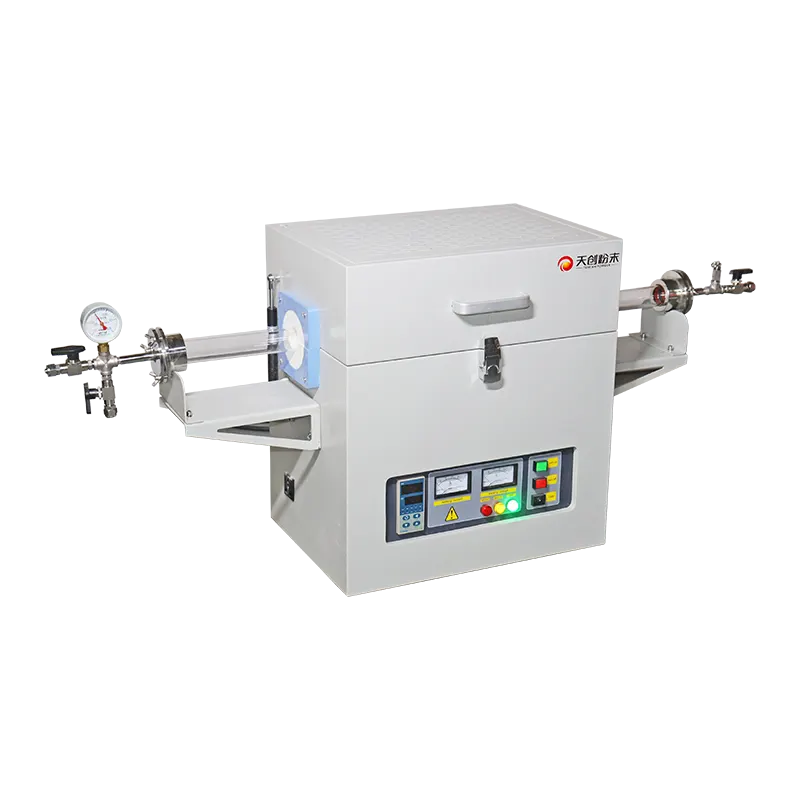
In a horizontal tube furnace, the sample is placed inside a tube that passes through the heated zone. Heaters increase the temperature of the pipe wall, heat is transferred to the sample and equipment, and the gas flow, if provided, moves along the pipe. This scheme differs from a chamber oven with an open door: not only temperature and time are important here, but also tightness, flow direction, position of the boat and the condition of the inner surface of the pipe.
Working area and thermal profile
Not the entire length of pipe is at the same temperature. In the middle there is usually a more uniform working area; a gradient is possible at the edges. If the sample is too close to the cold end, the actual sample temperature may differ from the set point. If the boat is long or massive, it occupies part of the work area and itself becomes a heat load. Therefore, when selecting, they specify the length of the heated zone, the permissible position of the sample and how the temperature is measured: by a furnace thermocouple, by a separate sensor or by a control sample.
The thermal profile includes more than just exposure. The rate of temperature rise, heating steps, equalization time and cooling mode affect the result no less than the end point. For powder materials, it is important whether moisture and volatiles have time to be removed before sintering begins. For compacts - how evenly the volume is heated. For thin layers - is there local overheating near the pipe wall? The work area must accommodate the sample and instrumentation so that gas flow and heat are distributed predictably.
Gas circuit, sealing and exhaust
The tubular arrangement allows the sample to be separated from the external environment, but only if the gas circuit is working properly. The tightness of the furnace does not equal the absence of oxygen in the working volume: air remains in the pores of the powder, on the walls and in the equipment, and can also be sucked in through leaks. The inert gas displaces the atmosphere gradually, and for reproducibility it is important how the purge is organized, where the flow is directed and how the output is controlled. If the card indicates work with gas, specify the type of connections, permissible pressure, presence of a flow meter and the possibility of exhaust.
The exhaust deserves special attention. When heating powders with moisture, binders or volatile components, decomposition products can accumulate in the pipe. Some of them condense in cold areas, some are carried away by the flow. Without proper exhaust, condensation can contaminate the sample and hinder the next run. If substances with hazardous decomposition products are suspected, the discussion goes beyond furnace selection and requires an assessment of ventilation, filtration, and the safety of the specific process.
Pipe and internal fittings
The pipe material is selected based on temperature, medium, and chemical compatibility with the sample. Quartz, ceramics or metal are used in different designs, but each option has limitations in terms of heat resistance, thermal shock and interaction with reagents. You cannot select a pipe based only on maximum temperature: heating cycles, contact with vapors, and cleaning method are also important. If the pipe is contaminated with residue from a previous sample, carryover of impurities may affect the result more than the stated control accuracy.
Internal equipment - boats, substrates, crucibles, stands - is also involved in the process. The tooling material must not react with the sample, release undesirable substances, or adhere to the sintered mass. Sometimes a more inert base is required, sometimes a material that is easier to clean is required. For powders, it is important that the equipment does not create stagnant zones and does not block gas exchange. Cleanliness and proper fit of the equipment in the pipe is part of the mode setting, and not a secondary detail.
Temperature and thermal profile: what does the nameplate value mean?
Several temperature values may appear in a furnace specification: maximum temperature, long-term permissible operating temperature, heater temperature and pipe temperature. They cannot be considered interchangeable. The maximum often refers to short-term operation or the capabilities of the heating element without taking into account the chemistry of the process. Prolonged operation at high temperatures wears out the pipe, seals and tooling faster, and the control margin helps maintain stability. For a specific task, you need a temperature that not only the furnace can withstand, but also the sample and equipment.
Maximum and continuous operating temperature
If the process requires many hours of exposure, they focus on the long-term permissible mode, and not on the advertising maximum. It is important how the oven behaves during opening, cooling and repeated cycles. Frequent rises to the maximum value can reduce the life of the pipe and heaters; For reproducibility, it is better to have an operating mode below the limit. However, a specific stock cannot be assigned without documentation: it depends on execution, atmosphere and load. The product card shows exactly those values that relate to the selected configuration.
Heating and cooling speed
The rate of temperature rise affects moisture removal, binder burnout, shrinkage and sintering. Heating too quickly increases the risk of compact cracking and unevenness in volume; too slow may not be justified for fine powder if the process is already stable. Cooling is also part of the regime. Extracting a hot boat into the air creates additional thermal shock, and slow cooling in the pipe takes time and affects phase transformations. Therefore, the request indicates not only the target temperature, but also the permissible speeds or at least restrictions on cracks and deformation.
What the sensor shows and what the sample receives
The temperature seen by the control system is not necessarily the same as the sample temperature. A thermocouple can measure the temperature of a pipe wall, furnace area, or gas stream. A massive boat warms up more slowly, and the exothermic reaction can cause local overheating. For sensitive materials, a blank test or a separate measurement is useful, but it also requires correct installation of the sensor. If the documentation does not indicate where the thermocouple is located and how calibration is carried out, this must be clarified before setting up the mode.
Atmosphere, tightness and volatile products
The atmosphere is the second most important group of parameters after temperature. It determines whether the sample will oxidize, reduce, react with the pipe material, or maintain a given surface. At the same time, “inert atmosphere” is not an absolute characteristic, but a result of gas quality, purge, tightness and time. Even a small air leak or residual oxygen in the pores of the powder sometimes changes the color, surface composition and sintering properties.
Inert gas, vacuum and residual oxygen
Purging with an inert gas displaces air, but does not replace a leak test. If the furnace is previously evacuated, this may speed up the removal of the atmosphere, but the vacuum itself does not create an inert environment and does not prevent the release of gases from the sample. Flow rate, flow direction and pressure must be in accordance with the oven design and safety requirements. For powders with a large specific surface area, it is useful to consider that gases are retained in the pores and between particles; A short purge alone may not be sufficient, but specific procedures will be determined by documentation and testing.
Volatiles, condensation and contamination
When heated, moisture, solvents, binder decomposition products, and other volatiles may be released from the sample. They go into the gas stream, but part of it condenses at the cold ends of the pipe, seals and equipment. The accumulation of condensation can spoil the next sample and create an undesirable chemical environment. Therefore, when choosing a furnace, not only the temperature is discussed, but also the possibility of exhaust, the accessibility of internal surfaces for cleaning and the compatibility of materials with emitted substances. Corrosive or dangerous volatiles require a separate safety assessment rather than a simple gas change.
Pipe material and chemical compatibility
The pipe is in contact with the sample, fixture and atmosphere, so its material is not neutral by default. Quartz is convenient for observation, but its durability depends on the chemistry of the medium and heating conditions; ceramics may be more inert in some processes and less suitable in others; a metal pipe has its own limitations regarding oxidation and interaction with gases. You can't promise "zero pollution" just by the name of a material. It is more correct to check compatibility with a specific powder, temperature and environment, and also consider cleaning and replacing consumables.
Loading, tooling and moving to a larger batch
Loading affects thermal and gas conditions more than it seems. A thin layer of powder is heated differently than a dense backfill; a massive boat takes away heat; the sample near the pipe wall may be in a different thermal field than in the center. If the powder is sintered into a dense layer, gas exchange within the layer deteriorates, and decomposition products come out more slowly. Therefore, when selecting a furnace, indicate the mass of the sample, the size of the boat, the desired layer thickness and the permissibility of mixing or pouring during the process.
Boat, crucible and sample contact
The material of the boat must withstand the temperature and not react with the sample. Sometimes not only chemical inertness is important, but also non-sticking, easy cleaning, and resistance to thermal shock. The powder can interact with the tooling material through the contact surface, especially if there is a liquid phase or aggressive vapors. Traces of a previous test on the boat and pipe are a common cause of unexplained changes. For reproducibility, it is helpful to consolidate the cleaning procedure and not use the same fixture on incompatible materials without proper treatment.
From laboratory sample to larger batch
An increase in load does not amount to a proportional increase in time. With greater mass, thermal inertia, temperature distribution, volatile release rate and purge requirements change. A sample in the center of a large load may see a different atmosphere than a thin layer in a laboratory sample. If the task moves from a single sample to a series, check whether the position in the working area is maintained, whether there is enough homogeneous zone, whether the seals and exhaust are not overloaded. Transferring the regime from a small sample to a large one without an intermediate check is risky.
What to check before ordering and trial run
For selection, it is not enough to name the material and temperature. It is useful to prepare a brief description of the sample and the process: weight, shape, initial fineness or part size, moisture and volatiles, susceptibility to oxidation, acceptable impurities, purpose of processing. Then the requirements for the atmosphere are formulated: air, inert gas, reducing environment or vacuum; whether directed flow, exhaust and residual oxygen control are needed. Limitations on heating and cooling rates are recorded separately so as not to select a furnace based only on the maximum temperature.
| What to clarify | Why is this important |
|---|---|
| Material, weight and shape of the sample | Determine the thermal load, permissible equipment and the risk of uneven heating |
| Moisture, binder and volatiles | Affect purge, exhaust, condensation and heating rate |
| Required atmosphere | Related to tightness, pipe material and process safety |
| Operating temperature and exposure | It is necessary to distinguish between maximum, long-term mode and sample temperature |
| Acceptable impurities | Determine requirements for pipe, boat cleanliness and treatment between cycles |
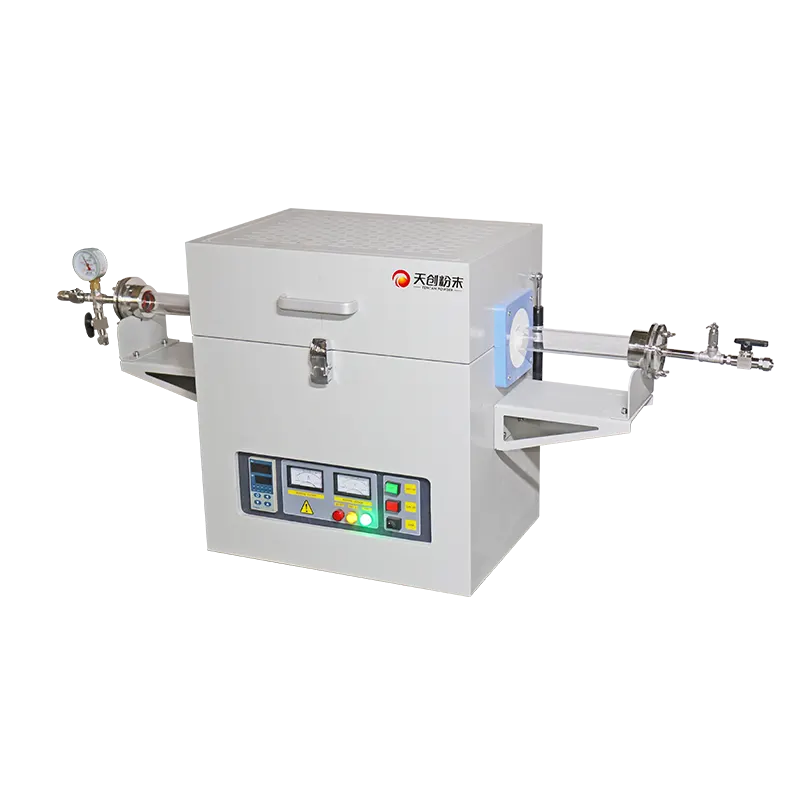
IN catalog TENCAN different types of equipment are presented, so it is better to link the request to a specific task, and not to the general name of the series. For trial heat treatment, they report what result is considered successful: retention of dispersion, specified porosity, absence of cracks, color, phase composition, or repeatability from cycle to cycle. If these criteria are not present, it is easy to turn the test into simple heating without making a conclusion about the suitability of the regime. In the card horizontal tube furnace TENCAN check the design, pipe material, gas circuit parameters and restrictions, and do not transfer the characteristics of another model.
Before the first start-up, it is useful to agree on the empty warm-up, leak testing, purge behavior and cooling procedure. For a new sample, they start with a conservative regime, monitoring the condition of the pipe, equipment and the material itself. If condensation, discoloration, powder clumping, or boat deformation appears, this does not necessarily mean the oven is faulty; The cause could be the atmosphere, the load, or heating up too quickly. Diagnosis begins by separating these factors, not by changing a parameter at random.
A horizontal tube furnace provides a controlled environment and predictable sample position, but does not eliminate the limitations of material and tooling. Correct selection is built around the question of what happens to the sample at each stage: during heating, holding, cooling and contact with gas. The more precisely the mass, atmosphere, permissible impurities and result criteria are formulated, the less uncertainty remains when choosing a configuration and setting up the first cycle.