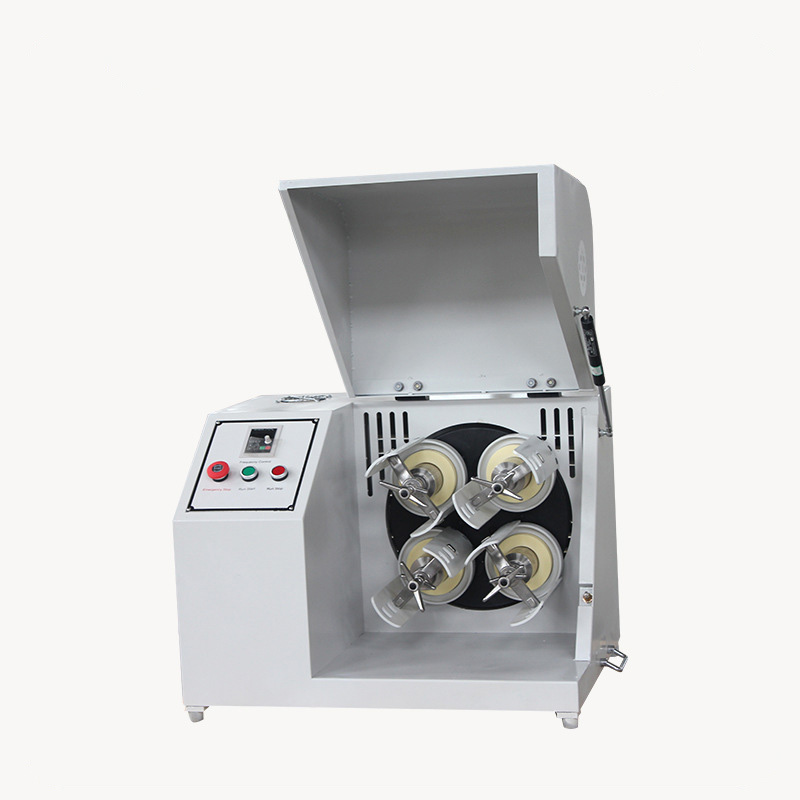
Horizontal Compact Ball Mill TENCAN — equipment for laboratory grinding and sample preparation where small work volume, controlled operation and batch-to-batch reproducibility are required. In practice, the choice begins not with the question “which mill is more powerful,” but with a description of the sample: what exactly needs to be ground, to what size, in what quantity, is contact with liquid acceptable, and how critical is the introduction of impurities. IN horizontal compact ball mill card TENCAN information about a specific design is provided; they should be checked against the task, and not transferred to the entire range.
The task that begins with the selection of a horizontal mill
Four groups of conditions are important for the laboratory. The first is the properties of the material: hardness, brittleness, tendency to agglomerate, humidity, melting or softening point, chemical activity. The second is the initial and target state of the powder: initial particle size, desired range, permissible width of particle size distribution, requirements for particle shape. The third is the scale: the mass of one sample, the number of samples in a series, the need to repeat the regime in different batches. Fourth - restrictions: permissible heating, contact with the material of the grinding container and grinding media, the possibility of wet grinding, cleaning between samples.
If the coarseness is not formulated measurably, the selection turns into a search of modes. The wording “you need to grind as finely as possible” does not allow you to compare options. It is more useful to indicate which control method is planned: sieve analysis, laser diffraction, microscopy, specific surface area. For different methods, the result may differ, so it is correct to compare modes only with the same sample preparation and measurement methods.
Separately record what the product is: individual particles, disagglomerated powder or suspension. Mixing and disagglomeration do not equal destruction of the primary particles. Sometimes the problem is solved by using a soft mode, and sometimes higher energy is required, but with it heat and wear increase. Horizontal Compact Ball Mill TENCAN refers to comminution equipment, however the specific achievable fineness depends on the material, initial size, environment, time and method of measurement, not just the model name.
How does a horizontal compact ball mill work? TENCAN
In a horizontal ball mill, the grinding container is located so that its axis is oriented horizontally. During rotation, the grinding bodies rise together with the wall, then separate from it and fall, creating impact and abrasive effects on the material. Depending on the speed, filling and properties of the medium, one or another mechanism predominates. With a soft mode there is more abrasion, with a more energetic mode - impact and mixing. For laboratory design, not only the dimensions are important, but also the ease of installation of the container, tightness, heat dissipation, access for cleaning and repeatability of the position of the units.
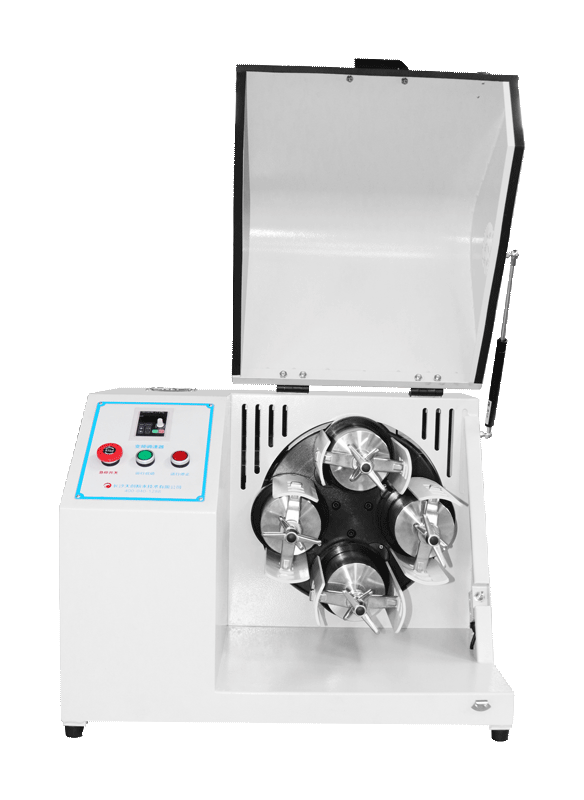
Compactness does not mean that the mode can be chosen arbitrarily. A small container heats up faster, and the mass of the sample can be so small that losses on the walls and grinding bodies become a noticeable proportion. On the contrary, too large a load reduces the free volume, restricts the movement of the grinding media and can lead to material sticking. Therefore, in the product card they look not only at the dimensions, but also at the recommended working volume, permissible load and operating conditions.
Horizontal layout and planetary motion: what is important not to confuse
The name "horizontal" describes the orientation of the grinding bowl, but not the type of drive or grinding energy. The planetary mill uses the complex movement of the glasses, and the horizontal drum circuit uses the rotation of the container around its own axis. In the card TENCAN you need to look at the kinematics of a specific model, and not draw conclusions only from the equipment family. If the description specifies a horizontal drum, the logic of choice is built around its volume, speed, grinding media and thermal conditions. If a different drive is used, the general principles remain the same, but the restrictions on loading and centrifugal effects change.
For any layout, it is useful to distinguish between the geometric volume of the container and the payload. Tables and cards may indicate different quantities: the volume of one glass, the total volume of several containers, the mass of grinding media, the mass of a sample, or productivity. These values are not interchangeable. It is impossible to judge the mass of a sample by the volume of the container without taking into account the bulk density, filling factor and density of the grinding media. That is why for test grinding they ask for not one number, but a range of operating modes.
What do the parameters on the product card mean?
The characteristics of the mill only make sense in conjunction with the test conditions. The same container with different loads and different times gives different results. Below are questions that help you read the card without replacing technical data with advertising language.
| Parameter | What to clarify | Why is this important |
|---|---|---|
| Grinding capacity | The volume of one container or the total is indicated; what is the recommended workload | The mass of the sample and the free volume for the movement of grinding bodies depend on this |
| Rotation speed | Regulation range, mode setting method, stability | Speed affects the trajectory of grinding media, heating and wear |
| Grinding media | Permissible diameter, material, density, loading weight | Size and density determine impact energy and sample contamination |
| Grinding time | Recommended interval, possibility of cycles and pauses | Prolonged continuous grinding can overheat the material and components |
| Contact materials | Material of container, lining, grinding media, seals | This is a source of possible impurities and limitations on sample chemistry |
Container volume, workload and sample weight
The workload is usually less than the geometric volume. Part of the space is necessary for the movement of grinding bodies and material. If the container is filled too tightly, the grinding media lose mobility and grinding slows down or becomes uneven. If the load is too small, a significant proportion of the energy is wasted in contact with the empty surface, and material loss on the walls increases. Specific limits vary by model and are indicated in the manual; they cannot be transferred from another mill.
The mass of the sample and the volume of the container are different quantities. A powder with low bulk density occupies a large volume with a small mass. Dense material, on the contrary, gives more mass for the same volume. Therefore, when choosing a mode, indicate the mass, the apparent volume, and the desired ratio of material and grinding media. For a series of samples, it is more convenient to record the mass of the sample and the number of grinding media, and not just the position of the speed controller.
Rotation speed, size and density of grinding media
The rotation speed determines how the grinding media behave. At low speeds, rolling and abrasion predominate; at higher speeds, lifting and falling with impact predominate. Too high a speed can cause bodies to be pressed against the wall and beneficial mixing is reduced. In laboratory practice, it is not so much the maximum speed that is important, but rather the reproducible operating range in which the material does not overheat and the container does not experience unwanted vibration.
The size of the grinding media is a compromise. Larger bodies produce stronger impacts, but leave more wear marks and may be less effective at crushing soft material. Small bodies increase the contact area and promote abrasion, but their impact energy is lower and separation from the product may be more difficult. The density of the grinding media material affects the energy at the same size. There is no one size that fits all powders: the choice depends on the initial size, hardness, target size and contamination tolerance.
Grinding time and productivity
Grinding time cannot be considered the only regulator of coarseness. After a certain point, grinding slows down, and then agglomeration and reverse growth of the measured size are possible. In addition, prolonged grinding accumulates heat. It is useful to plan not one long interval, but several cycles with sample control and, if necessary, pauses. To compare modes, the same time, the same load and the same sampling method are recorded.
Productivity per hour for a laboratory mill is a relative indicator. It depends on the sample weight, cycle time, time to clean and replace the container. For a series of small samples, reproducibility and ease of cleanup are more important than the maximum single load. To enlarge the batch, it is assessed whether it is possible to maintain the ratio of material and grinding media when moving to another volume; this often requires a separate test rather than a simple time multiplication.
Dry and wet grinding: different conditions, different restrictions
Dry grinding is convenient when the product must remain a powder and subsequent drying is not required. However, fine dry powder is prone to agglomeration, sticking to walls and dusting. In a small container these effects are more noticeable. If the material is sensitive to air humidity, dry grinding may require environmental control or sealing, but such solutions must be designed and documented.
Wet grinding introduces a liquid medium. It can reduce dusting, reduce heating due to heat capacity and promote disagglomeration, but at the same time new variables appear: suspension viscosity, solid-liquid ratio, compatibility of the liquid with the material and mill components, the need for separation and drying. Wet grinding does not automatically guarantee a finer result. In some cases, the suspension stabilizes and the measured particle size appears smaller, although the primary particles have not changed. Therefore, for wet grinding it is especially important to indicate how the sample was prepared and by what method the size was measured.
When moving from dry to wet mode, the load on the grinding media also changes: the suspension has a different viscosity and density than the air medium with the powder. The mode selected for dry grinding cannot be automatically transferred to wet grinding. Also, one cannot assume that liquid completely solves the problem of overheating: part of the energy still turns into heat, and a closed container can limit heat removal. Specific permissible environments and ratios should be clarified in the manual and product card.
Disagglomeration is a separate task. If the original powder consists of aggregates, gentle action can break up the aggregates without significantly reducing the primary particles. If the primary size needs to be reduced, sufficient energy is needed, but with it comes increased wear and the risk of overheating. Mixing powders is also not the same as grinding: it evens out the composition, but does not necessarily change the particle size distribution.
Overheating, wear and contamination
Overheating in a laboratory ball mill is not a diagnosis, but a consequence of several factors. It can be caused by high speeds, large loads of grinding media, long continuous cycles, insufficient heat dissipation, high room temperatures or the properties of the material itself. It is impossible to say based on one sign that a specific node is faulty. First, the mode, ambient temperature, operating time and measurement location are recorded, then one variable is changed at a time.
Wall temperature is not equal to powder temperature
The temperature of the outer wall of the container or housing does not indicate the temperature inside the powder. The material may heat unevenly, especially if the thermal conductivity is low or the sample occupies a small portion of the volume. Air cooling blows air over the surface, but does not make the process cryogenic. Cryogenic grinding with liquid nitrogen is a separate technology with its own safety requirements, materials and design; Conventional air cooling cannot be called cryogenic without confirmation.
If the material is temperature sensitive, it is useful to shorten the continuous cycle, pause, or reduce the load or speed. But these changes also affect the grinding result. It is impossible to simultaneously reduce the heating and maintain the same exposure energy without checking. For test grinding, not only the final coarseness is recorded, but also the temperature at selected points, cycle time and control method.
Wear is not only a resource, but also the composition of the sample
The grinding media, container walls and lining wear out. The wear product gets into the sample, so the material of the contact parts is selected taking into account acceptable impurities. Tungsten carbide, zirconia, ceramic or polymer do not mean "zero pollution". Each material has its own wear profile, hardness, temperature, chemical resistance and cleaning limitations. The statement about the complete absence of contamination is incorrect without analyzing a specific sample.
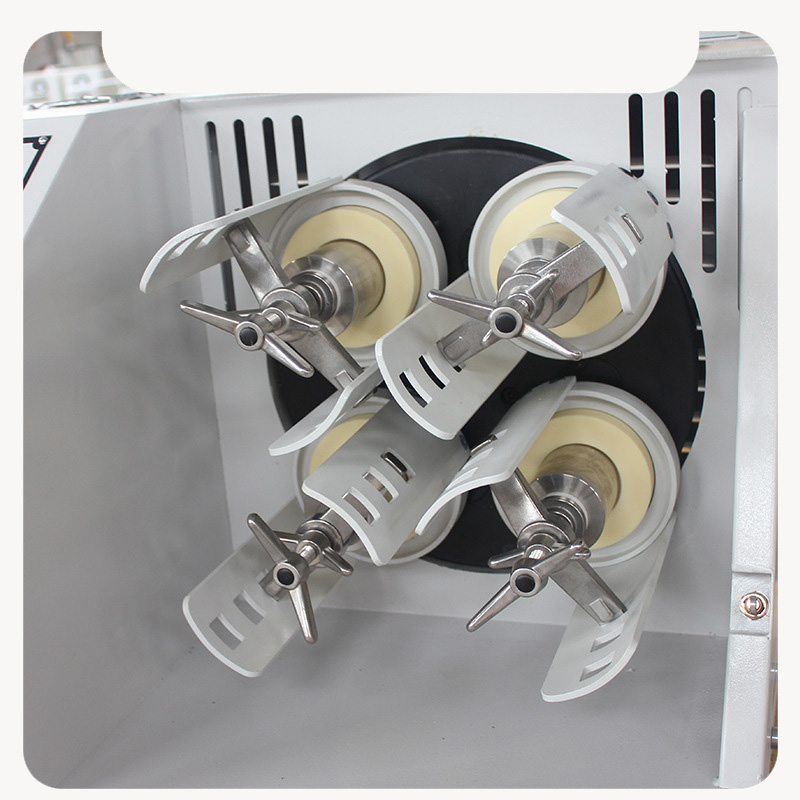
Cleaning between samples affects the transfer of impurities no less than the material of the grinding media. Hard-to-clean areas, seals and porous surfaces may retain residue from the previous sample. Different materials require different procedures, but the general principle is the same: the cleaning method must be compatible with the design and not damage the contact surfaces. If your laboratory has multiple sample types, it is helpful to keep a log of how containers and grinding media are assigned to groups of materials.
Material of grinding bowl and grinding media
The choice of contact material is a trade-off between energy, cleanliness and operating cost. Polymer containers can be useful for soft materials and noise reduction, but have limitations in temperature, hardness and wear. Ceramic and zirconia are common in applications where metallic wear is not acceptable, but they can also contribute trace amounts. Tungsten carbide is characterized by high hardness and density, but its use must be justified by the task and the permissibility of appropriate impurities. Metal grinding media provide high energy but require control of metal contamination.
Compatibility of the container, grinding media and apparatus is checked according to the documentation. You cannot choose a glass only by volume: the method of fastening, permissible speed, tightness, sealing materials and cleaning conditions are important. If a catalog contains an accessory for one type of mill, this does not prove its compatibility with another type. In the article about horizontal compact ball mill TENCAN It is correct to discuss the general requirements for contact materials, but the specific combination must be confirmed using the product card and manual.
The purity of the sample also depends on the preparation of the container. Abrasive cleaning can change the surface roughness, and aggressive solvents can damage seals. For trace analysis, it is important to know which elements are already present in the contact material and which of them are critical to the result. If the goal is to preserve the chemical composition, one material may be acceptable, but for another task the same material will be a source of interference.
What to check during trial grinding and what data to report
Test grinding is not needed to “prove” the universal superiority of the mill, but to test a specific combination of material, container, grinding media and mode. Before testing, acceptance criteria are formulated: target size range, permissible heating, permissible contamination, material loss, reproducibility between repetitions. It is useful to determine in advance what is considered a failure: too wide a fraction, agglomeration, discoloration, odor, corrosion, difficult to clean.
To select the mode and configuration, the following data is provided:
- name and nature of the material, its hardness, bulk density, humidity and sensitivity to temperature;
- initial particle size and method for determining it, target range and permissible distribution width;
- weight of one sample, number of samples in a series and required repeatability;
- dry or wet grinding, wet grinding - liquid, solid-liquid ratio, compatibility with the material;
- acceptable impurities and preferred material of the container and grinding media;
- restrictions on temperature, cycle time, noise, vibration and room conditions;
- cleaning requirements between samples and the ability to assign a separate container to a group of materials.
The test report records not only the final result, but also the entire path: load, number and diameter of grinding media, speed, time, pauses, temperature, sampling method and measurement. If the result is not achieved, you should not compensate for this by arbitrarily increasing all parameters at once. They change one variable, such as time or load, and compare it to the baseline. This approach allows us to understand what exactly affects the size and heating in a specific task.
For horizontal compact ball mill TENCAN The practical conclusion is simple: first they describe the sample and the target, then check the kinematics and parameters of a specific model using the card, after which they select the mode for trial grinding. Latest product information and other equipment trends TENCAN are given on manufacturer's website. This order helps to separate general physical principles from the characteristics of a specific machine and not transfer the parameters of one model to the entire range.