
Unstable suspension, lumps of filler, rapid sedimentation or foam after mixing are typical reasons why a laboratory will begin to select a high-speed simple dispersant. Such a device does not replace grinding in a ball mill and does not guarantee the specified particle size. Its task is to wet the powder, destroy soft agglomerates, distribute the solid phase in a liquid medium and obtain a homogeneous mass suitable for further processing or analysis. IN high speed simple dispersant card TENCAN information about a specific design is provided, so the selection begins not with assumptions, but with the sample task and passport restrictions.
The name “simple” reflects the type of execution, and not the absence of requirements for the mode. Even with a successful working element, the result depends on the geometry of the container, the position of the shaft, the viscosity of the medium, the order of powder introduction and temperature. Therefore, the same machine can produce a stable suspension for one formulation but an unsatisfactory result for another. Practical selection and verification criteria are discussed below, but they do not replace the operating instructions for a specific model.
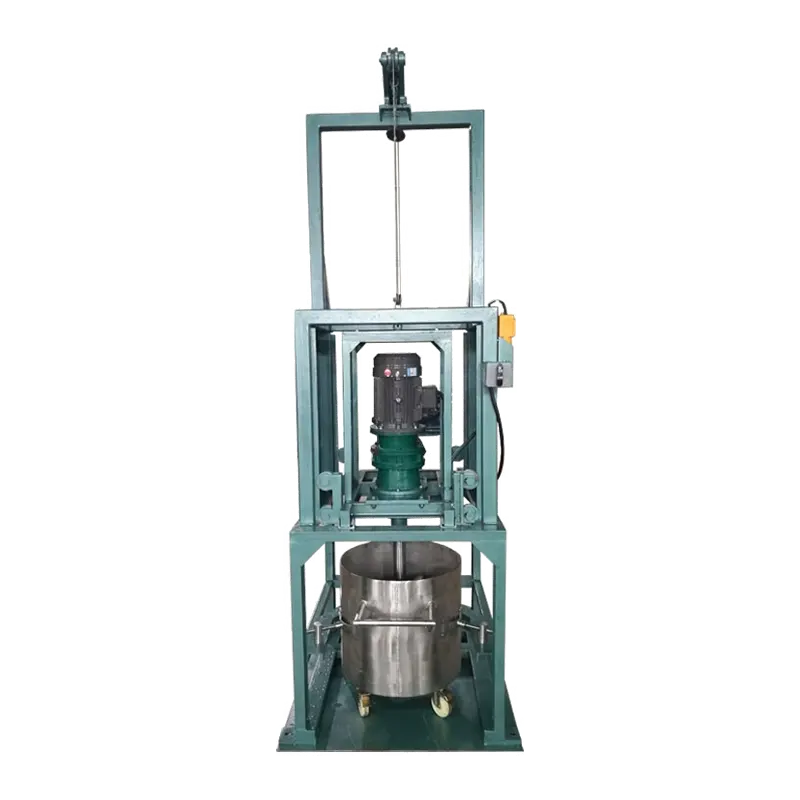
Task: not just to mix, but to destroy agglomerates
Stirring equalizes the composition by volume, but does not necessarily eliminate agglomerates. When dispersing, it is important to create shear zones in the liquid that are intense enough to wet the surface of the particles and break the weak bonds between them. If the powder is poorly wetted, the liquid remains in the pores of the agglomerate, and air remains inside the lump. This lump then slowly disintegrates, stains the coating, clogs the filter or distorts the measurement result.
A high-speed simple dispersant operates in a liquid medium: it creates a flow and local shear at a rotating working element. This is not dry grinding or grinding in a grinding bowl with grinding media. The apparatus can noticeably reduce the apparent size of agglomerates, but it should not be expected to transform crystalline powder into the nanoscale region. To formulate the problem, it is useful to separate the “size of primary particles” and “size of agglomerates”: the dispersant primarily affects the latter.
A practical question often asks: Why, after mixing, does the suspension at first seem homogeneous, but after an hour it separates or forms a sediment? The reasons can be different: insufficient wetting, too high viscosity, short processing time, unsuitable working tool, excessive heating or introducing powder in lumps. Without data on the recipe and regimen, one of the reasons cannot be declared proven. It is useful to keep a log of loading order, RPM, time, temperature and observations.
It is also important for the laboratory that dispersion does not correct formulation errors. If the wrong wetting agent is selected or the solid phase tends to structurize quickly, a more powerful apparatus will not automatically create a stable system. A high-speed simple dispersant provides controlled mechanical energy input, but the chemistry of the medium, particle surface properties and storage conditions remain part of the challenge.
How does a high speed simple disperser work?
A typical design includes a drive, a shaft and a replaceable working element, immersed in a container of liquid. Rotation creates an axial and radial flow: the fluid rises or falls along the shaft, passes through the area near the working element and returns to the walls. Near the edges and in the gaps, the flow velocity changes sharply, so this is where the highest shear stresses occur. The more successfully the diameter of the working body, its shape, position in the container and the viscosity of the medium are coordinated, the fewer dead zones and the more uniform the processing.
Working body and shear zone
The working body can have different geometries: a blade, a disk, a gear rim or another design provided for the model. You cannot transfer the properties of one design to the entire range. For easily moving liquids, it is more important to organize the overall flow and not capture excess air; For thick pastes, a powerful drive, a durable stirrer and sufficient torque reserve are needed. If the card specifies the type of implement, it should be considered as part of the configuration and not as a universal tool for all materials.
Rotation speed alone does not describe the impact. For evaluation, the peripheral speed at the edge of the working body is used, but it is not the only criterion. The diameter, width of the shear zone, distance to the bottom and walls, presence of partitions or direction of flow are important. Two machines with the same speed, but different working bodies and capacities will give different results. Therefore, when comparing options, they ask not only for maximum speed, but also for geometry, permissible load and operating conditions.
Capacitance and Flow Geometry
Capacitance affects the result as much as the drive. A container that is too narrow creates intense movement near the wall, but can overheat the product; too wide - leaves stagnant zones, especially at the bottom. A centered shaft position is not always optimal: shifting the axis changes circulation and can reduce crater formation. However, a specific recommendation depends on the performance of the equipment and the recipe, so it is checked on a test portion and not prescribed as a general rule.
When working with highly volatile solvents and dusting powders, a closed container, careful introduction of components and ventilation of the workplace are important. A high-velocity simple dispersant is not a pressurized top reactor unless otherwise specified. It should not be used as a vacuum mixer or glove box. Safety is determined by the properties of the medium, volume, temperature and instructions for a specific installation.
What do the parameters mean and what to specify on the card
The product card helps narrow down the choice, but does not replace the technical specification. It is useful to distinguish between actuator parameters, capacitance parameters and product contact parameters. For example, maximum speed does not indicate how a thick suspension will behave during long-term operation; the nominal volume is not equal to the payload; the material of the shaft and working element does not describe the entire surface in contact with the product. If necessary, specify the equipment and materials for a specific design.
| Parameter | What does it mean | What to check |
|---|---|---|
| RPM range | Drive and working body speed capabilities | Smooth adjustment, stable operation at low speeds, control method |
| Drive power | Load margin, not the finished result for any suspension | Compliance with viscosity and load, overload protection, long-term operating conditions |
| Capacity volume | Geometric capacity, not automatically useful portion | Working volume, free side, position of the working body, ease of cleaning |
| Contact material | Resistance to environment and possible wear | Solvent compatibility, powder abrasiveness, cleanup, risk of contamination |
| Temperature control | A way to monitor or limit heat | Presence of sensor, pauses, external cooling, ambient temperature |
| Control | Mode setting reproducibility | Setting speed and time, blocking, repeatability from start to start |
On website TENCAN different areas of equipment for the preparation and processing of powder materials are presented. This is useful for understanding the boundaries of choice: mixing equipment, mills and pressing equipment solve different problems. You should not choose a high-speed simple dispersant just because it is more compact than a mill, or replace it with a grinding unit if you specifically need to reduce primary particles.
If the model description contains units that are questionable, the translation is unclear, or the values contradict each other, it is better to omit the questionable parameter and ask the question to the supplier. You cannot convert an option into standard equipment yourself. For reproducibility, not only the numbers in the passport are important, but also the methodology: how the size was measured, at what temperature, after what exposure and how the sample was taken.
Mode selection: from low speed to operating point
It is convenient to construct the dispersion mode as a sequence of steps, rather than as one fixed setting. First, the liquid phase is prepared and the minimum stable speed is set to ensure movement without strong air entrapment. Then the powder is gradually introduced: in small portions, into the flow zone, avoiding the formation of dry lumps on the walls. After wetting, the speed is increased in steps, noting the moment when the suspension becomes visually homogeneous, but does not yet begin to foam or heat up much.
The guideline is the shape of the funnel and the nature of the movement. A funnel that is too deep indicates intense air entrapment; in this case, the foam can mask underdispersed agglomerates. Too little flow leaves powder on the bottom and walls. It is useful to stop the process, take a sample from the bottom and from the top layer, and evaluate the particle size distribution or at least the uniformity after dilution. If the analysis technique does not allow you to see the difference, the optimizing mode is blindly.
Signs of overload and overheating
Overload manifests itself in different ways: the drive loses speed, vibration appears, the suspension is thrown onto the walls, the temperature rises faster than expected, but the foam does not subside. Heating is especially important for polymer dispersions, paints, solutions with volatile components and materials with sensitive surfaces. The temperature of the working area of the installation is not equal to the temperature of the sample; if a conclusion about the heating of the product is needed, the product is measured at the selected point and the sampling time is recorded.
You should not compensate for poor wetting by endlessly increasing the speed. Sometimes the reason is the order of addition, the size of the initial powder, viscosity or insufficient pre-mixing time. If the slurry thickens when solids are added, the charge may be increased too quickly. In this case, stepped input and control of rheology, rather than just maximum speed, helps.
When to pause or cool down
If the design provides for pauses, external cooling or operation with thermostatting, this is indicated in the protocol. However, we cannot assume that any pause replaces the heat sink. In laboratory practice, it is useful to record the initial temperature, the temperature at regular intervals, and the maximum value. For volatile solvents, losses and fire safety are additionally taken into account. For viscous pastes, it is more important not to overheat the product and not exceed the permissible drive torque.
There is no single recipe for all materials. Even within the same group of powders, different batches may differ in granulometry, moisture content and surface treatment. Therefore, the operating point is confirmed by restarting the same recipe. If the result varies greatly from batch to batch, first check the raw materials and sampling technique, not just the dispersant settings.
Viscosity, loading and transition to a larger batch
Viscosity affects circulation more than many other properties. In a moving liquid, the flow easily passes throughout the entire volume, but entrains air; in a dense environment, the flow is localized at the working body, and the rest of the mass can remain motionless. Many suspensions do not follow a simple Newtonian model: their viscosity depends on shear rate and time. Therefore, one measurement does not describe the entire process, and the mode selected for a dilute sample may not be suitable for a concentrated one.
The loading is distinguished by the volume of the container, the mass of the solid phase and the working volume of the suspension. You cannot substitute the volume of one glass or container as the total volume of the batch. For a high-speed disperser, both too little liquid, in which the working element works at the surface, and too much, in which the suspension splashes out, are dangerous. The practical limit depends on geometry, viscosity, foam and freeboard requirements.
The order in which additives are added also affects viscosity. The wetting agent may require pre-dissolution or be added after wetting the powder; if it is added too late, the agglomerates are already stabilized. For foaming systems it is sometimes useful to reduce the intensity initially, but this should be tested on a trial basis. The mixing order cannot be transferred from one recipe to another without testing.
When moving from a laboratory sample to a larger batch, you cannot simply multiply the time. Typically, geometric similarity, peripheral speed, power per unit volume and heat dissipation are checked. Saving all parameters at the same time is rarely possible. If the diameter of the working body is increased at the same speed, the peripheral speed increases; if the peripheral speed is maintained, the speed and nature of the flow change. Therefore, scaling is carried out according to the selected criterion and is confirmed by sample analysis.
It is useful to determine in advance what is considered success: the absence of visible agglomerates, stability over a given time, a certain viscosity, particle size distribution, or the result of subsequent molding. Without an acceptance criterion, it is easy to end up with a “beautiful” suspension that is not suitable for the next operation. For one task, visual inspection is sufficient; for another, rheometry and microscopy are needed.
Limits of applicability: dispersant, mill and equipment
High speed simple disperser is not a planetary ball mill, bead mill or roll crusher. These devices differ in their mechanism of action: in a mill, particles are destroyed upon impact and abrasion by grinding bodies; in a bead mill, a medium with small bodies creates intense abrasion, and a dispersant primarily organizes flow and deagglomeration in a liquid medium. The external similarity of a “container with a rotating shaft” does not make the devices interchangeable.
Dry and wet grinding also solve different problems. Wet grinding can combine grinding and distribution, but the result depends on the grinding media, their material, size, load and time. Dispersing without grinding media does not produce the same size distribution as grinding. If it is necessary to achieve a certain upper limit of fineness, this is checked by analysis, rather than transferring the typical minimum from the catalog to any sample.
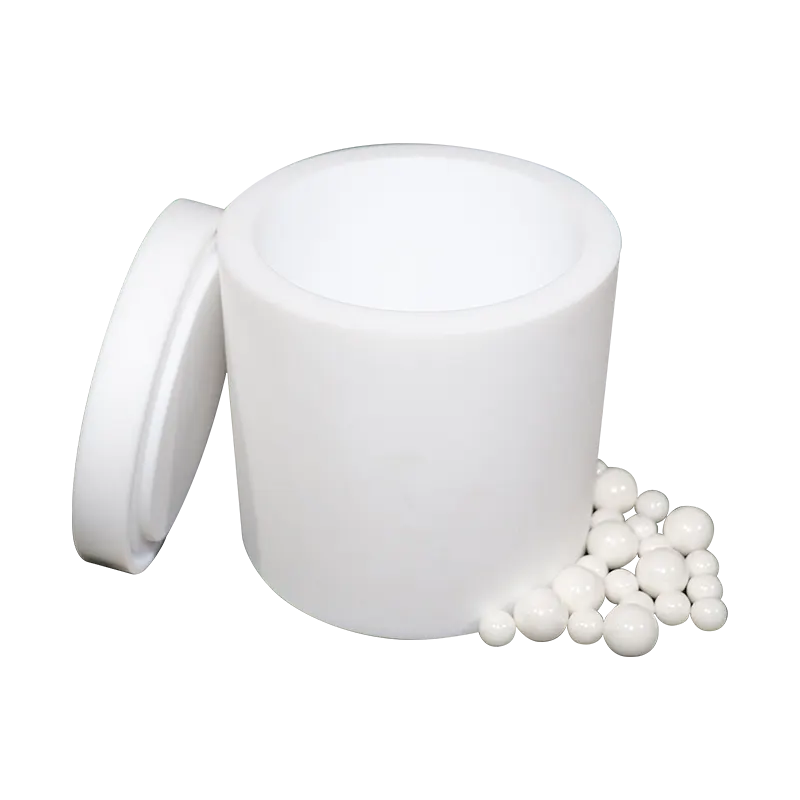
The photo shows a PTFE grinding bowl for a planetary mill. This is a separate type of attachment and the image shown does not indicate compatibility with the High Speed Simple Disperser. Do not move the grinding bowl onto the dispersant shaft or assume that the PTFE material alone solves the mixing problem. For a dispersant, its own capacity, mounting of the working element and permissible operating conditions specified for a specific model are important.
Materials in contact with the product are discussed taking into account wear, cleaning and possible transfer of impurities. Tungsten carbide, ceramic or zirconia do not mean zero pollution. Likewise, PTFE is not universal to all solvents and abrasive powders. If a product is sensitive to trace metal or requires aggressive cleaning, this is verified by documentation and trial use rather than by a general description of the material.
What to check before purchasing and trial run
Before making a choice, formulate the problem in measurable terms: volume of one portion, ratio of solid and liquid phases, viscosity or its range, density, permissible temperature, solvent, abrasiveness, required result and method of control. It is useful to indicate whether this is a single sample or repeat batches because purification and reproducibility requirements vary. If foam, volatility or processing time limitations are known, these will also be included in the request.
For test dispersion, a small volume is prepared, but the same container geometry and type of working body that are expected in the work are used. First, the movement of the liquid without powder is checked, then the solid phase is introduced in stages. Record the minimum and operating speeds, time to reach visual homogeneity, temperature, foam height, signs of deposition. The sample is taken from above and below, and not just from the middle, otherwise the heterogeneity will go unnoticed.
- Specify the model, type of working body, adjustment range and permissible load.
- Check the materials of the shaft, working element and container for contact with solvent and abrasive.
- Determine how temperature is controlled and whether there is overload protection.
- Agree on acceptance criteria: appearance, viscosity, particle size distribution or stability.
- Record the cleaning method and the order of transition between different materials.
To select a configuration, it is useful to inform the supplier not only the name of the product, but also the properties of the sample: initial size, tendency to agglomerate, presence of surface treatment, viscosity of the liquid phase, operating temperature and requirements for contact material. If the task involves hazardous substances, discussion of selections is not a substitute for operating instructions and local safety regulations. You should not request or self-assign unapproved modes for such materials.
A high-speed simple dispersant can be a useful slurry preparation tool if viewed as a controlled process step rather than a one-size-fits-all replacement for grinding. The main conditions for success are the correct formulation of the problem, suitable geometry of the container and working body, stepwise introduction of powder, temperature control and confirmation of the result by analysis. Specific speeds, load and time are established for their system based on documentation and test runs, and not on general advertising formulations.