
The transition from dry powder to slurry or paste is often accompanied by lumps, uneven wetting and a rapid increase in viscosity. A high-speed dispersant-homogenizer helps control these phenomena, but the mode begins to be selected not from maximum speed, but from a description of the sample and the purpose of the operation.
Dispersing, Homogenizing and Grinding: What's the Difference?
Dispersion distributes the solid phase in the liquid, wets the particles and destroys loose agglomerates. Homogenization equalizes the composition by volume, and grinding reduces the primary particle size. High-speed dispersant-homogenizer TENCAN designed for intensive mixing and dispersing; it does not replace a ball or bead mill when it comes to reducing primary particles. Increasing the speed instead of grinding may overheat the material and not give the desired particle size distribution.
Role of the apparatus TENCAN
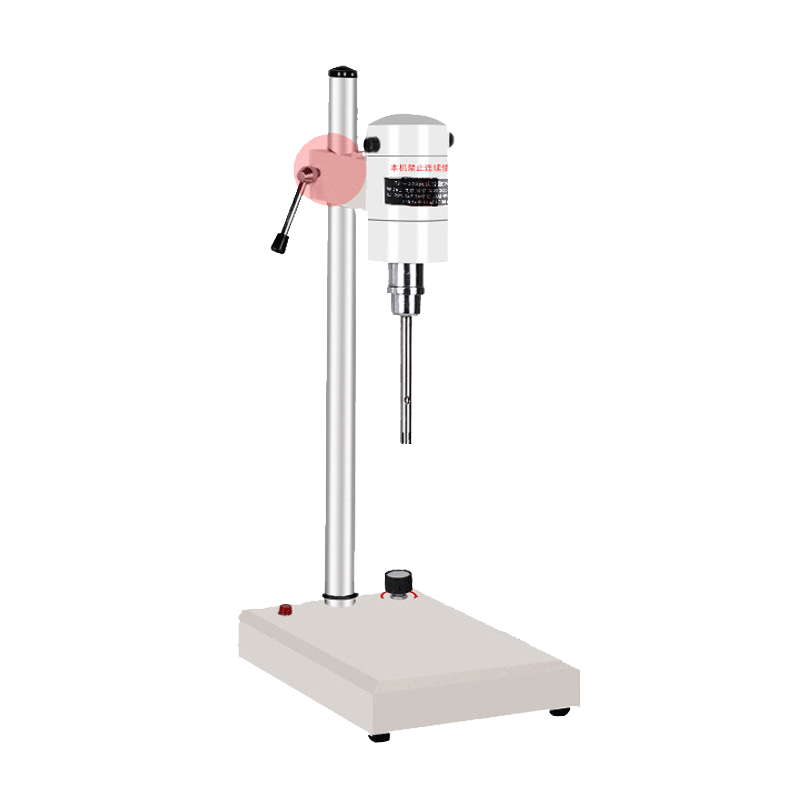
In devices of this class, the working element creates intense shear in the liquid. The powder becomes wetted faster, the lumps disintegrate, and the suspension becomes more homogeneous. The capabilities depend on the design: container volume, drive, permissible media and configuration. The parameters are checked against high-speed dispersant-homogenizer card TENCAN, and not transferred from another model.
Source system and boot
First, the nature of the liquid, the proportion and bulk density of the powder, the initial size, viscosity and tendency to swell are recorded. The solid phase is often introduced gradually: this is how wetting and the risk of a dense lump are visible. The load must leave room for the medium to move; overfilling increases spattering, foaming and unevenness. If there is a large amount of air, check the insertion order and the admissibility of slow mixing or vacuuming, if provided.
Speed, time and temperature
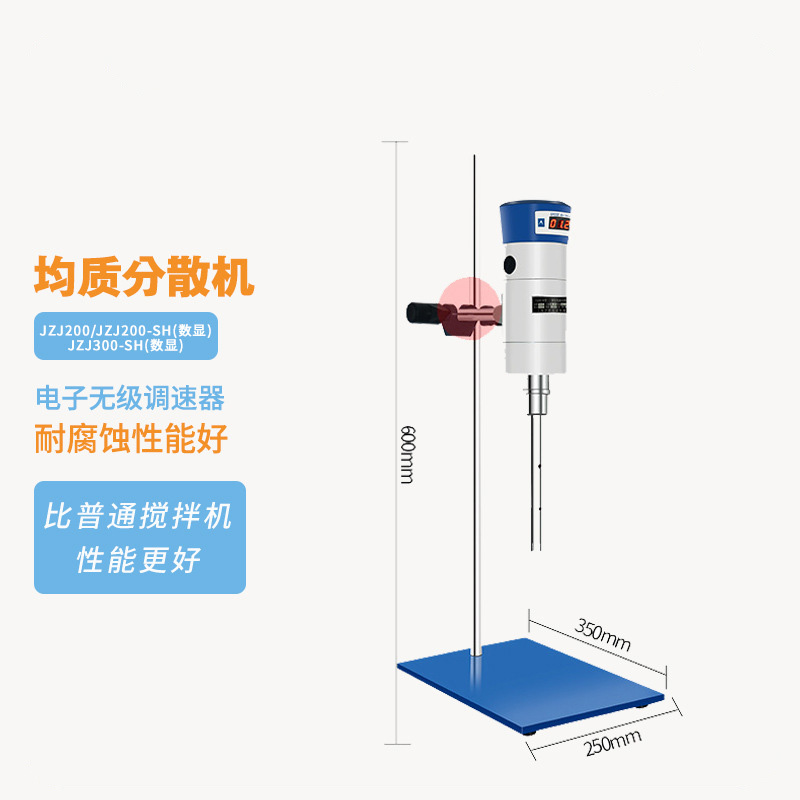
Increasing speed increases shear but increases heat generation. There is no single mode: a mobile suspension and a thick paste require different conditions. Time is selected based on the result, and not on the principle of “longer is better.” If refrigeration is provided, it is assessed by the temperature of the product rather than the air. For temperature-sensitive systems, the heating is recorded over time and pauses are made if necessary.
How to check the result
Readiness is confirmed by the absence of visible lumps, stability of the suspension, reproducible viscosity and particle size distribution. Microscopy helps distinguish remaining agglomerates from primary particles, and rheology or sedimentation helps assess stability. Color and foam are not criteria. If the result is unstable, check the insertion order, wetting, overheating and suitability of the type of equipment for the task; transport of impurities and purification are taken into account separately.
What to report for trial dispersion
- composition of the liquid base and the proportion of the solid phase;
- initial size and tendency to aggregation;
- permissible heating and need for cooling;
- sample volume and viscosity range;
- readiness criterion: appearance, rheology or microscopy.
To select a mode, indicate the composition of the base, the properties of the powder, viscosity, temperature, volume and readiness criterion. Specific Parameters of High Speed Dispersant-Homogenizer TENCAN check the documentation. If grinding or sifting is required after the sample, adjacent directions are compared in catalog TENCAN.