
Preparing a suspension in the laboratory rarely comes down to combining powder with liquid. If the powder tends to agglomerate and the medium has a noticeable viscosity, a conventional paddle or magnetic stirrer will leave lumps, which then manifest themselves as slip inhomogeneity, coating defects, or scattered analytical results. For such tasks, a high-speed dispersant is used: a device in which a disk rotating at high frequency creates intense shear and powerful circulation throughout the entire volume of the container.
High speed is not a one-size-fits-all solution. It simultaneously accelerates the heating of the suspension, increases the wear of the working element and increases the likelihood of introducing impurities into the sample. Therefore, selecting the mode and choosing the material of the contact parts is one task, not two independent ones. The practical question to which the article is devoted can be formulated as follows: how to select the operating mode of a high-speed simple disperser TENCAN and how to keep the contamination of the suspension within acceptable limits.
We will talk about laboratory and small-scale practice: preparing samples, pilot batches and series with volumes from fractions of a liter to several liters. Industrial circuits with continuous feed and multi-chamber devices are not considered here - they have a different selection logic.
Sample Conditions and Problem Observed
In laboratories working with ceramics, pigments, materials for chemical current sources, catalysts and paint and varnish systems, the picture is repeated: the powder is stored in the form of agglomerates, when introduced into a liquid it forms lumps, and when stirred, it partially floats and partially settles. The reasons are different - sintering during drying, electrostatic forces, van der Waals interactions, poor surface wetting, large specific surface area. Direct mixing does not destroy agglomerates, but only transfers them throughout the volume. For destruction, a local shear stress is required that exceeds the strength of the bonds between particles inside the agglomerate. This is exactly what the dispersing disc provides.
In practice, the problem is formulated more briefly: “the suspension is heterogeneous” or “the result is not reproducible.” This formulation may be due to insufficient peripheral speed, too large a gap between the disk and the bottom of the container, excessive viscosity of the medium, short processing time, overheating, foaming, incomplete wetting of the powder before injection, or inconsistent history of the starting material. Before changing the setup, it is useful to divide the problem into these components and test the cheapest hypotheses.
The second aspect that is often ignored is the impurities introduced. The dispersion of abrasive powders wears out the disk and shaft, and the material of the working element gradually turns into suspension. For materials sensitive to iron, chromium or nickel, this may be more critical than heterogeneity. Therefore, the mode and material of the contact parts are chosen together.
Design and purpose of a high-speed simple disperser
High Speed Simple Disperser TENCAN refers to mixing equipment. The typical design of devices of this class includes a frame or stand, a drive with variable speed control, a vertical shaft and a replaceable working nozzle - a dispersing disk, which is immersed in a container with a suspension. Rotation creates two working zones: a zone of intense shear at the edges of the disk and a circulation zone in the rest of the volume. The combination of these zones gives simultaneous wetting, deagglomeration and homogenization.
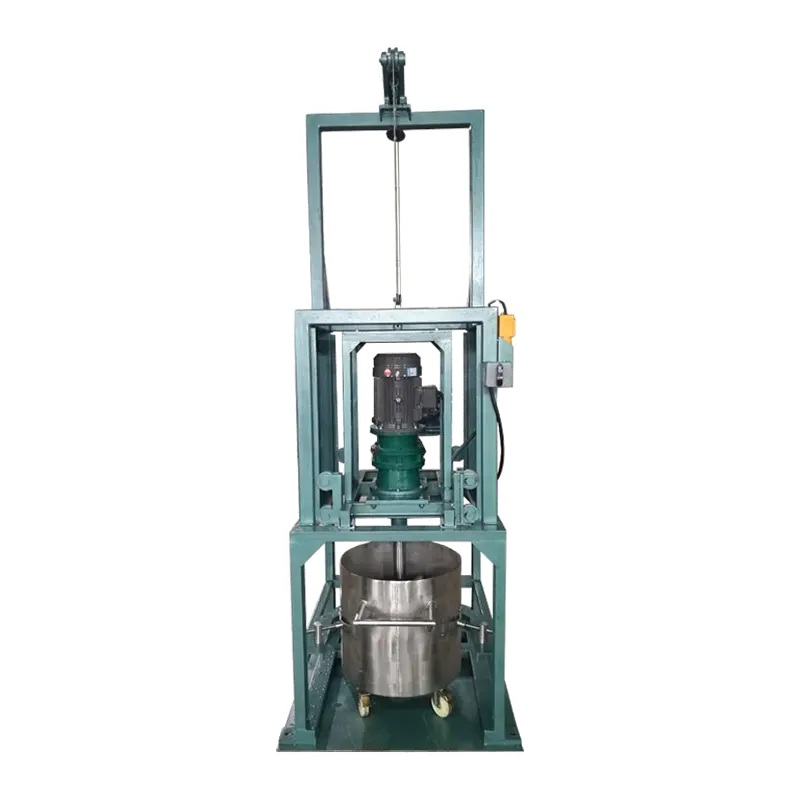
The word "simple" in the name indicates a basic design. Advanced versions of such equipment are often equipped with a closed or vacuum housing, a lifting mechanism, a thermostat jacket and control systems; the base machine may not have these nodes. Rotation speed range, drive power, maximum batch volume, type and diameter of the nozzle, shaft and disk material, method of fastening the container are the characteristics of a specific model, and they should be taken from the current product card.
You should not transfer parameters from other devices or from earlier publications: the same category of equipment is available in different versions, and the description of one model does not become a characteristic of the entire range. If the value is missing from the documentation or appears contradictory, it is better to check with the manufacturer rather than substitute a plausible number.
The purpose of a dispersant is not to grind primary particles, but to combine wetting, disagglomeration and homogenization in a liquid medium. If the task is to reduce the size of the powder particles themselves, grinding with grinding media is needed: planetary, drum, vibration or bead mill. The dispersant does not replace the mill, and vice versa.
Mode parameters: rotation speed, disk diameter, load
Peripheral speed is more important than rated speed
The determining parameter is the peripheral speed of the disk edge. It is proportional to the product of the disk diameter and the rotation frequency, that is, v = π·D·n. A disk with a smaller diameter at the same speed gives lower speed and less shear. That is why the mode cannot be transferred from one attachment to another “according to the number on the display”: two machines with the same speed and different disks work differently.
The shear is localized in a narrow layer between the edge of the disk and the wall or bottom of the container. Too large a gap reduces efficiency: energy is spent on general circulation rather than breaking down agglomerates. Too small a gap increases heating and wear rate, as well as the risk of jamming if a large inclusion hits. A reasonable disc height position is selected for a specific container; there is no universal meaning here.
Batch volume, viscosity and container geometry
Each device has a range of volumes in which the circulation remains closed. If there is too little suspension, the disk traps air, a funnel is formed, and part of the volume does not participate in processing. If there is too much, the lower layers stagnate and sediment remains at the bottom. Viscosity determines the flow regime and energy distribution: at low viscosity, turbulent mixing predominates, at high viscosity, laminar shear prevails, and the same effect requires more time or more power per unit volume.
Many suspensions with which we have to work are non-Newtonian: pseudoplastic, thixotropic, sometimes dilatant. Their effective viscosity changes both during the dispersion process and over time. A regime that is sufficient at the beginning may turn out to be excessive in temperature or insufficient in shear by the end of processing. Therefore, it is necessary to record not only the revolutions, but also the sequence of operations: the order of powder input, feed speed, pauses, temperature.
Dispersion time, heating and foam
Processing time is not “longer is better.” After reaching the maximum degree of disagglomeration for a given mode, further dispersion leads to an increase in temperature, wear of equipment and the risk of re-agglomeration during cooling. The temperature increase depends on the input power, viscosity, volume and area of heat transfer: the smaller the batch and the higher the viscosity, the faster the suspension heats up.
For heat-sensitive materials, external cooling of the container is used - a water bath, a jacket, a circulation circuit. At the same time, it is important not to confuse the temperature of the wall or working space of the installation with the measured temperature of the sample: these are different quantities, and the first gives only an indirect assessment of the second. Conventional water or air cooling is not a cryogenic process; cryogenic solutions are an independent class of equipment, and their properties cannot be attributed to the base machine.
Foam and air entrapment is a diagnostic sign. They occur when the disc position is too high, the speed is too high for the viscosity, surfactants are present, or the powder is introduced too quickly. Stable foam not only distorts the batch volume, but also changes the shear conditions, so its appearance is a reason to reconsider the regime, and not just remove the foam. Separately, we note that wet dispersion in liquid and dry mixing of powders solve different problems: the first requires a medium and shear, the second requires uniform distribution of bulk components, and it is not worth transferring techniques from one area to another without changing the technology.
Material of contact parts and introduced impurities
Wear of contact parts is inevitable to one degree or another. The practical question is not whether it exists, but how much material gets into the sample and how this affects further properties. Stainless steel contributes iron, chromium and nickel; polymer and composite coatings can peel off; Ceramics contribute their own composition - aluminum oxide, zirconium dioxide, yttrium oxides. There are no materials that give “zero pollution”: only the composition, dispersion and amount of impurities change.
The wear rate increases sharply with abrasive powders: silicon carbide, aluminum oxide, zirconium dioxide, quartz, and some metal oxides. For them, even moderate peripheral speeds and long processing times give a noticeable contribution of impurities. The selection criterion is the permissible concentration of a specific element in the finished material and the sensitivity of control methods, and not general considerations about the “purity of ceramics.”
This can be controlled in several ways: reduce the peripheral speed where it is not needed for disagglomeration; reduce processing time until the target state is achieved; use equipment made of more wear-resistant material, if such a possibility is provided for in the design and confirmed by the manufacturer; monitor the resource of the nozzle and shaft and replace them in a timely manner. Replacing a disk or shaft with an arbitrary analogue is unacceptable: this is part of the drive, and any change affects balancing, vibration and operational safety.
Cleaning requires special attention. Cross-transfer between samples is a more common source of error than wear: remnants of the previous suspension, dried crust on the disk and shaft, traces of cleaning agent. A reasonable approach is to have separate equipment for sensitive series, have a cleaning schedule and check for cleanliness, and not rely on the fact that it is enough to rinse the equipment with water.
Corundum grinding bowl: another group of accessories
Corundum grinding bowl TENCAN refers to equipment for planetary mills. Corundum is sintered aluminum oxide, a material of high hardness and wear resistance, which is used where metal contamination is unacceptable, as well as when working with abrasive materials. The volume, dimensions and design of the glasses are given in the product card; The available options are also indicated there.
It is important to understand the place of this product in the technological chain. The grinding bowl is a grinding container with grinding media in a planetary mill, and not a working part of the dispersant. The disperser works as a disk in a container, while a glass is used in a different type of apparatus. You should not transfer equipment from one machine to another without the manufacturer’s confirmation: compatibility in terms of fastening, permissible load and rotation speed is not obvious and is checked separately.
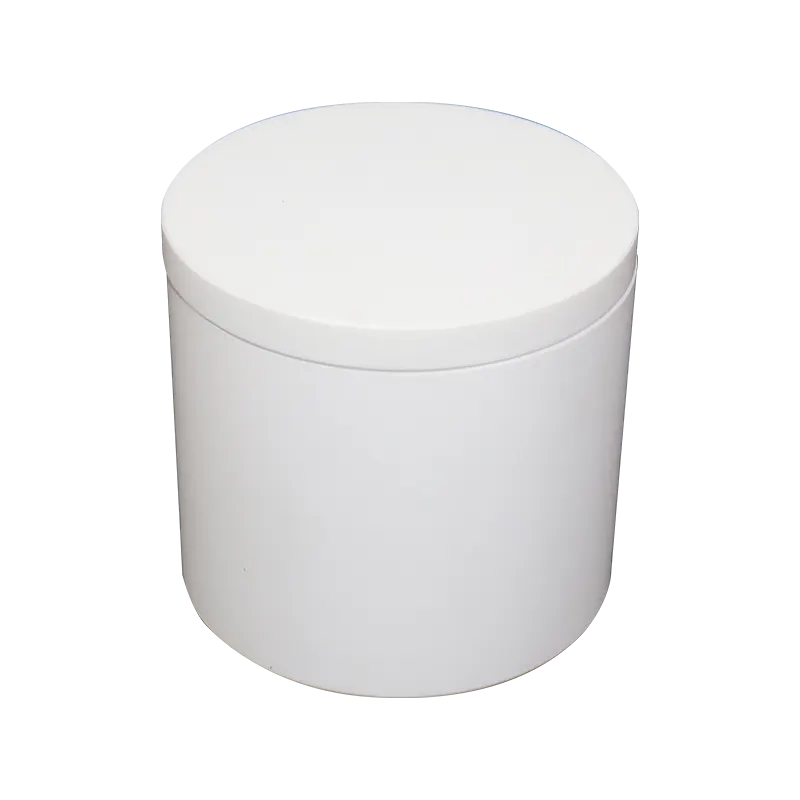
At the same time, the logic for choosing contact material for the dispersant and for the grinding equipment is similar. Hard ceramic materials - corundum, zirconium dioxide - reduce the wear rate, but change the composition of possible impurities. Metal parts are easier to make and clean, but introduce metals. The choice is determined by which element is critical in the final material. For a dispersant, the consumable elements will be a disk, a shaft, fasteners and a container, and not a grinding bowl.
The line between dispersing and grinding
Dispersion breaks down agglomerates and distributes particles in a liquid medium; grinding reduces the size of the primary particles themselves. The limit is not absolute, but it is fundamental: even an intense shift in the disperser does not replace the grinding media. Reduction of particle size is provided by devices with grinding media - planetary ball mill, drum mill on rollers, vibration mill, bead mill. These are different devices with different mechanics: a bead mill uses small grinding media in a chamber, a drum mill uses a rotating drum, and a planetary mill uses complex movement of glasses. A roll crusher that works with dry material belongs to another group of tasks - crushing.
The practical sign that the wrong device has been selected is simply formulated. If, after dispersion, large inclusions remain in the suspension, and the measured particle size distribution does not shift towards smaller values, increasing the dispersant speed will not solve the problem - grinding is needed. And vice versa: if the task is to uniformly distribute ready-made submicron or nanometer powder, long-term grinding is not only unnecessary, but also harmful, since it accumulates impurities and changes the state of the particle surface.
Separately, it is worth mentioning the control of the result. It makes sense to compare modes only by reproducible measurements: particle size distribution, proportion of undestructed agglomerates, sedimentation stability, rheological characteristics. Laser diffraction, sedimentation analysis and optical microscopy give different pictures, and a direct comparison of their results without reservations is incorrect. The control method must be fixed in advance, otherwise comparison of modes turns into comparison of methods.
The typical minimum size specified in the mill catalog is not a guarantee for any sample. The final particle size depends on the material, initial size, medium, mode and method of measurement.
Observed problems and possible causes
The table below helps organize observations, but is not a substitute for diagnosing a specific installation. The listed reasons are versions that are checked one by one, and not established diagnoses.
| Observation | Possible reasons | What to check |
|---|---|---|
| Lumps remain after processing | Insufficient shift; poor powder wetting; medium viscosity too high | Peripheral speed and position of the disk; order and speed of powder introduction; pre-wetting; gap to the bottom |
| Rapid rise in temperature | High power for small volume; high viscosity; insufficient heat transfer | Batch volume; rotation speed; presence of container cooling; processing time |
| Foam and Air Entrainment | The disc is too close to the surface; excessive speed; surfactants | Disc height position; powder input mode; composition of the environment; pauses in work |
| Sediment at the bottom of the container | Poor circulation; The volume is too large or the geometry of the container is unsuitable | Ratio of disk diameter and capacity; loading volume; suspension rheology |
| Increased metal content in the sample | Disc and shaft wear; abrasive material; increased processing time | Equipment material and resource; mode and time; cleaning regulations; batch control |
| Variation between batches | Non-reproducible conditions; different background of the powder; temperature fluctuations | Protocol with recording of revolutions, time, mass, temperature; powder storage conditions |
The practical meaning of the table is that most observations are explained by a combination of geometry, mode and properties of the medium, and not by a single fault. Without measurements, it is impossible to declare a specific cause proven: first the conditions are fixed, then they are varied according to one parameter.
Preparing for trial dispersion
Test dispersion is more productive if information about the sample and the medium is collected in advance. For powder: chemical composition and nature of the material, density, initial particle size and distribution of particles, tendency to agglomerate, moisture content, wetting behavior. By liquid phase: water or solvent, pH, presence of binders, dispersants and thickeners, viscosity at operating temperature, sensitivity to heat, fire safety and ventilation requirements.
According to the target task: what is considered the finished result - the degree of disagglomeration, acceptable size, resistance to sedimentation, rheological characteristics, acceptable impurity content. By scale: batch size, number of replicates, expected transition from lab sample to larger batch, cleaning requirements between samples, and available contact materials.
- Equipment and fittings: estimated container diameter, type of nozzle, possibility of thermostatting, range of rotation speed control.
- Mode: sequence of operations, powder input speed, approximate time, pauses, temperature control.
- Control: method of measuring the result, number of repetitions, acceptance criterion.
- Limitations: permissible impurities, maximum temperature, material compatibility, safety requirements.
If some of the data is unknown, this is also useful information: it shows what measurements need to be taken before selecting a mode, and not after. To configure equipment and accessories, it makes sense to rely on current product cards TENCAN and for clarifications from the manufacturer for a specific model.
Frequently asked questions
Can a high speed disperser be used instead of a mill? No. The dispersant destroys agglomerates and distributes particles in the liquid, but does not replace grinding with grinding media. If it is necessary to reduce the size of the primary particles, a suitable grinding apparatus is required.
The higher the speed, the better the result? Not necessarily. An increase in peripheral speed accelerates deagglomeration up to a certain limit, after which the main effects are heating, wear and air entrapment. The mode is selected according to the target state of the suspension, and not according to the maximum speed.
What material of contact parts should I choose? One whose impurities are acceptable in the final material. Metal parts contain iron, chromium and nickel, ceramic parts contain aluminum oxide or zirconium dioxide. There is no universal “purest” option: the choice depends on analytical control and product requirements.
Selecting a dispersion mode means working with several variables simultaneously: geometry, speed, time, temperature and material of the contact parts. It makes sense to start by fixing the sample conditions and control method, then move on to equipment and mode options, and only after that to scaling the batch. This order reduces the risk that a successful single result will not be reproduced.