
A sample that oxidizes in air, absorbs moisture, or changes surface when exposed to oxygen cannot be assessed solely on data obtained in an open laboratory vessel. Hydroscopic salt, fine metal, catalyst or electrochemical research material may change during weighing, pouring and short-term storage. This is why sample preparation sometimes becomes no less important than subsequent analysis. A glove box with a cleaning system creates a controlled gas environment for such operations, but its choice is not limited to purchasing a “glove box.”
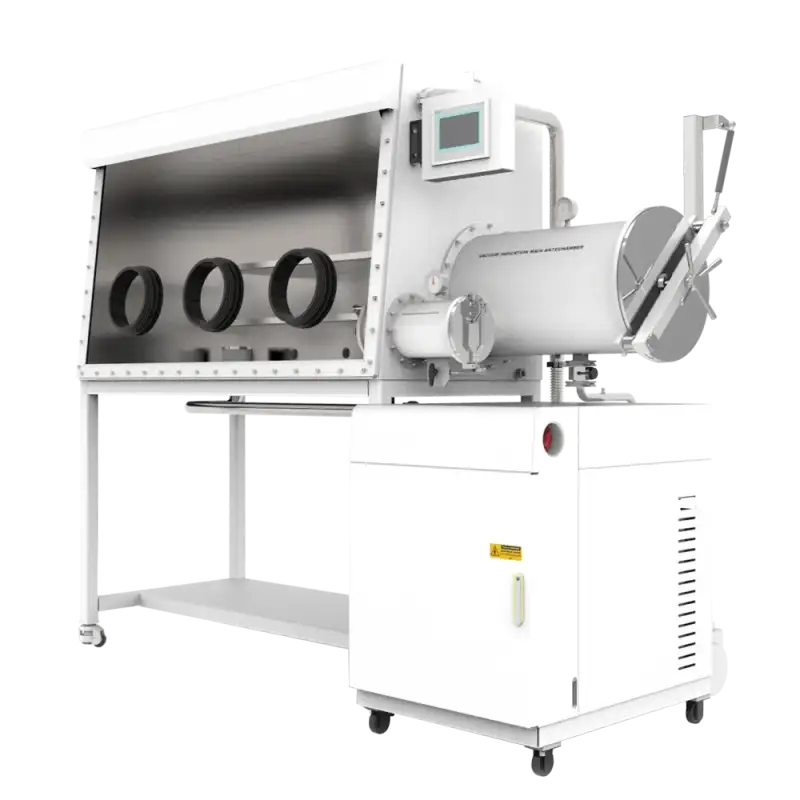
In the catalog TENCAN presented glove box with cleaning system — equipment for organizing a work area with a controlled atmosphere. Below we consider a practical question: how to select the configuration and operating mode of such a box for preparing powder samples, which parameters really affect the result, and which require testing on a specific sample. This is not about replacing grinding equipment or about a ready-made procedure for hazardous substances, but about choosing an infrastructure that should preserve the properties of the sample and ensure reproducibility of operations.
Objective: to preserve the sample, and not just to create an inert atmosphere
The glove box is often perceived as a one-stop solution for any sensitive sample. In practice, the result depends on a combination of several conditions: the seal of the chamber, the quality of the gas replacement, the operation of the cleaning system, the cleanliness of gloves and instruments, and how carefully the sample is loaded and unloaded. If the box is not sealed or the airlock is not used correctly, even prolonged purging will not guarantee powder protection. If the environment is stable, but the sample is already saturated with moisture before loading, the box will not be able to “dry” it automatically.
In a materials science laboratory, a glovebox typically serves three functions. The first is to isolate the sample from the surrounding air. The second is replacing the internal volume with a selected gas, for example nitrogen or argon. The third is maintaining a given environmental quality through recycling and purification. These functions are related but not interchangeable. An isolation chamber without a cleaning system can only remain dry for a limited time; a cleaning system operating in an insufficiently sealed chamber will waste resources to compensate for constant suction. Therefore, when choosing, it is useful to first describe the task of the sample, and then compare the equipment with it.
To prepare the powder, not only the residual concentrations of oxygen and moisture are important, but also practical operations: opening the container, weighing, dividing the sample, sifting, packaging, installing a crucible or cuvette. The more open spills, the higher the risk of chamber contamination and sample alteration. Sometimes it makes more sense to limit the operation of a single chamber to a few critical operations than to try to combine analytical preparation, storage and grinding in it without assessing heat generation and dust.
How does a glove box with a cleaning system work?
A typical glove box includes a working chamber with a clear window and glove ports, an airlock or transfer vestibule, an atmosphere control system, and a gas cleaning unit. The chamber houses samples, instruments and small devices if their dimensions, heat generation and power supply allow such work. The gateway allows you to bring in and take out objects without completely opening the work area. The cleaning system maintains the quality of the gas environment, and sensors and controls help monitor the condition of the box.
The specific equipment may vary: one airlock or several, a vacuum vestibule or a simple transfer port, oxygen and moisture sensors, additional filters, vapor traps, power connectors. Based on the name of the category, one cannot assume that everything listed is included in the standard delivery. Before ordering, you should check the configuration on the product card and check with the supplier about those components that are critical for the task. This is especially true when working with solvents, dust-prone powders, and processes that generate heat inside the chamber.
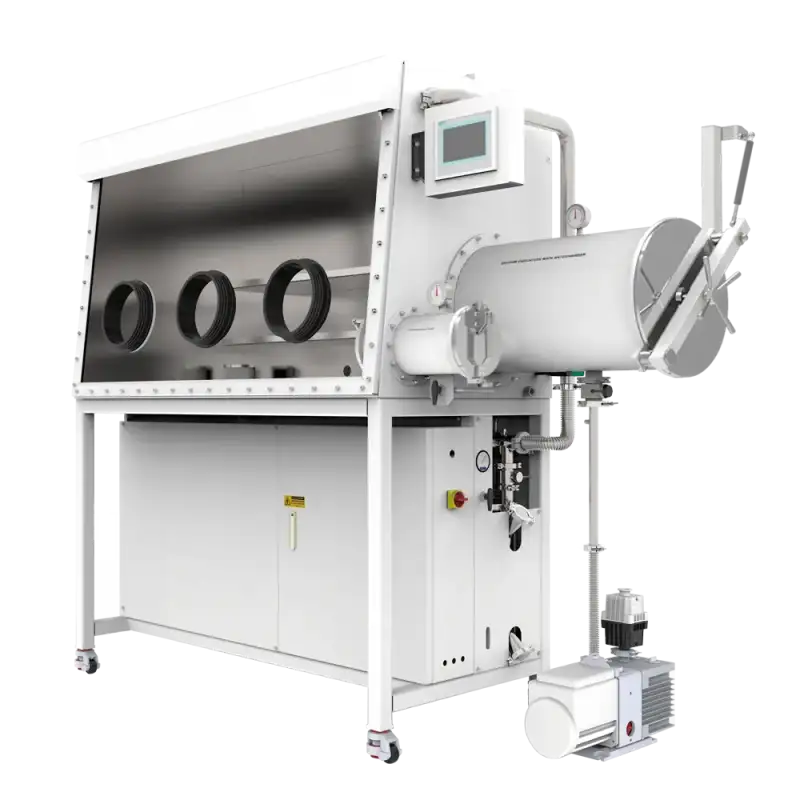
It is useful to distinguish between three levels of protection. Isolation means that the chamber is separated from room air and equipped with gloves for handling. Gas displacement means that the air inside is replaced by an inert gas before operation begins. Circulation cleaning means that gas is pumped through the cleaning unit and returned to the chamber, maintaining the specified parameters. If a purification system is not provided or does not function, the box may remain insulating, but will not necessarily maintain low oxygen and moisture levels for long.
Tightness is a basic condition for all three levels. It cannot be replaced by powerful blowing: with constant suction, air will enter the chamber, and the cleaning system will work with increased load. Therefore, it is reasonable to include in the acceptance program a check of the camera and gateway for leaks, as well as monitoring the stability of the readings after the mode has stabilized. If the documentation does not contain a verification method, this is a question for clarification, and not a reason to assume that tightness is guaranteed by itself.
Atmosphere, oxygen and moisture: what does the set point mean?
The choice of gas depends on the application and available infrastructure. Nitrogen is often used as a more accessible inert medium, argon - when a higher gas density or special inertness is needed, however, specific compatibility with the material and laboratory conditions require a separate assessment. You should not transfer the properties of one gas to another or assume that any inert gas is automatically suitable for all powders. The purity of the gas, the method of supply, the material of the pipelines and the absence of residual moisture in the system are important.
Oxygen and moisture readings in the glovebox are environmental parameters and not an automatic characteristic of the sample. The sensor can measure the oxygen content at a specific point in the chamber, and moisture can be absorbed on gloves, tools, containers and the powder itself. Therefore, after loading the sample, the readings sometimes change and take time to stabilize. A low value in an empty chamber does not prove that the same environment will persist around an open canopy. For critical operations, it is useful to monitor not only the sensor, but also the actual holding time, sample weight and its exposed surface area.
When choosing a box, you should clarify where the sensors are installed, how often they are calibrated, what values are considered working for a particular configuration, and how quickly the system restores the mode after sluicing. You should not compare the passport value with a household hygrometer or with the reading of a device located at another point. If specific oxygen and moisture limits are not specified on the product data sheet, they cannot be invented: they must be requested or agreed upon with the supplier as an acceptance criterion.
A separate issue is the initial state of the powder. Material stored in air may contain adsorbed moisture and oxygen-containing surface layers. The glove box protects the sample from further interaction, but does not always remove contaminants already present. If the application requires moisture removal, separate preparation and box compatibility should be discussed rather than relying on an inert environment to replace drying or vacuum treatment.
Gateway and gas replacement: where time is most often lost
The gateway is one of the most practical components of the box, but many errors are associated with it. The replacement principle is usually based on evacuating the vestibule and filling it with inert gas; The number of cycles depends on the volume of the airlock, the volume of objects introduced, the initial atmosphere and the requirements for residual air. There is no one universal number of cycles for all tasks. If the container is porous, has a loose lid, or traps air in crevices, even a few cycles may not produce the expected results.
It is better to add the powder in a closed container, and open it in the working chamber, if this is permissible. Open filling in the airlock increases dust and contamination of the vestibule. The airlock chamber is not intended for sample storage and does not replace the work area. After each pass, it is useful to assess whether there is any powder left on the seals and shelves: the accumulation of fines impairs the seal and creates carryover between batches.
A distinction must be made between evacuation with gas replacement and continuous purging. In the first case, air is removed in portions, in the second, a constant flow of gas flows through the chamber. Continuous purging can be useful for removing volatile impurities, but uses gas and is not always economical. The vacuum cycle is faster in operation, but requires compatibility of containers with reduced pressure: closed containers containing liquids, highly volatile powders and soft packaging may behave unpredictably. For each configuration, it is necessary to clarify the permissible vacuum and the procedure.
Productivity in the box is determined not only by the speed of the gateway. Time is spent stabilizing the environment, weighing, cleaning instruments, changing gloves, and checking readings. If many small operations are performed per day, it is better to think in advance which items can be brought in in one pass, and which must remain in the chamber constantly. This reduces the number of discoveries and the risk of atmospheric fluctuations.
Circulating cleaning, regeneration and vapor resistance
The cleaning system in the glove box is usually associated with a recirculation circuit: gas is taken from the chamber, passes through the cleaning unit and is returned back. Depending on the design, it can reduce oxygen and moisture content, retain individual impurities, or perform several functions. The specific composition of the cleaning elements, the regeneration procedure and acceptable impurities should be checked according to the model documentation. A “cleaning system” cannot be assumed to automatically solve any problem, including the removal of solvent vapors or acids.
Cleaning node regeneration is not just a periodic button. In some systems it involves heating, purging and by-gases, so it requires safe conditions and an understanding of what is happening in the loop. During regeneration, the box mode may change; if there is a sensitive sample in the chamber, this must be taken into account. The frequency of maintenance depends on the load, gas quality, tightness and the nature of the operations, so it is incorrect to name a universal interval without the manufacturer’s data.
Volatile substances require special attention. Vapors from solvents, acids and some reagents may reduce the effectiveness of cleaning materials or be carried through the circuit. If you plan to work with such substances, it is necessary to clarify whether the configuration includes appropriate traps and whether the box is compatible with such vapors. Sometimes these types of tasks require a separate fume hood or specialized system rather than just an inert chamber. An inert atmosphere protects the sample from oxygen, but does not necessarily protect the operator from toxic aerosol.
Even a properly functioning cleaning system cannot compensate for poor sealing and contamination of the chamber. After working with the powder, dust should be removed from the shelves and seals in accordance with the instructions, without using aggressive solvents that are incompatible with the box materials. The cleanliness of gloves and instruments affects moisture levels and the transfer of contaminants. If operations with different materials have been carried out in the chamber, it is useful to keep a log: this helps to understand where the deviations came from and not attribute them to a non-existent malfunction.
Working with powder inside the box: loading, statics and cleanliness
Preparation of the powder sample begins before the box is opened. It is necessary to determine the mass of the sample, the type of container, the need for weighing inside the chamber, and the permissibility of contact with gloves and tools. The container must be opened with gloves without spillage and be clearly marked. If the powder is highly electrified, it is worthwhile to provide in advance an antistatic substrate, a suitable tool and a cleaning method without creating an excess aerosol. Fine dust can settle on windows, gloves and seals, so handling it requires more care than working with large granules.
It is useful to separate areas inside the box: a place for clean instruments, a place for weighing, a place for waste and a place for temporary storage of closed samples. An open canopy should not remain in the chamber longer than necessary. It is better to transfer the sample from the airlock to the work area in a closed container rather than in an open one. If several sequential operations are required, they are planned in such a way as to reduce the number of box openings and to avoid mixing contaminated and clean items.
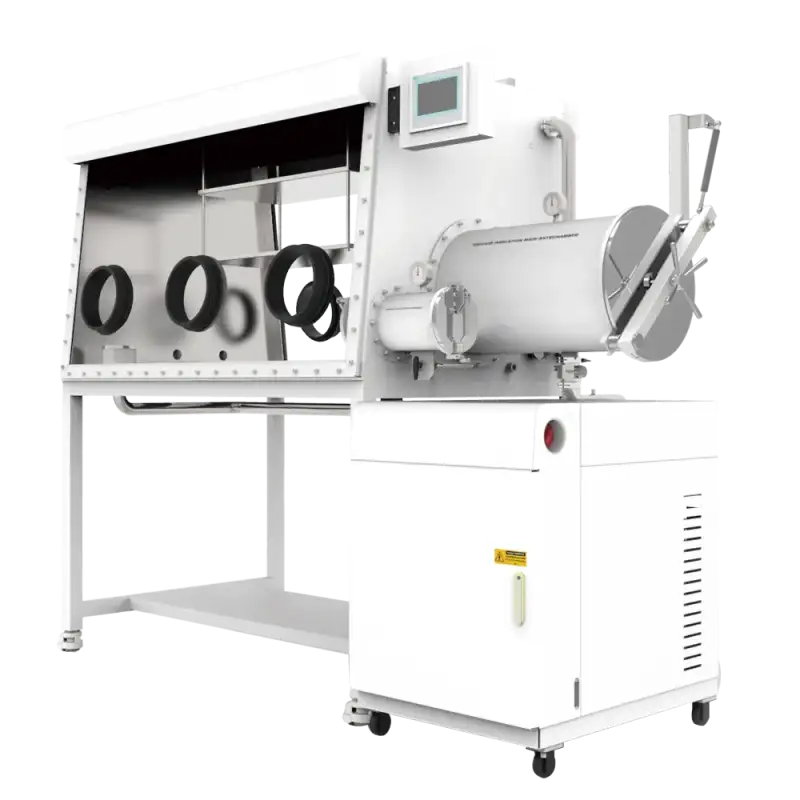
The issue of placing a mill or other device inside the box requires a separate check. A small planetary mill can generate heat, vibration and dust and must be sized and powered to accommodate the capabilities of the chamber and airlock. It should not be assumed that the glove box is designed to work with any grinding equipment. If grinding is carried out outside the box, you need to consider protecting the sample during transfer and not passing off normal transportation as a sealed cycle. If grinding is planned inside, heat dissipation, chamber volume, ventilation and the permissibility of equipment installation should be agreed upon with the supplier.
Gloves are part of the work environment, not just a means of access. They can absorb moisture, release volatile components, accumulate dust and transfer contaminants between batches. For sensitive powders, it is important to clarify the glove material, how to replace them, and acceptable cleaning agents. Do not use the same pair on different materials without cleaning and assessing cross-carryover. Likewise, tools made of different materials may introduce impurities; Compatibility should be tested for a specific sample and not assumed to be universal.
Once the sample is removed, it is useful to record how long it was in the chamber, what atmosphere it was in, and what operations were performed. This information helps you interpret results if the powder properties are different from what you expected. The glove box does not make the sample “perfect” and does not eliminate control of the source material. It reduces environmental exposure but does not replace analytical testing and does not guarantee the integrity of any substance.
Check before purchase and trial cycle on a real sample
Before choosing a configuration, it is worth formulating the problem in measurable terms: what operations will be performed, what is the mass of the sample, how long does it remain open, what gases and solvents are allowed, is a vacuum lock required, is it necessary to place a scale or small device inside. It is useful to indicate what exactly is considered an unacceptable change: weight loss, color change, sticking, surface oxidation, increase in moisture content. Without such a criterion, it is impossible to understand whether the box is suitable for a particular job.
In the request, it makes sense for the supplier to list the nature of the sample, its original size, sensitivity to oxygen and moisture, permissible contact time with the chamber atmosphere, purity requirements and possible volatile components. If you are working with powders that are prone to dusting, chamber cleaning and seal protection should be discussed. If solvents are planned, the compatibility of the cleaning circuit and the presence of traps should be separately clarified. There is no need to describe dangerous techniques in detail; it is enough to indicate the class of substances and conditions that require verification.
| What to check | Question to the supplier | Why is this important |
|---|---|---|
| Tightness | What method of checking the camera and gateway is provided? | Leaks increase gas consumption and interfere with the stability of the environment. |
| Sensors | Where are oxygen and moisture measured, how is calibration done? | A reading at one point does not describe the entire chamber and sample. |
| Gateway | Is vacuum acceptable for my containers, how many cycles are required? | The number of cycles depends on the volume, container and residual atmosphere requirements. |
| Cleaning | What impurities are acceptable, how is regeneration and maintenance carried out? | Vapors and dust may reduce system efficiency. |
| Accommodation | Can the scale or device be installed with heat and power in mind? | Not każde laboratory equipment is compatible with the camera and gateway. |
It is better to carry out a trial cycle with a real sample or one similar in behavior, and not just with an empty chamber. First, the stability of the readings is checked after entering the mode, then the tightness and operation of the gateway, after which the sample is introduced in a closed container and the planned operations are performed. It is useful to do a blank test with an inert material to isolate chamber contamination from the behavior of the powder itself. If the result depends on the holding time, this is recorded in the protocol. This approach does not prove suitability for all substances, but it does show where the limitations of a particular configuration lie.
Upon acceptance, it is worth checking not only the readings of the sensors, but also the ease of use: sufficient space for hands, access to the gateway, visibility of the sample, the possibility of cleaning, changing gloves and the location of controls. Equipment that formally complies with atmospheric parameters, but is inconvenient in daily operation, is more likely to be subject to errors. Reproducibility of actions is important for the laboratory, so instructions and training of employees are included in the choice no less than technical specifications.
Additional information about equipment directions TENCAN can be checked at manufacturer's website. However, the final configuration should be based on the sample task and validated model-specific data rather than on general category descriptions. If the required oxygen or moisture level, solvent compatibility, sluice size, or internal device installation capability is not confirmed, this item is left open until a response is received. This approach allows you to choose a glove box with a cleaning system not based on promises, but on verified working conditions with a powder sample.