
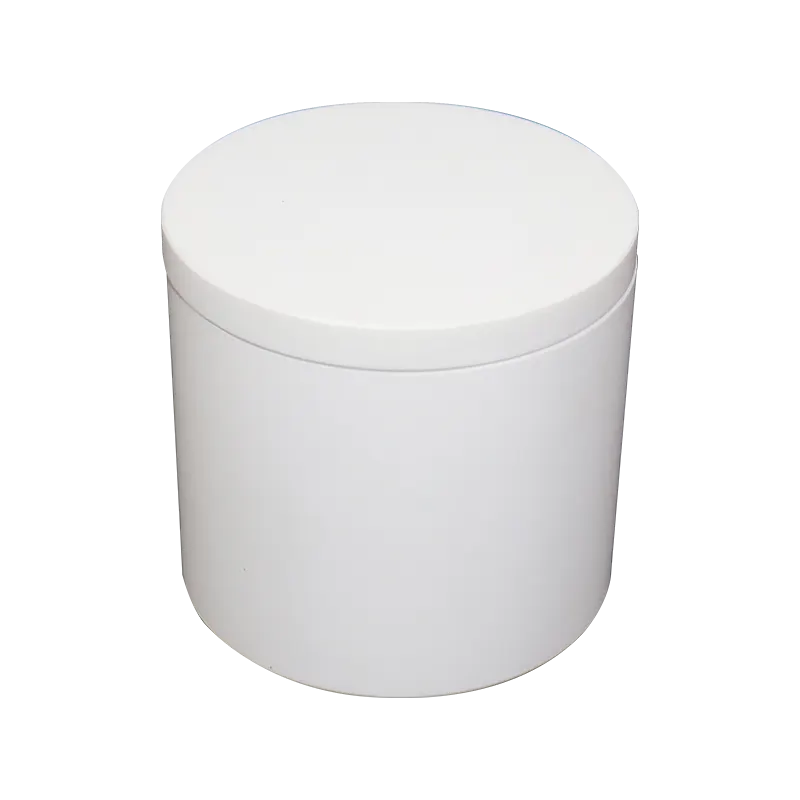
The corundum grinding bowl for a planetary mill is the part that is in direct contact with the sample and the grinding media. Not only the grinding coarseness, but also the purity of the sample, the reproducibility of the regime and the complexity of cleaning depend on its material, geometry and condition. An error in selection often does not appear immediately: at first the result looks acceptable, but then particles of the beaker material, stains on the surface, or scatter between parallel samples appear in the analysis.
The focus is on a practical question: how to select and use a corundum glass so that it does not become a source of additional error. This is not a universal recommendation for all materials, nor is it intended to replace the manual for a specific mill. Below we discuss the properties of corundum ceramics, compatibility with the machine, the influence of loading, dry and wet grinding, signs of wear and the procedure for checking before purchasing.
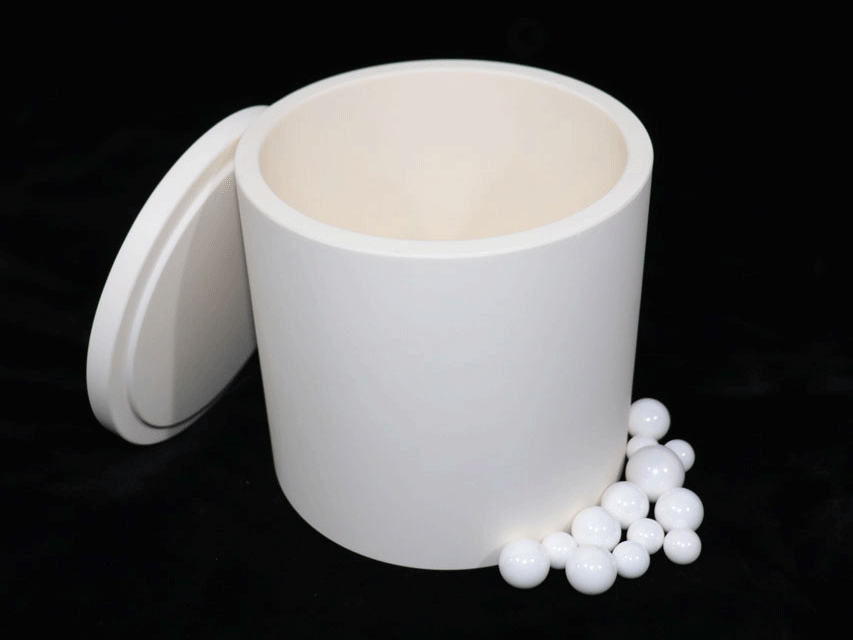
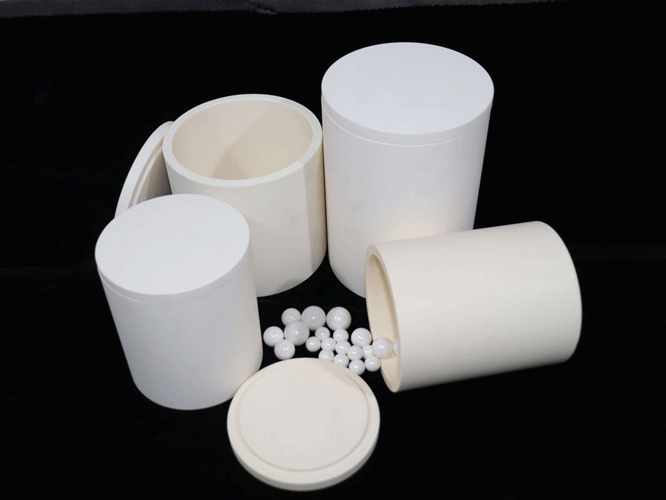
In the catalog TENCAN presented corundum grinding bowl for planetary mill. This is the starting point for discussion; The exact dimensions, volume, configuration and permissible operating conditions are checked using the current product card and manufacturer’s documentation. Brand TENCAN refers to Changsha Tianchuang Powder Technology Co., Ltd.; The article does not imply the presence of a local representative office or other services that are not included in the materials provided.
Place of the glass in the planetary grinding scheme
The planetary ball mill transmits energy through the rotation of the grinding bowls around its own axis and around the common axis of the carrier. The grinding bodies inside the glass experience impact and abrasion loads, and the walls and lid absorb part of this energy. Therefore, the glass is not a passive container, but an element that affects the grinding intensity, heating and particle size distribution.
The glass has several functions: to hold the sample and grinding media, maintain the geometry of the chamber, ensure tightness over the lid, and transmit movement without beating. If the fit does not match the mill seat, vibration, uneven seal wear and the risk of damage to the mounting will occur. If the lid does not close tightly, loss of fines, moisture leakage and contamination of the working area are possible.
Therefore, the choice begins not with the name of the material, but with the apparatus: the mill model, the number of glasses, mounting dimensions and balancing requirements. A corundum glass may be technically close in purpose to other ceramic glasses, but this does not prove interchangeability. Compatibility is confirmed by the dimensions, design of the lid and the manufacturer's instructions, and not just the word “corundum” in the name.
What does corundum mean in a grinding bowl?
Corundum is a crystalline form of aluminum oxide, Al2O3. In technical ceramics, this concept is usually associated with alumina-based material, which has high hardness and abrasion resistance. For a grinding bowl, not only hardness is important, but also brittleness, porosity, the quality of the internal surface, as well as the properties of the seal and lid. The name of the material itself does not reveal all these parameters.
The high hardness of corundum means that it can resist wear when in contact with many powders. However, “wear resistance” is not the same as “no wear”. With prolonged grinding, high speeds, large or very hard grinding media, the ceramic gradually wears out. Wear products enter the sample; If aluminum is determined in a sample or the total oxide content is assessed, the contribution of the glass material may be significant.
The second feature is fragility. Corundum ceramics do not withstand local shocks, falls and sudden temperature changes. A chip on an edge or inner wall is not always noticeable, but it becomes a source of large particles and a place for accumulation of the previous sample. A crack is more dangerous than uniform abrasion: it can open during the next cycle and lead to loss of tightness.
The chemical resistance of corundum is also not absolute. Acids, alkalis, moisture and solvents have different effects on ceramics and, especially, sealing elements. If wet grinding is intended, check the compatibility of not only the glass, but also the lid, gasket and grinding media. The statement about “zero contamination” for a ceramic glass is technically incorrect: we can only talk about the controlled level and direction of possible transfer of impurities.
Volume, dimensions and fit: what to check before ordering
The first parameter that is often confused is volume. It is necessary to distinguish between the nominal volume of one glass, the total volume of the set and the workload. You cannot fill the glass to the brim: the grinding media needs free space to move, and the sample needs room to pour out. In this case, the specific permissible load depends on the mill model, the mass of the grinding media, the density of the sample and the manufacturer’s recommendations.
The mass of the sample is not the same as the volume of the glass. Different loads can be prepared for the same chamber, but too large a load increases the load on the drive, impairs the movement of the grinding media and increases heating. A sample that is too small may produce unrepresentative results due to edge effects and wall losses. The selection is carried out experimentally, starting from a safe range and controlling the size, temperature and condition of the glass.
Fitting dimensions include outer diameter, height, bottom shape, fastener position and cover design. Even a slight misalignment can interfere with installation or create misalignment. Do not machine the ceramic cup, force it into the socket, or use adapters not provided by the manufacturer. This is not only a risk of part destruction, but also a potential danger for the operator.
Check the lid and seal separately. Sealing is needed to preserve the fraction, protect against dust and work with volatile solvents, but a regular grinding bowl is not necessarily a vacuum or gas-tight chamber. If tightness is declared, specify under what conditions it was confirmed. The O-ring is a consumable item; its material must be compatible with the sample, fluid and process temperature.
Loading, grinding media and thermal conditions
The grinding mode is determined jointly by: the size and density of the grinding media, their number, rotation speed, duration, the ratio of the mass of the balls and the sample, and the presence of liquid. Large and dense bodies give stronger impacts, small ones - more abrasive contacts. Increasing the energy does not always improve the result: at the same time, cup wear, heating, and the proportion of very small particles, which are then difficult to extract and characterize, increase.
The corundum glass should be considered together with the grinding media, but they should not be considered automatically compatible. The material, size and condition of the balls affect the wear of the ceramic. If grinding media are supplied separately, this must be taken into account when planning. You cannot transfer the parameters of one set to another without checking: even the same chamber volume does not guarantee the same hydrodynamics and temperature.
Thermal conditions are especially important for sensitive materials. Planetary grinding is accompanied by the release of heat due to friction and impact; the temperature of the working chamber of the mill is not equal to the temperature of the sample inside the glass. Air cooling removes heat from external surfaces, but does not make the process cryogenic. Liquid cooling, liquid nitrogen cooling and short pauses are different solutions; each requires separate verification and should not be described as "universal protection".
Ceramic can dissipate heat more slowly than metal tooling, so for long periods of time it is useful to control not only the final grain size, but also the heating of the lid, seal and outer surface of the cup. If the material is prone to sticking, agglomeration or thermal degradation, the regime is adjusted according to the test results, and not according to the promised “standard minimum”. The achievable fineness depends on the initial size, hardness, medium, time and measurement method.
Dry and wet grinding: different requirements for the glass
Dry grinding is useful for materials that cannot be brought into contact with liquid and for subsequent analysis without drying. However, dry grinding may result in dust formation, wall sticking, electrostatics, and sample inhomogeneity. After the cycle, the glass requires thorough dry cleaning; powder residues in microroughnesses and under the edge of the lid can be transferred to the next sample.
Wet grinding often reduces dusting and helps distribute the material more evenly, but adds new variables: solvent, solvent purity, interaction with the ceramic and seal, subsequent liquid separation and drying. Not all solvents are compatible with the gasket and cap. In addition, the liquid can dissolve or leach components of the sample, so the choice of medium affects the result as much as the material of the beaker.
It is important to distinguish between comminution and disagglomeration. If the original powder consists of aggregates, a mild regime can destroy the bonds between particles without reducing the primary crystals much. In another case, it is precisely the reduction in particle size that is required, and then energy, environment and time play a different role. Mixing in a planetary mill is also not the same as grinding: it can improve homogeneity, but does not necessarily change the particle size distribution.
After wet grinding, the glass should not be left with liquid for a long time unless necessary. Remove the slurry, wash the surface with a compatible solvent, check the seal, and dry the part to the manufacturer's specifications. Aggressive reagents are used only after confirmation of compatibility; the assumption “ceramics is inert to everything” is inappropriate here.
Wear, cleaning and contamination control
The glass is inspected before and after each critical cycle. Pay attention to chipped edges, cracks, discoloration, ring abrasions, the condition of the inner surface and the lid seat belt. A chip or crack is a reason to remove a part from work until the cause is determined. A slight change in appearance does not always mean failure, but requires verification: sometimes this is a consequence of sample residues, and sometimes it is the beginning of the destruction of the ceramic.
Cleaning begins with the removal of grinding media and the bulk of the powder. For dry residues, use a soft brush, a vacuum cleaner with a suitable filter or dry compressed air in accordance with laboratory procedures. Abrasive scrapers and metal tools can damage the surface. If a solvent is used, first check its effect on the ceramic and seal, then wash, rinse with a suitable clean environment and dry.
For samples that are sensitive to the transfer of impurities, a blank experiment is useful: a glass with grinding media is processed according to the selected regime without a sample or with an inert material, and then the washouts or a control sample are analyzed. Such experience does not prove “zero pollution”, but shows whether there is a meaningful contribution under given conditions. If aluminum, silicon, iron or other elements are being determined in the laboratory, it is important to evaluate in advance which components of the beaker and grinding media may affect the result.
Assigning the cup to a specific material class reduces the risk of cross-contamination. For particularly clean work, a separate bowl, a separate set of grinding media and a documented cleaning procedure may be required. Storing closed after complete drying reduces dust ingress; Unnecessary wet storage is not advisable, especially if the seal or ceramic is prone to moisture accumulation.
Grinding media are an independent source of wear. If they are made of a different material, particles from both the balls and the glass may get into the sample. It should not be assumed that the material of the glass determines the entire contamination profile. When replacing a batch of balls, compaction or grinding mode, the control experiment is repeated: the previous results refer to the previous configuration.
How to Plan a Trial Grind and Check Compatibility
Before ordering, it is useful to write a short technical request. It includes the mill model, the number of simultaneously used glasses, mounting dimensions, required volume, estimated sample weight and material characteristics. For a corundum glass, the external and internal dimensions, cover design, seal material, permissible temperatures and environments, as well as the possibility of supplying spare seals are specified.
- Model of a planetary mill and a nest for glasses.
- Required volume of one glass and workload.
- Sample material, initial size and target result.
- Dry or wet grinding, composition of the liquid medium.
- Purity requirements, analyzed elements and acceptable transfer of impurities.
- Mode: speed, time, grinding media, cooling and pauses.
It is better to start trial grinding with a small representative sample and a minimum number of variables. First, mechanical compatibility and tightness without hazardous material are checked, then the behavior of the sample. At the same time, a blank experiment is carried out and the particle size is assessed by an independent method. If the result is unstable, the reasons are looked for not only in the glass: loading, grinding media, humidity, agglomeration, heating and sampling method influence.
For selection, it is important to indicate which result is considered acceptable: average particle size, upper limit of fineness, absence of agglomerates, preservation of the crystalline phase, or minimal transfer of a particular element. Without this, it is impossible to distinguish “the glass does not fit” from “the mode is selected for a different task.” It should also be stated whether the analysis is carried out after drying, sieving or directly from suspension.
Corundum grinding bowl TENCAN should be assessed as part of the procedure and not as a separate guarantee of grind quality. The glass material, dimensions, fit, sealing, cleaning and mode form a single system. Testing on a representative sample, monitoring washouts, and inspecting the part after a cycle provide more than a guide to one material property. On the website TENCAN You can check the current directions of the equipment, and specify the specific parameters of the glass using its card before ordering.