
Preparing a powder sample in a planetary mill begins not with choosing a speed, but with the question of what vessel the grinding will take place in and what this vessel will contribute to the sample. The grinding bowl comes into contact with the material, grinding media, solvent and wear debris. Its geometry affects the movement of the balls, the lid affects the tightness, and the material affects the surface chemistry. Therefore, a grade A corundum grinding bowl cannot be considered as a neutral container: it is a method element on which purity, reproducibility and service life depend.
In the catalog TENCAN presented grade A corundum grinding bowl for planetary mill. Its purpose is to work with a sample in a closed volume, however, specific dimensions, permissible modes and compatibility are determined by the design and documentation. The name of the material in itself does not answer the questions about whether the glass is suitable for the existing device and how suitable it is for powder sensitive to impurities.
The hands-on analysis is useful for researchers, materials engineers, laboratory staff and equipment selection specialists. It does not replace the operating manual and does not confirm compatibility with any mill: each case is checked for fitment dimensions, process conditions and sample requirements. This approach reduces the risk of buying a glass that is suitable in volume, but not suitable in terms of fit or chemistry.
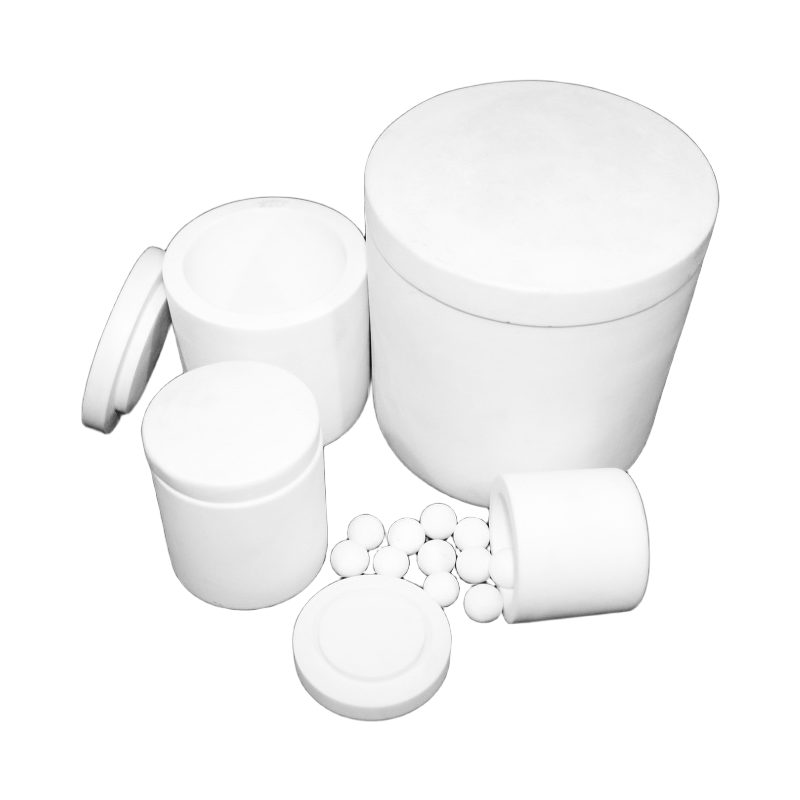
Why a grinding glass is part of the technique, and not a consumable detail
In a planetary mill, the glass undergoes a complex movement, and its inner surface is constantly under impact and abrasion. The balls and powder are pressed against the walls, lid and bottom; depending on the mode, impacts, friction, or a combination of both predominate. Therefore, the beaker material must withstand not only chemical contact, but also mechanical stress, temperature changes and cleaning between samples. An error in selection does not manifest itself immediately, but through wear, adhesion or instability of results.
The geometry of the glass is no less important than the material. The height-to-diameter ratio, bottom shape, transition radii, and lid position all affect the path of the grinding media and whether the sample will be mixed evenly. Too tight a volume or poor loading can lead to powder build-up, overheating and uneven grinding. These effects cannot be assessed only by the name of the material or by a photograph of the product.
The cover and seal perform a separate function. They retain powder and solvent, reduce losses and limit exposure to the atmosphere. If the seal is not designed for the selected mode, leaks, sticking and contamination of adjacent components are possible. Therefore, when choosing a glass, they check not only its volume, but also the type of lid, the presence of a sealing element, the method of fixation on the faceplate, and the ease of removal without damaging the edge.
Finally, the glass must be reproducible. If two batches of the same product differ in size, roughness or fit, grinding results are difficult to compare. For the technique, it is important to have passport dimensions, a clear designation of execution and the ability to repeat the purchase. The designation "Class A" does not in itself replace inspection of the drawing, approvals and accompanying documentation. This is especially significant when the same sample is repeated over a period of months.
The practical conclusion is simple: the glass is selected simultaneously with the grinding media and the mode. If you first buy a vessel and then select the balls and loading, you can end up with an incompatible pair in terms of shock load or chemistry. The procedure should describe what glass is used, how it is cleaned, and what sample limitations exist. Then replacing the consumable element does not destroy the comparability of the results.
The cost of the glass is usually small compared to the cost of the device and lost time, but its impact on the result is large. An unsuccessful pair of “glass - balls - mode” can produce dust, agglomerates or contamination, which will only be revealed during the final analysis. Therefore, it is useful to formalize the choice of glass as part of the sample preparation protocol, and not as a one-time purchase of consumables.
Corundum: useful properties and limits of applicability
Corundum is a crystalline aluminum oxide. The grinding bowl uses corundum ceramic, which combines high hardness, wear resistance and chemical resistance in many environments. Due to this, corundum glasses are used for grinding abrasive and relatively hard materials when metal surfaces are undesirable. However, “corundum” does not mean “chemically inert under all conditions”: resistance depends on the environment, temperature, duration of contact and surface condition.
The main limitation is related to the glass material itself. When worn, aluminum oxide particles may enter the sample. For most macroscopic applications this is a small fraction, but for trace analysis of aluminum, surface studies or cleanliness control it can be significant. If the target component is sensitive to aluminum, the corundum beaker requires particularly careful evaluation and sometimes a different material. It is impossible to assume “zero pollution” in advance.
Corundum ceramics are hard but brittle. It does not withstand sudden shock loads, falls and local overheating if not properly cleaned. Microcracks and chips on the edge can increase powder retention and make cleaning more difficult. Therefore, the glass is inspected before and after work, especially the seating surfaces, edge and sealing area. A damaged glass should not be used simply because it retains its shape externally and does not allow liquid to pass through.
The Class A designation should be taken as a stated performance and not as a blanket guarantee of purity. Different manufacturers may add their own criteria to classes. To make a responsible choice, you need information about the material, tolerances, batch control and operating conditions. If this data is not available, it cannot be stated that the beaker is suitable for a sample that is sensitive to contaminants. It is helpful to inquire about dimensions, seal material, and acceptable media.
The surface of corundum ceramics may have micropores and traces of processing. They are useful for wetting but can hold fine powder. Therefore, a new batch of glasses sometimes requires not only checking the dimensions, but also a control grinding. If the laboratory is working with micro quantities, surface area and finishing method may be more important than stated hardness. These details should be checked with the supplier.
Comparison with other materials is useful, but it is not a matter of finding “the purest.” Metal glasses can give their own set of impurities, ceramics - their own, and polymer seals - a third. The choice depends on the analyte, acceptable contamination level and grinding conditions. Corundum is often seen as a trade-off between wear resistance and chemical resistance, but this trade-off must be tested on a specific sample.
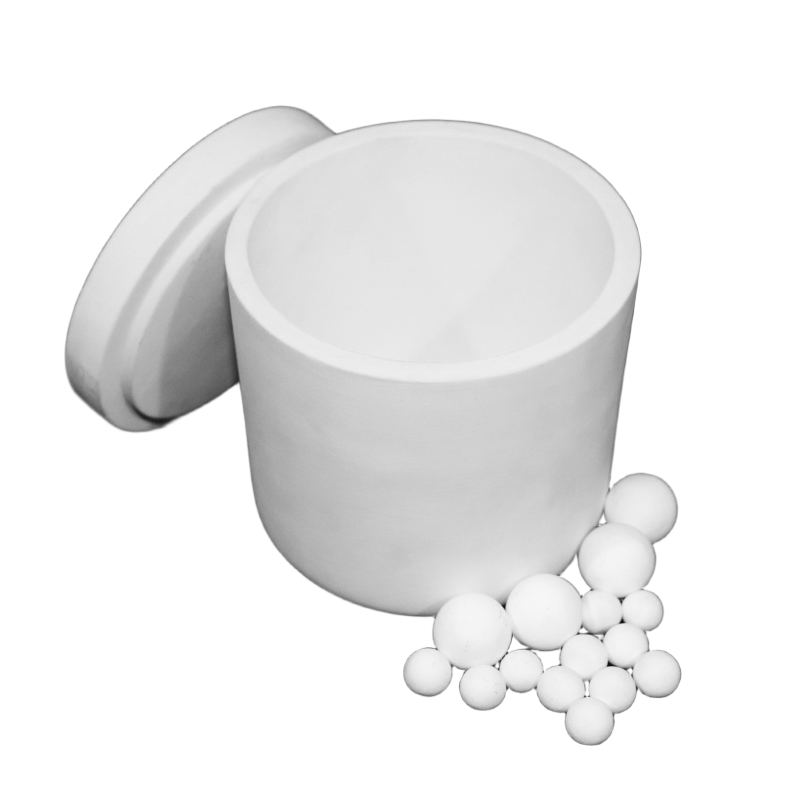
Planetary Mill Compatibility: What to Check Before Ordering
Compatibility cannot be inferred from the name “planetary mill” or from the volume of the glass. You need to know the specific model, seat, mounting method, permissible load and requirements for the cover. The same nominal volume can have different external dimensions, wall thickness and bottom profile. Therefore, the order begins with identification of the mill and glass, and not with selection from a photograph. If the device model is unknown, it is safer to assume compatibility is unconfirmed.
Landing dimensions and fastening
Check the outer diameter, height, belt diameter, type of fixation and permissible gap in the socket. Not only the nominal values are important, but also the tolerances: a too loose fit creates play and vibration, a too tight fit makes installation and removal difficult. Fasteners must match the standard mill assembly. You should not compensate for discrepancies with gaskets unless this possibility is confirmed by the manufacturer. It is convenient to check the landing dimensions according to the drawing, and not according to approximate measurements.
Cover, seal and load operation
The lid must ensure tightness in the selected mode, withstand rotation and not interfere with the movement of the balls. The seal is checked for solvent and temperature compatibility. Under load, not only the static dimensions are important, but also the behavior of the unit: misalignment, vibration, heating. If documentation does not support a specific model, compatibility is considered unconfirmed. This also applies to the case where the glass fits externally into the socket, but is not designed for the working load.
Grinding media and their material
The glass and grinding media form a friction pair. Balls of other materials can accelerate the wear of the wall, change the nature of grinding and introduce their own impurities. Ball recommendations cannot be automatically transferred from one system to another. It is necessary to take into account the diameter of the balls, their material, quantity, density and admissibility of contact with the sample. This is especially important for fragile ceramic glasses, where impact loads can lead to chips.
It is useful to remember that the presence of other equipment in the catalog does not prove compatibility. For example, ultrasonic planetary ball mill — separate type of drive and working unit; a corundum glass is suitable only if the fitting dimensions and operating conditions are confirmed. Referencing such a mill is useful for understanding the variety of equipment, but is not a substitute for checking a specific configuration.
Cup volume, loading and size: do not mix different sizes
The nominal volume of the beaker is not the amount of sample that can be loaded. Part of the volume is occupied by grinding bodies, part should remain free for the movement of balls and powder. The working load depends on the bulk density of the material, the desired ratio of balls to powder, dry or wet grinding. Therefore, it is impossible to transfer the volume figure to the sample mass without calculation. The same volume can accommodate different masses depending on density and placement.
As the load increases, performance does not increase linearly. Too much powder reduces the energy per particle, increases heat, and can lead to agglomeration. Too little quantity is also inconvenient: the proportion of material retained on the walls and balls increases, and losses and heterogeneity become more noticeable. The optimum is sought in trial grinding, and not according to one table. Reasonable loading may vary for different materials.
Dry and wet grinding solve different problems. In the dry process it is easier to obtain powder without liquid, but dusting, sticking and overheating are possible. In the wet process, the liquid removes heat and aids in deagglomeration, but it must be compatible with the beaker, seal, and sample. After wet grinding, liquid separation and drying operations are added, which also affect the distribution of particles. You cannot choose a medium based on convenience alone: chemical compatibility and purity are important.
The final fineness depends on the starting material, its hardness and brittleness, type of grinding media, time, speed, medium and measurement method. The catalog minimum particle size does not guarantee the same result for any sample. In addition, measurements on different devices may give different values. Therefore, the method fixes not only the mode, but also the method of sample preparation and analysis. For reproducibility, it is useful to indicate what proportion is agglomerates.
The temperature in the beaker depends on the grinding energy, heat dissipation and sample properties. The planetary mill can heat the contents even without an external heater. Corundum ceramics are resistant to many environments, but temperature gradients and local overheating are undesirable. If the sample is sensitive to heat, the mode is selected with pauses or the energy is reduced. Measuring wall temperature and powder temperature are not the same thing.
Transferring a laboratory regime to a large batch requires caution. Increasing the volume of the glass changes the trajectory of the balls, heat dissipation and the time to achieve the same size. Sometimes it is easier to maintain laboratory scale and combine multiple samples rather than jump straight to a large beaker. The decision depends on homogeneity requirements, heat tolerance and available equipment.
Wear, addition of impurities and selection of grinding media
Glass wear is not only a decrease in wall thickness. Microabrasion, chipping of edges, plaque and difficult-to-remove particles appear in the contact zone. The intensity depends on the abrasiveness of the sample, the hardness and size of the balls, grinding time, speed and temperature. A soft sample can also contribute to sticking if the media or load is not selected correctly. Therefore, wear is assessed in conjunction with the mode, and not only by the hardness of the material.
Impurities in a sample come from several sources: beaker material, grinding media, compaction, surrounding dust, and residues from previous samples. Corundum glass reduces the risk of metal contamination compared to some metal surfaces, but does not eliminate it completely. If the balls are steel, iron may get into the sample; If the balls are ceramic, the wear pattern changes. There is no universal combination without introducing impurities, and the promise of complete purity requires disbelief.
For sensitive analyses, a blank experiment is useful: grinding without a sample or with an inert load, then analyzing the washouts and assessing the background. Mass balance before and after grinding helps to notice loss and sticking. Visual inspection is not a substitute for chemical analysis if trace impurities are important. However, a specific analytical method should not be prescribed without taking into account the laboratory's objectives. Blank testing also helps to compare batches of beakers and grinding media.
The grinding media are selected together with the glass. It is necessary to take into account not only the material of the balls, but also their size, quantity and wear. Balls that are too large increase the impact load on the ceramic, while balls that are too small may not provide the required energy. If the glass and balls are supplied as a single recommendation, this should be documented and not assumed based on appearance. Separately, check whether the material of the balls enters into an undesirable reaction with the sample.
The seal and cover also wear out. Rubber or polymer elements may swell, lose elasticity and leave marks. Their compatibility with the solvent is no less important than the durability of the corundum. When changing samples frequently, it is useful to keep a log: date, sample, medium, mode, edge and seal condition. This record helps distinguish accidental release from systematic wear.
Wear of the grinding media also affects the result. The balls can change in diameter and mass, and their surface can accumulate adhering material. Regular checking helps to notice that the regime has ceased to be the same. When replacing a batch of balls, it is useful to repeat the test grinding, even if the material is the same. This does not guarantee identity, but it allows you to notice the discrepancy in time.
Cleaning and transition between samples
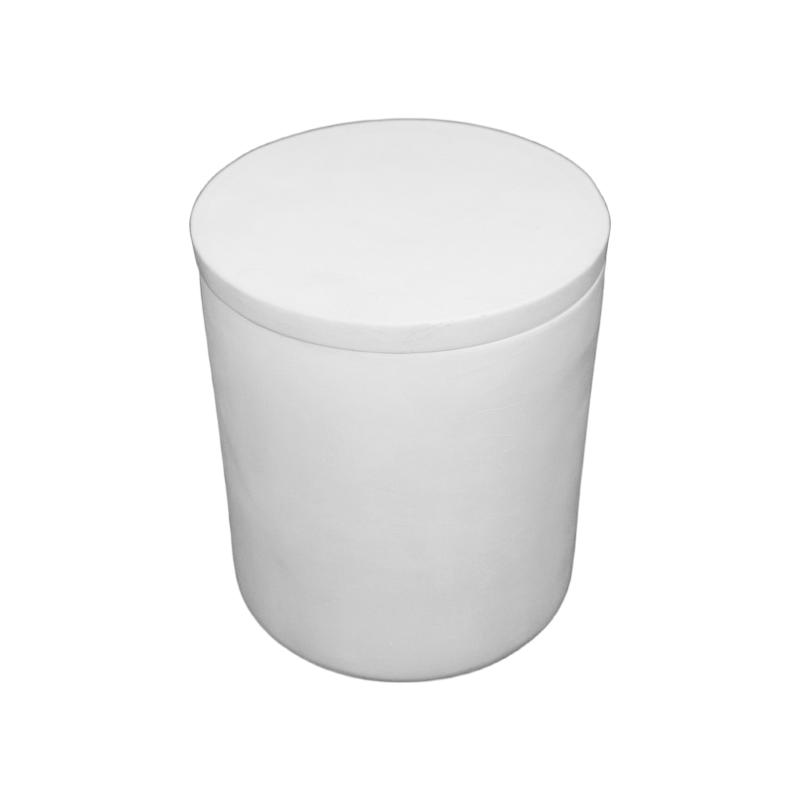
Cleaning the glass begins with removing the bulk of the powder with a soft tool that does not scratch the surface. Then use the method approved by the manufacturer for the given material and seal. It is important to wash the bottom, walls, edge and lid, but avoid abrasive action that creates new micro-scratches. After washing, the glass is dried and inspected. For volatile or sensitive samples, the procedure is consistent with laboratory procedures.
Aggressive acids, alkalis and strong solvents are used only if compatibility has been confirmed. They can damage not only the corundum, but also the seal, so saving time on cleaning sometimes leads to contamination of the next sample. Do not use metal brushes or abrasive pastes unless specified by the manufacturer. If the contamination is not removed in the usual way, it is better to stop and clarify the procedure than to act on the surface at random.
The transition between samples is assessed not only visually. After cleaning, it is useful to do a control grind or rinse, especially if trace elements are being analyzed. Different residues are critical for different analytes, so there is no universal “ideal purity.” The logbook records the procedure used and the result of the examination. If the glass retains powder in microcracks, cleaning becomes less reliable and the product may require replacement.
Drying also affects the result. Residual moisture can change the flowability, bulk density and grinding behavior of the powder. For hygroscopic materials, it is useful to provide a separate drying stage and store the glass in conditions that prevent condensation. However, the drying method should not create a thermal shock to the ceramic. Sudden cooling or heating of a fragile glass is undesirable unless permitted by the documentation.
If multiple beakers are used in a laboratory, they should be labeled and assigned to specific sample types. This reduces the risk of cross-contamination and helps monitor wear. The marking must be permanent, but not damage the surface. For sensitive tasks, it is better to have a separate glass than to try to wash the same vessel to a condition that is not confirmed by a control experiment.
Checking for cleaning can be as simple as: After washing and drying, the glass is inspected under a side light, and then a rinse or dry grind is performed. For different tasks, different criteria are enough. It is important that the procedure is repeatable and does not damage the surface. If cleaning requires more effort than usual, this is a reason to check the grinding mode and loading: perhaps the material is sticking due to overheating or excess powder.
Selection checklist and test grinding conditions
To select a corundum glass, it is not enough to name the volume. The supplier or in-house engineer needs information about the mill, seat, sample and cleanliness requirements. The more complete the initial data, the less likely it is that the glass will turn out to be incompatible in fastening or unsuitable in chemistry. Below is a practical list that helps translate the discussion into testable parameters.
What to report for selection
- planetary mill model and seat type;
- external dimensions, drawing or photograph of a standard glass;
- type of cover, seal and fastening;
- sample material, initial size and purpose of grinding;
- sample weight, bulk density and desired loading;
- dry or wet grinding, medium and permissible temperature;
- sensitivity of the analysis to aluminum and other impurities;
- requirements for cleaning and batch-to-batch repeatability.
What to check during test grinding
Trial grinding begins with a small batch to evaluate sticking, heating and losses. Check the installation of the glass, tightness, absence of vibration and extraneous sounds. After grinding, the mass balance, particle distribution, presence of agglomerates and edge condition are assessed. If contamination is important, a blank is performed and compared with the original sample. The result of a trial grind does not guarantee the same effect for another sample, but it does reveal gross inconsistencies.
To proceed to serial operation, the verified configuration is recorded: cup number, material and number of balls, load, medium, time and speed. It is useful to indicate which parameters cannot be changed without re-checking. If a large batch is required, first evaluate whether multiple laboratory grinds can be combined without loss of uniformity.
It is also worth clarifying what data the supplier can document. These are dimensions, material, sealing, permissible media and operating conditions. If some information is missing, it should not be added. It is better to designate the question as open and test it by testing. This approach is especially important when working with small batches of expensive material, where errors are costly.
When discussing with the supplier, it is worth distinguishing between mandatory and desirable requirements. Fit, tightness and compatibility with the mill are required; Ease of cleaning, resistance to the selected environment and predictable wear are desirable. If the mandatory requirement is not confirmed, it is better not to place the order. If it is confirmed, but doubts remain regarding the chemistry, trial grinding with analysis helps. This approach disciplines choice and reduces dependence on promises.
The grade A corundum grinding bowl is not just a container for powder, but an element that sets the boundaries of the technique. Its material affects impurities, its geometry affects the movement of the balls, the lid affects tightness, and the fit affects operational safety. Compatibility with a specific mill is confirmed by dimensions and documentation, not by category name. Before purchasing, it is useful to formulate the requirements for the sample, check the blank experiment and fix the mode. This method does not promise a universal result, but it makes grinding more predictable.