
Preparing a powder sample for analysis or subsequent synthesis almost never comes down to a single operation. The material must be brought to a representative size, maintaining its composition, and obtain a result that can be reproduced in the next sample. The difficulty that will be discussed manifests itself here: it is not possible to simultaneously maintain coarseness, purity and repeatability, because the material of the grinding set begins to get into the sample.
A grade A corundum grinding bowl for a planetary mill is a consumable item that largely determines what exactly ends up in the sample and in the analyzer. The issues that arise when choosing such a bowl are discussed below: material properties, wear and impurity mechanisms, behavior during dry and wet grinding, cleaning between samples, volume and loading, as well as checking compatibility with a specific mill and grinding media.
Where does the selection begin: a sample, not a catalog
It is wise to start selecting a headset not with a list of products, but with a description of the task. A glass that is convenient for one series of samples will be unsuitable for another: too soft a material will introduce a noticeable impurity, too large a volume will require more sample and more time for grinding, and a standard size that does not correspond to the installation location will not allow you to start working at all. Therefore, the first step is to record the characteristics of the sample and the limitations of the technique.
- nature of the material: brittle, viscous, prone to sticking, layered or fibrous;
- initial and target size, as well as the method by which it will be measured;
- requirements for maintaining the phase composition, the admissibility of partial amorphization of the particle surface;
- chemical activity of the sample: acidity, alkalinity, sensitivity to moisture and air oxygen;
- mass of sample per grinding and number of samples in a series, including parallel ones;
- grinding medium: dry or wet method, what liquids are acceptable according to the method;
- restrictions on introduced impurities: which elements cannot be added and with what sensitivity they are determined;
- subsequent operations: sifting, mixing, pressing, sintering, analysis.
Separately, it is worth describing the observed problem if grinding is already in progress. It is useful to distinguish three groups of signs. The first relates to the result: the particle size stopped decreasing, the particle size distribution became wider, and a “tail” of large fractions appeared. The second is about the composition: lines of elements appeared in the spectrum that were not in the original raw material. The third is the condition of the equipment: traces of running-in, darkening, chips at the edge are visible on the inner surface of the glass, the mass of the glass changes.
None of these symptoms by itself proves a specific problem. An increase in particle size is caused by overload with grinding media, insufficient speed, and agglomeration of small particles. The appearance of new elements may be associated not with wear of the glass, but with grinding media or with the reaction of the sample with the fitting material. Discrepancies between parallel samples are often explained by incomplete purification or heterogeneity of the starting material. Diagnostics are built as a sequence of checks, changing one factor at a time.
The formulation of the restriction “contamination is unacceptable” is useless for selection: any grinding set interacts with the sample to one degree or another. The working formulation contains the element, the limit of its content and the method of determination. Then the headset options can be compared with each other, and the test result can be compared with the requirements of the method, and not with the general impression of the test.
Corundum glass class A: material, design and purpose
Corundum is sintered aluminum oxide, a ceramic material with high hardness, wear resistance and chemical resistance in a wide range of environments. It is the combination of these properties that makes it a common choice for grinding bowls and grinding media: the material is not a metal, and therefore does not introduce iron, chromium and nickel into the sample in the quantities that are typical for steel equipment.
The product name contains the class A designation. This designation refers to the execution within the line and to the quality control of the material; Specific values of purity, density, hardness and dimensional tolerances are given in the product card. These values need to be compared with the requirements of the technique, and not general ideas about “ceramics”. Data obtained for one standard size cannot be transferred to another: the batch of material, wall thickness and sintering quality differ for large and small glasses.
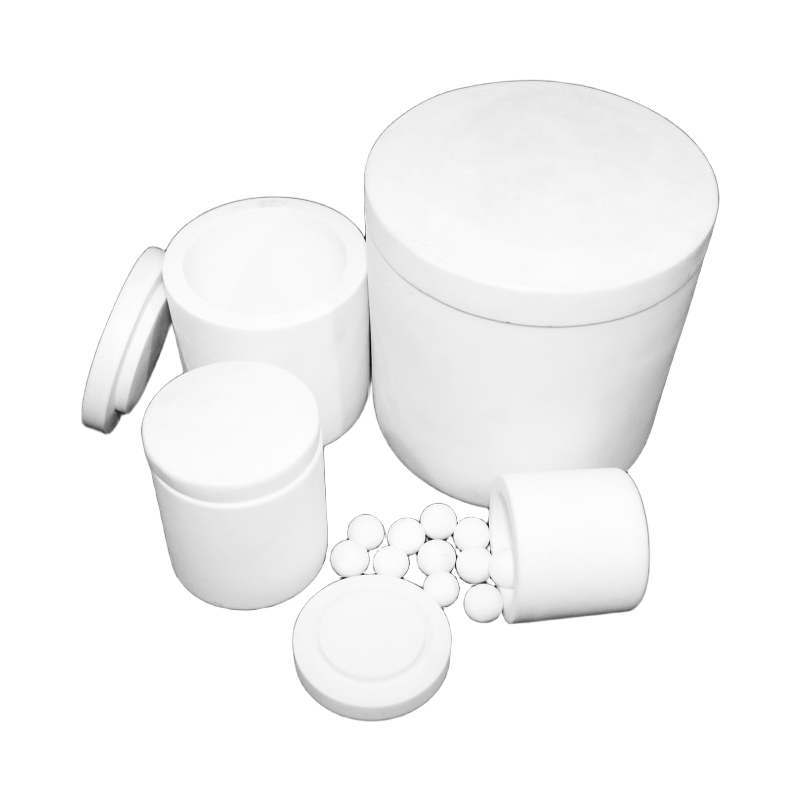
The grinding bowl for a planetary mill is not just a container. The kit includes a body, cover and seal, and sometimes seating elements. Compaction is important for wet grinding: without it, the liquid medium carries part of the sample out, and the filling volume has to be limited. The lid should fit tightly and be centered without distortion; with uneven tightening, the edge bends and becomes a point of stress concentration.
The corundum glass is used for grinding brittle and moderately abrasive materials: oxides, minerals, glass, ceramics, slag, some salts and pigments. It is also suitable for deagglomeration of powders that do not require additional grinding. Limitations are associated with aggressive environments and increased requirements for cleanliness. Strongly acidic and strongly alkaline liquids, fluorine compounds, as well as long-term high-energy grinding require separate agreement with the supplier: corundum is chemically resistant, but not inert under any conditions.
The choice of headset material is a compromise between wear and tear and reactivity. Soft materials load the drive less, but wear out faster; metal glasses produce metallic impurities; Hard ceramics wear out more slowly, but its own admixture remains in the sample. For corundum, the main introduced element is aluminum, as well as the components that make up the glass material. The significance of this impurity depends on the element being determined and on the detection limit of the method. More information about the product itself and its performance can be found in the card Grade A Corundum Grinding Bowl for Planetary Mill.
Wear, mechanisms and contribution of the set to the sample composition
The wear of the grinding set consists of several mechanisms, and to select a glass it is important to understand which of them predominates in a particular task. During abrasive abrasion, the sample particles act as a grinding material and gradually remove the substance from the walls and working surfaces. Under shock loading, characteristic of a planetary mill, the ceramic grains experience repeated collisions with the grinding media; Microcracks gradually accumulate, and individual grains crumble.
Chemical interaction manifests itself differently: the surface of the set dissolves or reacts with the components of the sample, especially during wet grinding and at elevated temperatures in the working volume. The fourth mechanism is thermal. The planetary mill transfers significant energy into the sample, some of which turns into heat; in the closed volume of the glass, the temperature can significantly exceed the ambient temperature of the installation. The temperature difference between the body and the contents of the glass is not equal to the measured temperature of the sample, and it is incorrect to evaluate the heating of the sample using the chamber sensor.
The wear rate is determined by the hardness ratio. If the sample is harder than the glass material, abrasion occurs quickly; if it is softer, there is less material transfer, but the sample may stick to the walls, which reduces grinding efficiency and complicates cleaning. The size and shape of the particles, the mass of the load, the diameter of the grinding media, the duration and speed of rotation also influence. Small grinding media increase the contact area and the number of impacts, while large ones increase the energy of a single impact.
Why "zero pollution" doesn't work
The grinding set and sample are always in contact, so there is no absolute absence of transfer - there are different levels of transfer. It makes sense to discuss not the presence of an impurity as such, but its relationship to the detection limit of the method and to the tolerance of the method. A small transfer of aluminum into a sample of an oxide material may be insignificant, whereas the same transfer into a sample where aluminum is the analyte element will be critical. For the same reason, conclusions about the suitability of a material cannot be transferred from one task to another without verification.
How to evaluate the contribution of a headset in practice
- weigh the glass and grinding media before and after a series of grindings on scales with sufficient discreteness;
- perform blank grinding without a sample under the same conditions and analyze the resulting residue;
- grind one material for different durations and watch how the content of controlled elements changes;
- compare the results of grinding in glasses made of different materials, if the methodology allows this;
- record the state of the glass surface together with the result of the analysis, and not separately from it.
None of these methods gives an absolute figure for the contribution: part of the impurity can go into the gas phase or pass into the liquid. However, a comparison using the same method allows you to see a trend and make a decision about grinding duration, loading or the need for intermediate control.
Dry and wet grinding in a corundum glass
Dry grinding is more convenient in terms of the number of operations: no liquid is required, and after grinding the sample is almost ready for sifting or analysis. Limitations relate to sticking and agglomeration. As the particles decrease, the forces of interparticle interaction begin to dominate over the grinding effect, and some of the material settles on the walls and on the grinding bodies. As a result, the particle size stops decreasing, and the particle size distribution becomes wider.
Wet grinding introduces a dispersion medium into the glass, which reduces surface energy, reduces sticking and promotes a narrower particle distribution; the liquid also removes some of the heat. At the same time, new questions arise: the medium must be compatible with the sample and the beaker material, must not dissolve its components, and must not participate in reactions that change the phase composition of the sample.
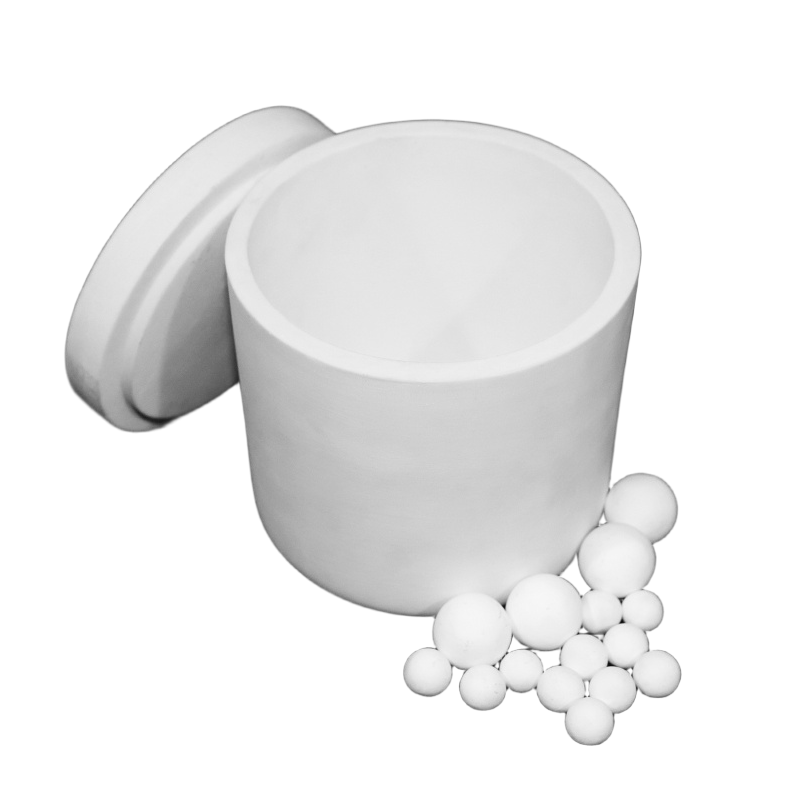
For a corundum glass during wet grinding, the filling volume and tightness are especially important. With a large free volume, the medium moves more intensely, wear on the working surfaces increases and the risk of ejection through the seal increases. The presence of a seal in the kit of a particular model is checked on the product card: an option available for one standard size does not become a standard for the entire line.
Particle destruction and disagglomeration are similar but different problems. In the first case, the goal is to reduce the size of the crystals and grains themselves; in the second, to separate the aggregates without destroying the primary particles. The modes and choice of grinding media for these tasks differ: soft disagglomeration requires less energy and less time, while true grinding to the submicron level requires prolonged processing at high speed. The same size value obtained by different methods may correspond to different reactivity of the powder.
Wet grinding almost always requires subsequent drying - this is a separate operation and should not be considered part of grinding. Drying can change the surface state of particles and lead to the formation of durable aggregates. In the heat treatment section TENCAN presented, in particular, Microwave Vacuum Drying Chamber, however, this is a separate device that is not included in the mill set; its suitability for a particular sample and glass is decided separately and does not follow from belonging to the same catalogue.
The choice between dry and wet methods is determined not only by size. If subsequent operations involve pressing and sintering, excess liquid adds a step and the risk of contamination; If the sample is heat sensitive, wet grinding helps limit temperature rise. Both solutions have limitations and should be selected to suit the task.
Beaker cleaning and cross-contamination between samples
Cross-contamination is a common cause of discrepancies between parallel samples and is caused not only by the equipment, but also by insufficient cleaning. The remainder of the previous material may constitute a fraction of a percent of the mass of the new sample, but when determining microimpurities, this is enough to significantly distort the result. Therefore, the cleaning regime should be considered as part of the technique, and not as an auxiliary procedure.
The first rule is separation. For different materials, especially when working with microimpurities, it is preferable to have separate glasses and separate sets of grinding media assigned to a specific type of sample. If this is not possible, the cleaning sequence is standardized: dry mechanical cleaning, washing with a suitable solvent, rinsing, drying, control blank grinding with rejection of the washing material.
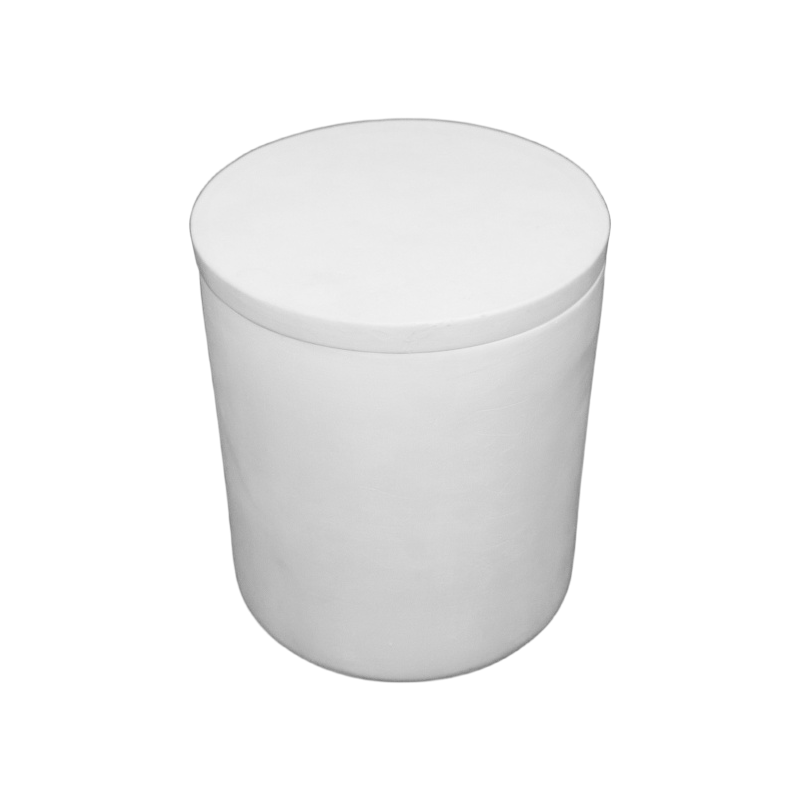
Mechanical cleaning is carried out with tools that are softer than the glass material: brushes and scrapers should not leave metal particles on the surface. Abrasive powders, wire brushes and rough sanding damage work surfaces, increase roughness and create areas where material accumulates. After mechanical cleaning, the surface is inspected: matte areas and residual deposits are usually visible under oblique light.
Washing and drying also affect the condition of the headset. Sudden changes in temperature can cause the ceramic to crack, so the glass should not be heated or cooled arbitrarily; Acceptable conditions are specified in the product documentation. Blank grinding without a sample allows you to assess whether transferable material remains in the beaker. If the blank grinding produces a repeatable residue, the beaker is returned for cleaning or removed from work with critical samples.
A separate topic is storage. The open glass is left closed in a dry place to prevent the ingress of dust and moisture. Lids and seals are stored together with the beaker: selecting a seal for a different standard size is a common mistake that leads to leaks during wet grinding and sample loss.
Glass volume, loading and transition from sample to batch
There are different quantities used in the description of the grinding bowl, and it is useful to differentiate between them. Geometric volume is the total capacity of the housing. The useful volume is always smaller: part of the space is occupied by grinding bodies, while part remains free for their movement. The mass of the sample is an independent quantity, depending on the density of the material and the accepted load. Finally, productivity over time is the mass of material processed over a certain interval, and is not directly derived from the volume of the glass.
Loading grinding media affects the result more than it seems. Too few bodies - the collision energy is distributed ineffectively, grinding is slow. Too much - the mass and load on the drive increases, but there is no free space left for movement, and part of the energy is wasted. The size of the bodies determines the nature of the impact: larger ones provide an impact component, smaller ones provide an abrasive component.
Filling the beaker with sample is usually limited so that there is room for movement above the charge, and in wet grinding, so that liquid is not forced out through the seal. Acceptable fill percentages should be taken from the manufacturer's instructions and specified for each material; mechanical transfer of values from one model to another is unacceptable.
The transition from a laboratory sample to a larger batch is a common source of error. Increasing the volume of the bowl changes the trajectories of the grinding media, energy distribution, heat removal and the time to achieve a given size. Keeping “the same RPM and the same time” does not automatically reproduce the result. When scaling, the mode is selected anew, and sometimes one large glass is abandoned in favor of several small ones working in parallel: this increases the uniformity of the series and simplifies control.
A practical technique is to preserve geometric relationships where possible: the ratio of the mass of grinding bodies to the mass of the sample, the filling fraction, the characteristic size of the bodies. After changing any of these parameters, a control grinding is needed to measure the particle size distribution. If the distribution remains the same, and the mass of the series increases, the regime is tolerated more reliably.
Compatibility of glass, mill and grinding media
The grinding bowl is not universal: it fits a specific planetary mill model and a specific seat. Before ordering, check the geometry - the outer diameter and height of the housing, the diameter and profile of the mounting socket, the method of fixation, the number of glasses in the installation kit. The error in the seating dimensions is not compensated by the grinding mode: the glass either does not fit into the socket or experiences abnormal loads.
The second parameter is permissible operating speeds. Each mill model is designed for a specific range; a glass not designed for high speeds may break. Information about permissible modes is taken from the documentation for the product and installation, and not from general considerations about the strength of ceramics. The same applies to seals: their material must withstand the operating environment, temperature and speed.
The third question is grinding media. Their material determines what impurity they introduce into the sample and how they interact with the glass. The “glass-body” pair is considered as a single whole: the combination of materials of different hardness leads to preferential wear of the softer element, and therefore to the transfer of its substance into the sample. The size and number of bodies are selected according to the volume and the task.
Equipment presented on the site TENCAN, covers different stages of powder preparation and processing; An overview of the directions is given at home page. However, the presence of a mill, beaker or accessory in a catalog does not in itself mean that they form a compatible package. Compatibility is confirmed by specific fitting dimensions, permissible modes and materials.
What to tell the supplier before ordering and trial grinding:
- type and brief description of the material, its hardness and tendency to stick;
- initial and target size, as well as measurement method;
- restrictions on introduced impurities and sensitivity of the analysis method;
- sample weight per grinding and required batch productivity;
- grinding medium and permissible liquids;
- planetary mill model, number of seats and permissible speeds;
- expected material and size of grinding media;
- cleaning and drying conditions available in the laboratory.
The trial grinding is planned so that the result can be interpreted. It is useful to set the basic mode and change one parameter at a time: duration, speed, size of grinding media, filling fraction. For each option, the particle size distribution, the state of the glass surface and, if possible, the content of controlled elements are recorded. Comparison using one method provides more information than several separate experiments under different conditions.
Choosing a grade A corundum grinding bowl is not about choosing the “best” material in general, but about choosing the right material for a particular sample and a particular mill. The material determines the level of introduced impurities and the nature of wear, volume and loading - reproducibility, design and mounting dimensions - the very possibility of work. It is more convenient to get answers to these questions before ordering, rather than after a series of samples requires repetition.