
Preparing a sample for grinding begins not with choosing the rotation speed, but with the question of where the material will be located. The grinding drum is in contact with the powder, grinding media, liquid and chamber atmosphere; Not only the size, but also the chemical background of the sample depends on its condition. The corundum grinding drum is considered precisely as an element that helps control this background, but does not eliminate it completely.
Below is a practical analysis of choosing a corundum drum for sample preparation: from checking the fit in the mill to cleaning, wear and assessing the contribution of ceramics to the analysis result. This is a specific type of grinding container and not a replacement for a procedure or instruction manual.
Why drum material becomes part of the technique
Three surfaces are involved in grinding: the sample material, the grinding media and the drum wall. Even with careful work they wear out. Wear debris gets into the powder and can change the result where trace impurities, phase composition or particle size distribution are important. Therefore, the choice of corundum is not a cosmetic improvement, but a decision about which specific source of contamination is acceptable in the technique.
Corundum is a crystalline form of aluminum oxide. What is important for grinding equipment is its high hardness, wear resistance and chemical resistance in many environments. However, ceramics remain brittle and wear is not zero. If aluminum or elements associated with ceramic tooling are being analyzed, the corundum drum can make a significant contribution. This does not make the material unusable - it does mean that the technique must include background control.
The rate of wear depends not only on the material of the drum. It is influenced by the hardness and shape of the particles, the mass and density of the grinding media, grinding duration, rotation speed, presence of liquid, temperature and acidity of the medium. The same drum behaves differently in a soft and abrasive sample. Therefore, you cannot transfer someone else’s conclusion “ceramics does not pollute” to your own sample.
The practical criterion is more modest: the material must be compatible with the sample, and its contribution must be measured or at least estimated. For routine grinding of the same raw materials, a stable procedure and periodic monitoring are sufficient. Trace analysis requires a more rigorous approach: blanks, surface monitoring and, if necessary, an alternative material.
Corundum drum in the catalog TENCAN: what it is and what it is not
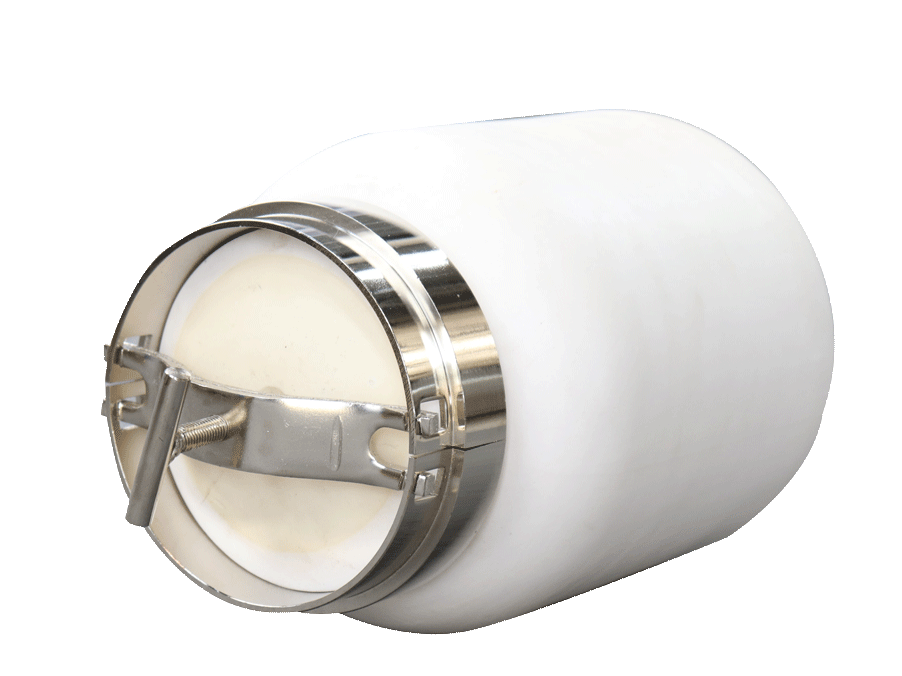
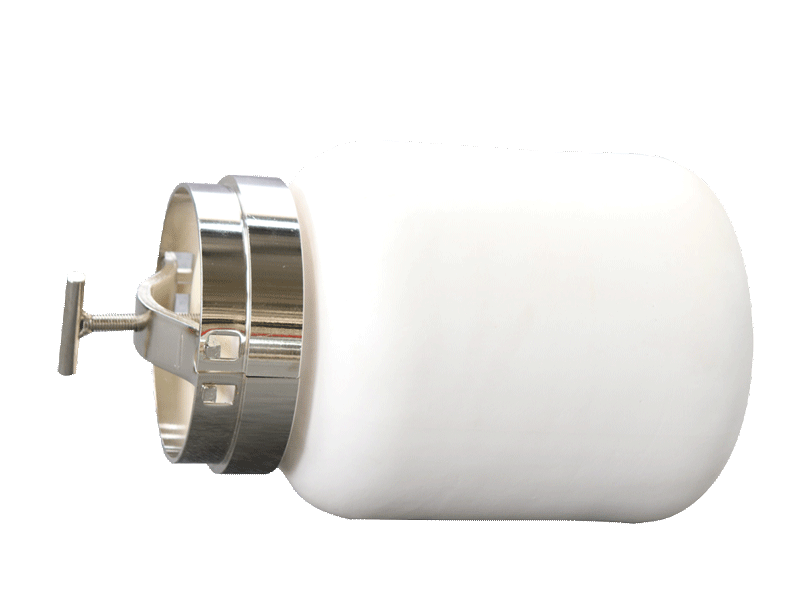
In the catalog TENCAN presented corundum grinding drum. This is a grinding container, not a stand-alone grinder. It holds the sample and grinding media, sets the contact surface and, together with the drive, participates in creating the loading movement. Without a mill, drive and properly selected grinding media, the drum itself does not provide either grinding or the desired size.
The card refers to the product as drums for roller ball mills. In such a machine, the drum rotates on support rollers, and the nature of the movement of the load is determined by the diameter, internal geometry, speed and degree of filling. This is a fundamentally different mode than that of a planetary mill, where the grinding bowls move along a complex trajectory inside a supporting disk. Therefore, a corundum drum cannot be automatically considered compatible with any planetary machine.
In Russian technical speech, “drum”, “glass” and “mill” are sometimes confused. For a roller machine, the term “drum” is appropriate: it has a pronounced cylindrical shape and rotates as a single unit. For a planetary machine they often say “grinding bowl”. Mixing terms is dangerous because it leads to the selection of equipment by name, and not by mounting dimensions. When ordering, it is better to use the full name from the card and add a drawing.
The site’s selection includes, for example, heavy horizontal planetary ball mill. This is a separate class of equipment. Even if the external dimensions seem close, questions remain about fastening, cover, centrifugal loads, permissible weight and seal material. Compatibility is confirmed by the drawing and manufacturer's data, and not by similarity of names.
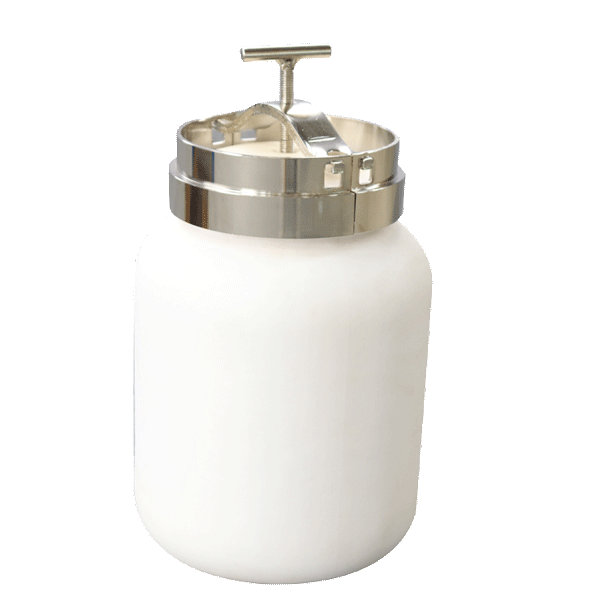
The corundum drum also has a second role - a sample separator. If the same drum is used for different materials, the remains of the previous sample become as much a source of error as ceramic wear. Therefore, in laboratory practice, the container is assigned to the sample type or a strict cleaning procedure is introduced. This is especially important for powders that are poorly wetted, stick to walls, or contain large abrasive particles.
Volume, geometry and fit: what to check before ordering
The first mistake in selection is to assume that the volume of the drum is equal to the mass of the sample. These are different quantities. The geometric volume describes the internal cavity, the working volume takes into account the free space for the movement of the grinding bodies, and the sample mass depends on the density of the material. It is impossible to assign loading only according to the inscription “volume”: when overfilled, the grinding media do not have time to accelerate; when loading is insufficient, the proportion of impacts on the wall increases and wear accelerates.
The second mistake is to check only the diameter. For installation on a roller mill, the outer cylindrical surface, length, location of supports, method of fixation and permissible weight are important. Fit, sealing, ease of opening and protection from dust are essential for the lid. If wet grinding is planned, the resistance of the seal to solvent and the possibility of hermetically sealing must be checked separately. This data must be in the drawing or confirmed by the supplier.
| What to check | Why is this important | How to reduce the risk of error |
|---|---|---|
| Internal volume and dimensions | Determine loading, movement of grinding media and sample loss | Check the drawing with the methodology, and not just with the model name |
| External dimensions and fit | Installation on rollers or in a supporting unit depends on them | Request fitting dimensions and permissible weight |
| Cover and seal | Dust, liquid leakage and loss of fines | Specify seal material and operating mode |
| Wall thickness and ceramic condition | Fragility, wear and risk of chipping during handling | Inspect before and after grinding, do not use a damaged drum |
| Equipment | Grinding media and gaskets can be supplied separately | Do not consider as an option anything that is not confirmed in the order. |
A separate issue is the degree of filling. There is no universal loading percentage: it depends on the density of the sample, the size of the grinding media, the viscosity of the liquid and the desired impact-to-abrasion ratio. A mixture that is too thick does not mix well, and a mixture that is too thin increases wear on the walls and heats up faster. It is wise to start with a minimum load, which still gives stable movement, and increase it gradually, controlling the size and temperature.
Units of measurement are recorded separately. Diameter and height can be indicated in millimeters, volume in liters or milliliters, weight in kilograms. If the description contains mixed internal and external dimensions, this is revealed when checking the drawing. An error of a few millimeters sometimes decides whether the drum will sit on the rollers and whether the lid will close without distortion.
Corundum and grinding media: compatibility is more important than hardness
The corundum drum does not work alone. The grinding result and contamination depend on the pair “drum material - grinding media material.” Ceramic bodies made of aluminum oxide are chemically close to corundum, but this does not mean there is no wear. With prolonged grinding, the ceramics wear out, and particles of the same family appear in the sample. For aluminum analysis, such a pair may not be successful; for many other tasks it remains convenient as long as the input is controlled.
Zirconium dioxide bodies have a different density and destructive ability. They can speed up the grinding of difficult materials, but add zirconium and elements of stabilizing additives to the picture of contamination. Steel bodies produce a different chemistry: iron, chromium, nickel and corrosion products. The choice cannot be made solely on the basis of firmness; take into account the fragility of the sample, acceptable impurities, tendency to stick and the need for wet grinding.
The size and number of grinding media also affect wear. Small bodies provide more contacts and work better for abrasion, but may not destroy large aggregates. Large bodies increase the impact energy, but increase the local load on the ceramic wall. For a fragile corundum drum, this is a practical trade-off: a mode that grinds the sample quickly may wear out the tooling faster and contaminate the material more.
Dry and wet grinding solve different problems. The dry process is easier to prepare, but may be accompanied by dust, heating and the formation of aggregates. Liquid reduces dusting and aids deagglomeration, but adds a drying step and the risk of interaction with the material. Corundum is stable in many environments, but not all; prolonged contact with aggressive liquids, salts or hot solutions requires separate inspection. There is no universal recommendation here.
Sample contamination: four sources worth separating
The first source is abrasive wear of the drum and grinding media. It appears as a fine fraction of the tooling material, which can change the chemical analysis and particle distribution. The second source is the remains of the previous sample. They are especially noticeable when going from a coarse powder to a fine powder or from a colored material to a light one. The third is chemical interaction: dissolution, leaching, or reaction of the surface with the liquid. The fourth is the external environment: dust, lint from brushes, insufficiently clean tools and dishes for drying.
These sources give different symptoms. If contamination increases with grinding time, equipment wear is likely. If it appears immediately after changing the material, it is most likely a cleaning issue. If the result depends on the liquid or pH, chemical compatibility must be checked. If scatter occurs from batch to batch without connection with the mode, it is worth checking the storage, selection and preparation of the drum. Without such observations, a specific cause cannot be declared proven.
To evaluate the contribution of the equipment, a blank experiment is useful: the drum, grinding media and liquid are processed according to the same procedure without the analyzed sample or with a matrix similar in behavior. The elements of interest are then measured and compared to the background. Such experience does not replace full methodological control, but indicates whether there is a systematic problem. For trace amounts it is especially important that the blank be realistic and not performed in a different vessel or grinding time.
Corundum should not be described as "zero contamination". Aluminum oxide may be chemically resistant, but mechanical wear remains. In addition, ceramic particles can enter the coarse fraction and distort the granulometry. If the technique is sensitive to aluminum, silicon or other ceramic components, alternatives are considered in advance: a different drum material, different grinding media or shorter contact duration. This is not a universal rule, but a matter of target element and detection limit.
Wear, cleaning and transition between samples
The corundum drum is inspected before and after work. Cracks, chips, deep scratches and changes in surface color are a reason to stop. Fragile ceramics do not forgive a blow to a hard object or a sudden temperature change; a damaged drum may collapse under load. If the integrity is in doubt, the product is replaced rather than masking the defect. This is cheaper than re-analysis and losing the batch.
Cleaning begins with dry removal of residue: soft brush, vacuum cleaner or rinsing with a compatible solvent. Wire brushes and abrasive pads can leave particles and damage the surface. Ultrasound is used only if it is approved for a specific product and does not destroy the seal. After washing, the drum is dried so that no liquid remains inside and stored closed. Lint, dust and detergent residue are the same pollutants as ceramic wear.
Checking cleaning should not be limited to external inspection. It is useful to wipe the surface with a lint-free cloth and evaluate the mark, and for sensitive methods, perform a test grind with an inert matrix. If, after changing the sample, particles appear that were not encountered before, the procedure is revised. Sometimes the problem is not in the drum itself, but in the brush, drying cabinet or storage container.
For different materials it is convenient to have separate drums or, at a minimum, separate covers and grinding media. Marking helps not to confuse the equipment. If this is not possible, a control washing and blank grinding procedure is introduced. Do not use the same drum for samples with different target elements without checking for cross-contamination. This is especially true for trace analysis, where even a small residual film changes the conclusion.
Equipment compatibility and trial grinding program
For a roller mill, the outer diameter, length, weight, surface condition and ability to rotate steadily are checked. For a planetary mill, not only the dimensions are important, but also the method of fixation, the lid, the permissible weight of the glass with loading and balancing. Therefore, the question “whether a corundum drum is suitable for a planetary mill” cannot be decided from a photograph. A drawing, a list of compatible items or written confirmation from the supplier is required.
Before ordering, it is useful to prepare a short list of data: sample material, initial size, target size, sample weight, dry or wet grinding, liquid used, permissible impurities, mill type and mode. If only the “required subtlety” is known, the selection remains incomplete. Fineness depends on energy, time, grinding media and material properties; the same drum does not guarantee the same result for different samples.
The trial grinding is planned as a comparison and not as a demonstration. The mass of the sample, the material and size of the grinding media, the volume of liquid, speed, time, temperature and extraction method are recorded. Then the yield, particle size distribution, presence of aggregates and chemical background are checked. It is useful to repeat the experiment and perform a blank control. If the result is noticeably different from what was expected, first check the drum fit, filling and cleaning, rather than changing all the parameters at once.
When moving from a small sample to a larger batch, you cannot scale by volume alone. The ratio of sample, grinding media and free space, speed and time affect the energy of the process. For a corundum drum, the mass of the load and the thermal regime are additionally important: ceramics are fragile, and long-term operation with high loads accelerates wear. It makes more sense to increase the batch in stages, maintaining verifiable parameters and controlling contamination.
The result of the selection is simple: first, the compatibility of the drum with a specific mill and landing is confirmed, then the chemical pair “sample - corundum - grinding media” is checked, after which loading and cleaning are adjusted. The corundum grinding drum is prized for its wear resistance and predictable ceramic surface, but the right choice ends not with the purchase, but with a reproducible sample preparation procedure.