
Sample size as a limitation for fine grinding
Laboratory preparation of powder materials often begins with pieces of ore, polymer granules, plant materials, recycled materials or sintered blanks, the size of which is measured in centimeters. Planetary ball mill, bead mill or vibration mill are designed for a certain feed size. If you feed too large a piece, the grinding bowl and grinding media will not work efficiently: wear will increase, grinding time will increase, and the particle size distribution will become less predictable. Therefore, before fine grinding, the sample goes through a preliminary crushing stage. Compact shredder TENCAN — one of the equipment options for this stage. Its task is to reduce the size of the pieces to a state suitable for subsequent processing, without turning the material into a fine powder.
In the catalog TENCAN Various groups of equipment for the preparation and processing of powders are presented: planetary and drum ball mills, bead mills, crushers, screening and mixing devices, presses, ovens and glove boxes. The compact shredder belongs to the crushing equipment. You can view its card on the manufacturer’s website: Compact shredder TENCAN. This article addresses the practical question of how to use a compact shredder in the sample preparation chain and what parameters to pay attention to so as not to get unexpected results when moving to fine grinding.
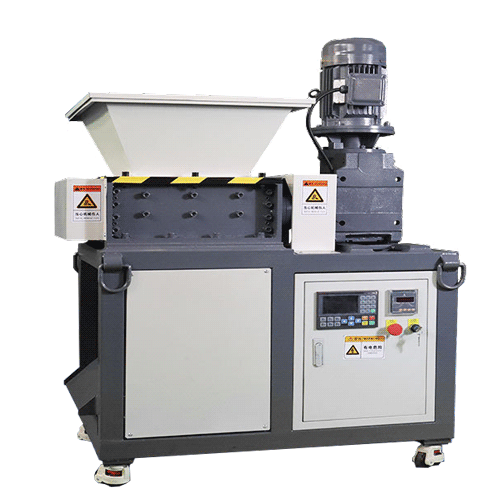
What is a compact shredder and how does it differ from a mill?
A shredder is a device for shredding material primarily through cutting and shearing. Unlike a ball mill, where destruction occurs due to impact and abrasion of the grinding media, a shredder uses rotating and stationary knives. This effect is effective for materials that cannot or are unprofitable to crush with impact: polymers, rubber, wood, plant fibers, and some soft and viscous substances. Compact shredder TENCAN occupies a niche between manual crushing and heavier industrial grinders. It is commonly used in laboratories, pilot lines and small production facilities where compactness, ease of cleaning and the ability to process small batches are important.
It is important not to confuse a shredder with a bead mill, roller drum or roller crusher. The bead mill is designed for fine and ultra-fine wet grinding with small-diameter grinding media. A drum mill rotates with grinding media and produces a finer product than a shredder. The roll crusher crushes the material between the rolls. The shredder produces a relatively large product, the shape of the particles is determined by the geometry of the knives and the size of the sieve or grid openings. Therefore, a shredder cannot be considered as a replacement for a ball mill if powder in the micron range is required.
The cutting principle and its implications for the specimen
In a shredder, material enters a chamber where rotating knives grab and cut it, and stationary knives create a counter-cutting edge. The degree of grinding depends on the number of knives, their geometry, rotor speed and the size of the output sieve. The smaller the sieve opening, the finer the product, but the lower the productivity and the higher the heating. For heat-sensitive materials, this limitation becomes critical. If the product data sheet does not indicate specific speed, power and sieve size values, these parameters should be checked with the supplier before testing. You cannot transfer the characteristics of one shredder model to the entire range TENCAN.
Compact shredder design: what is important for sample preparation
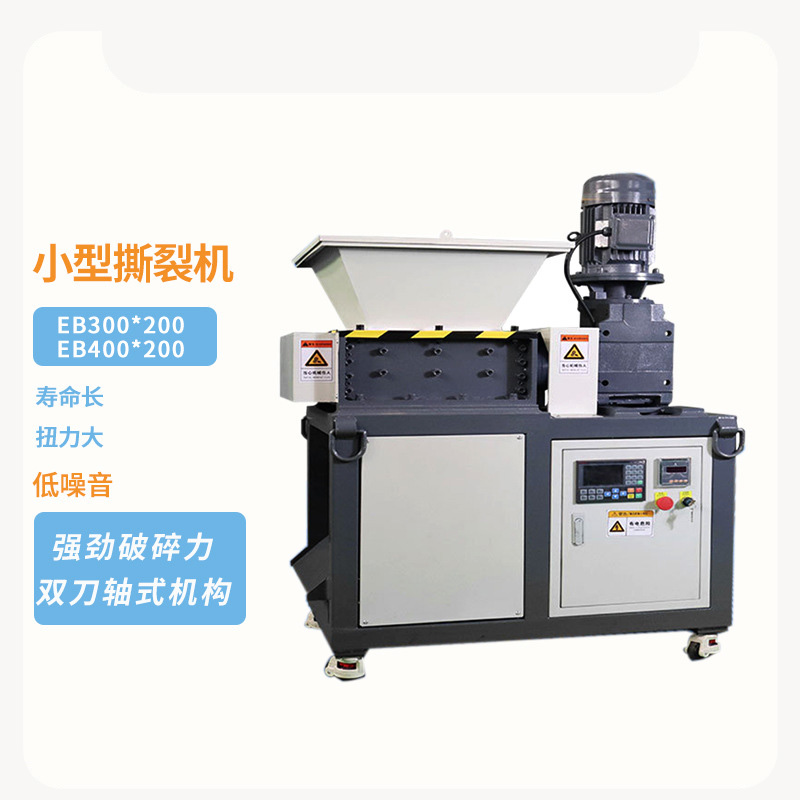
A typical compact shredder includes a feed hopper, a crushing chamber, a rotor with knives, fixed knives, a replaceable sieve or grid, a drive and a receiving container. The laboratory version often has wheels or small dimensions for movement, as well as the ability to quickly disassemble for cleaning. Model "Compact shredder" TENCAN, presented in the Broken Series section, belongs precisely to this class of equipment. The specific equipment, knife material and set of sieves are indicated in the product card; when choosing, you need to rely on this data, and not on general assumptions.
Knives and materials for their manufacture
Knives are the main working part of the shredder. Their material determines the resistance to wear and the risk of introducing impurities into the sample. For laboratory tasks, hardened steel, stainless steel or hard alloys are often used. Stainless steel is preferred if corrosive contamination cannot be tolerated. However, even a hard alloy does not provide “zero contamination”: when grinding abrasive materials, the knives wear out, and wear products can get into the sample. This is especially important if the sample is later analyzed for elements that make up the knives. In such cases, one must either select an appropriate blade material or take into account the possible background when interpreting the results. Promises of “zero contamination” from older publications should not be repeated without verification.
Sieves and output size
The output coarseness in the shredder is determined by the size of the sieve or grid openings. The smaller the hole, the finer the product, but at the same time the processing time and heating increase. In addition, the shape of the particles after cutting is different from the shape of the particles after ball grinding: they can be elongated, lamellar or fibrous. This is not always a bad thing for subsequent fine grinding, but it must be taken into account when analyzing particle shape. If the product card does not indicate the output size range, it should be clarified. It cannot be said that the same shredder will produce the same size for all materials: soft polymer and brittle ore behave differently.
Criteria for choosing a compact shredder for the laboratory
Choosing a compact shredder starts with a sample. You need to understand what exactly will be fed into the device: pieces of ore, polymer waste, plant materials, cables, rubber, sintered tablets. Then the requirements for the final product are formulated: the maximum size of the piece after crushing, the permissible proportion of fines, the temperature of the sample, the possibility of cleaning between samples, the permissible introduction of impurities. Only after this does it make sense to compare models. For the Compact Shredder model TENCAN the product card shows available options and technical data; they need to be checked for suitability for your task.
Hardness and brittleness of the material
The blade shredder works well with materials of moderate hardness and viscosity. For very hard and brittle materials such as quartz, corundum, cement clinker, a jaw or roller crusher followed by a ball mill may be more suitable. If you feed too hard material into the shredder, the blades will wear out faster and productivity will decrease. At the same time, some fragile materials can be crushed in a shredder, if the power and geometry of the knives allow this. A specific conclusion is made based on the results of the trial crushing, and not on the name of the category.
Humidity and temperature
Wet and sticky materials tend to stick to the knives and sieve. This reduces productivity and makes cleaning difficult. Some shredders can handle material with moderate moisture content, but very wet samples may require pre-drying. Heat-sensitive materials, such as some polymers, can soften when heated by friction. In such cases, the rotation speed, pauses in operation and the ability to cool the chamber are important. If cooling measures are not specified in the model description, do not assume they are available. Air cooling is not the same as cryogenic cooling; Cryogenic crushing requires separate equipment or a refrigerant supply, which must be documented.
Productivity and batch size
Shredder performance depends on material, screen size, speed and operator skill. The product card may indicate the performance for a certain material, but this does not mean that it will be saved for your sample. Do not confuse the volume of the loading hopper, the volume of the receiving container and the mass of the sample that can be processed in an hour. For laboratory applications, reproducibility and the ability to quickly clean the device are more important than maximum performance. If you plan to move from a few grams to hundreds of grams, you need to check whether the selected model can handle larger loads without overheating and loss of quality.
Contamination, wear and cleaning
Any grinding equipment introduces a certain amount of material from the working parts into the sample. In a shredder, these are wear products from knives, screens and chamber walls. The degree of contamination depends on the hardness of the sample, operating time and material of the working parts. For analytical tasks where the content of microelements is determined, this factor must be assessed in advance. For example, if knives are made from steel containing chromium and the sample is tested for chromium, the result may be overestimated. In such cases, shredders with knives made of other materials are used or a blank run is performed to evaluate the background. It should not be said that ceramics or zirconia are “zero contamination”: they also wear, although to a lesser extent for some materials.
Cleaning the shredder between samples is essential to obtain representative results. The design should allow the hopper, screen and, if possible, the knife rotor to be quickly removed. If cleaning is difficult, the risk of cross-contamination increases. When choosing a model, check which components are available for cleaning without special tools and how long this operation takes. For a laboratory with a mixed sample flow, this may be more important than maximum power.
The place of the shredder in the technological chain: from piece to powder
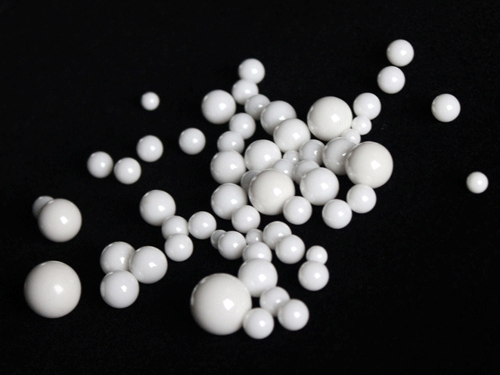
The compact shredder is not designed to produce fine powder. It makes sense to use it as a first stage: it crushes large pieces to a size that can be fed into the next equipment. After the shredder, the material can be separated, averaged and then sent for fine grinding. For fine grinding, planetary ball mills, vibration mills or bead mills are often used in the laboratory. They use grinding bowls and grinding media. One of the options for grinding media are zirconium dioxide balls: Zirconium dioxide grinding balls. It is important to understand: these balls are used in ball mills, not in shredders. They are not loaded into the crushing chamber of the shredder. The technological connection here is not that the shredder and balls work together in one device, but that the shredder prepares the material for subsequent fine grinding, where grinding media are used.
Why can't you replace a shredder with a ball mill?
The ball mill is not designed to accept large pieces. If you load a piece of several centimeters in size into it, it will either not be crushed or will damage the lining and grinding media. In addition, the effectiveness of ball grinding decreases if the initial particle size is too coarse. Therefore, a shredder and a mill solve different problems. The shredder produces a relatively large product, while the mill produces a fine product. Trying to get by with just one stage often leads to waste of energy and time. If you only have a ball mill at your disposal, you have to either look for a sample of suitable size or use a more powerful crusher. Compact shredder TENCAN offers a compromise option for laboratory conditions where industrial performance is not required.
Dry and wet grinding after crushing
After the shredder, the material can be subjected to dry or wet grinding. The choice depends on the properties of the sample and the requirements for the final powder. Dry grinding is easier, but can be accompanied by dust formation and sticking. Wet grinding reduces dust and improves dispersion, but requires subsequent drying and handling of liquids. The shredder usually works with material that is dry or with little moisture; if wet grinding is planned, this does not change the requirements for the shredder, but is taken into account when choosing a mill. Do not confuse the concepts of crushing and disagglomeration: a shredder destroys large pieces, and disagglomeration is the destruction of particle aggregates, which is often achieved in mills or special devices.
What to check before purchasing and trial crushing
Before you decide to buy a compact shredder, it's helpful to make a list of questions. The answers to them determine whether a particular model is suitable. Below are the main points.
- What is the maximum piece size allowed for loading?
- What screen sizes are available and what range of output sizes do they provide?
- What material are the knives and sieve made of? Is it possible to introduce impurities that are critical to your analysis?
- What is the performance on material close to your sample? Is it indicated in the product card or does it require clarification?
- Is there any cooling or temperature limitation for heat sensitive materials?
- How easy is the device to disassemble for cleaning? Is there access to the knife rotor?
- What safety measures are in place: lockout, material release protection, grounding?
- What units of measurement are used in the documentation: millimeters, revolutions per minute, kilograms per hour? Make sure they are clear.
For the Compact Shredder model TENCAN Some of this information is given in the product card. If any data is missing, it should be requested from the representative TENCAN. You shouldn’t think about the characteristics by analogy with other shredders. A parameter of one model does not become a characteristic of the entire range.
Test crushing and sample representativeness
Test crushing is the best way to determine if the shredder is suitable for your material. For testing, a sample must be prepared that reflects the actual range of particle sizes and properties. If you take only small pieces, the result will be better than in production. If only large and hard ones are worse. Therefore, the sample must be representative. During the test, record the processing time, heating of the housing, the presence of dust, the degree of wear of the knives (visually), and the particle size distribution after crushing. This data will help you plan the next stage - fine grinding.
Errors that lead to unsatisfactory results
One of the common mistakes is expecting fine powder from the shredder. The shredder does not replace the mill. If a powder of less than 100 microns is required after the shredder, a ball or bead mill is indispensable. Another mistake is using a shredder for materials that it is not designed to shred, such as very hard or abrasive materials. This leads to rapid wear and breakdown. It is also dangerous to ignore cleaning: residues from a previous sample can distort the results of the next one. Another mistake is interpreting rated performance as guaranteed for any material. In practice, productivity depends on size, moisture and hardness.
You should also not confuse pressure in the press hydraulic system with pressing force, and air cooling with cryogenic cooling. In the context of a shredder, this means: if the description says “cooling”, you need to clarify which one. If it says “stainless steel,” you need to specify the brand, because different brands have different effects on contamination. Just because it says "compact" doesn't mean the device can be placed on any desk - weight and vibration may require a stable support.
How to formulate a request for equipment selection
To get an accurate recommendation from your supplier, prepare a task description. Indicate the sample material, its origin, maximum piece size, required size after crushing, desired batch weight, acceptable processing time, temperature and contamination restrictions. Also tell us what equipment is already used in the next stage: planetary ball mill, bead mill, vibration mill. This will help link the shredder to the existing chain. If you plan to use grinding media such as zirconia balls, check their compatibility with the grinding bowl material and the sample being processed. But remember: this applies to the mill, not the shredder.
It is also useful to inquire about available sieves, blade materials and availability of spare parts. For a laboratory where samples flow, reproducibility is important. If you have to disassemble and clean the shredder manually every time, this can become a bottleneck. If the device is rarely used, the requirements for cleaning speed are reduced. In any case, the decision should be based on real technical data, and not on advertising promises.
Conclusion: compact shredder as the first stage of preparation
Compact shredder TENCAN — This is equipment for pre-crushing samples before fine grinding. It is not intended to produce micron powders and is not a replacement for a ball or bead mill. Its strengths are the ability to quickly reduce large pieces, compactness and adaptation to laboratory conditions. When choosing, you need to take into account the properties of the material, requirements for output size, acceptable contamination and ease of cleaning. Specific parameters of the model are given in the product card on the website TENCAN; they should be checked before purchasing. For fine grinding after the shredder, mills with grinding bodies, for example zirconium dioxide balls, are used, but this is a separate stage and separate equipment. Precise communication between the stages is only achieved if the size of the product after crushing corresponds to the requirements of the mill. Therefore, before starting a series, it is useful to carry out trial crushing and evaluate the particle size distribution. This approach avoids overloading the mill, increased wear and non-reproducible results.
Additional information about the equipment line TENCAN can be found on the main page: TENCAN. To clarify the characteristics of a compact shredder, please refer to its card: Compact shredder. If fine grinding is planned, examine the available grinding media, e.g. zirconium dioxide balls, but select them for a specific mill and sample material. Do not transfer the characteristics of one product to the entire range and do not expect the properties of a mill from a shredder.