
When a sample arrives at the laboratory, it is rarely ready for fine grinding right away. A piece of ore, a piece of polymer, a sintered ceramic tablet, a scrap circuit board or a stuck together agglomerate must first be reduced to a size that the next machine can accept. The first stage of this work is usually performed by a compact shredder - equipment that reduces the size of the material primarily through shearing and cutting, rather than through crushing between the jaws or abrasion between grinding media.
Choosing such a device seems like a simple task: a small machine, one material, a clear goal. In practice, it is at the first stage that errors occur, which then manifest themselves both in the mill and in the analysis results: overheating of the viscous sample, sticking of the cutting unit, uneven coarseness at the output, unexpected introduction of impurities from the working parts. Below we will look at what properties of a sample determine the behavior of a compact shredder, how it differs from neighboring classes of equipment, what characteristics need to be confirmed using a specific product card, and what is worth checking with a test run.
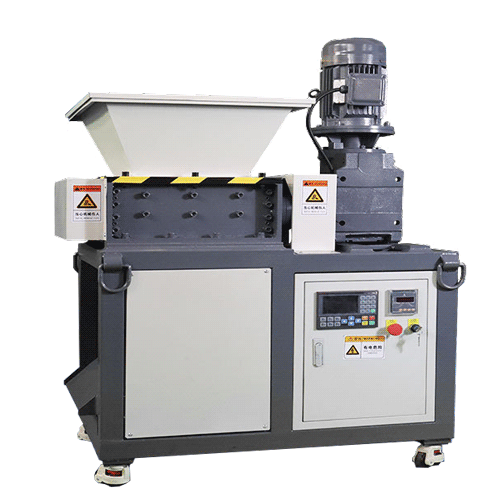
Compact shredder in the sample preparation chain
Preparing a sample for analysis almost always involves several steps of size reduction, and each step has its own limit. The upper stage receives the material in the form in which it entered the laboratory: a piece, a segment, a sheet, a rope, a sticky agglomerate. The task of this stage is not to obtain analytical size, but to make the material suitable for the next apparatus.
- selection and reception of a representative sample;
- preliminary size reduction - cutting and shifting, that is, the work of a compact shredder;
- crushing to the size accepted by the mill;
- fine grinding and homogenization in a ball or planetary mill;
- sample reduction and sample preparation for measurement.
Skipping or combining steps rarely occurs without consequences. If a large viscous piece immediately falls into the grinding bowl, the mill operates with overload in terms of mass and torque, the material sticks to the walls and to the grinding media, and the particle size distribution after grinding turns out to be unreliable. Pre-cutting eliminates this problem: it reduces the particle size to values at which the mill operates in design mode.
The second practical point is the representativeness of the sample. Cutting does not grind the material into dust, so the fine fraction is not carried away by the air flow as actively as with intense impact. But here, too, care is needed: any step of size reduction can change the particle size distribution if the material is fed too quickly or if you work with a worn cutting unit. Compact shredder TENCAN in this scheme, it is an independent apparatus with its own area of responsibility, and not a “small mill”.
How does a shredder differ from fine grinding?
Fine grinding is based on impact and abrasion: the material is destroyed by grinding bodies - balls, cylpebs, beads - inside a rotating or vibrating drum, glass or working chamber. The final particle size in such devices is several orders of magnitude smaller than after cutting, and the main task is not only to reduce the size, but also to homogenize the sample. Planetary, drum, vibration and bead mills solve exactly this problem.
A shredder works differently. It cuts the material with knives, and its output coarseness is orders of magnitude larger than what the mill produces. The shredder does not homogenize the sample: the particle size distribution at the output remains wide, the shape of the particles depends on the properties of the material and the geometry of the cutting unit - the particles can be splintered, lamellar or fibrous. Therefore, averaging and reduction of the sample after cutting is performed separately, and not “at the same time” with it.
How does a shredder differ from a jaw and roller crusher?
Jaw and roller crushers destroy the material by compression: the piece splits when the stress exceeds the tensile strength. This mechanism is effective for fragile materials - rock, slag, sintered ceramics, glass. Viscous, elastic and fibrous materials in a jaw crusher are more likely to become deformed, clog the throat or slip through without destruction.
The cutting apparatus operates on a different principle: it holds the material in the area between the movable and stationary knives and cuts it. That is why polymers, rubber, cable waste, sheet and long fragments, textiles, and biomass are processed more confidently by the shredder. The downside is sensitivity to hard and abrasive inclusions: a strong, brittle material that easily splits in a crusher can quickly dull cutting edges.
It is worth emphasizing that a shredder, a drum on rollers, a roller crusher and a bead mill are different devices with different mechanisms of action on the material. Mixing these names in the technical specifications leads to incorrect selection of equipment and disappointment during the first tests.
| Equipment class | Predominant mechanism | When appropriate | What limits the application |
|---|---|---|---|
| Compact shredder | Cutting and shearing | Soft, viscous, fibrous, sheet and long materials, agglomerates | Does not produce fine powder, sensitive to abrasive inclusions |
| Jaw crusher | Squeezing between cheeks | Brittle pieces of rock, slag, ceramics | Does not work well with viscous and elastic materials |
| Roll crusher | Compression and shear between rolls | Medium crushing of brittle materials of similar size | Requires piece size limitation and uniform feeding |
| Ball or planetary mill | Impact and abrasion by grinding media | Fine grinding and sample homogenization | Does not accept large pieces, is sensitive to overload |
| bead mill | Abrasion by fine media, often in liquid phase | Suspensions and fine dispersion | Works with already prepared suspension |
How the cutting unit works and what depends on it
The cutting unit of a typical compact shredder includes a rotating rotor with knives, stationary knives, a working chamber, a loading unit and an unloading unit, as well as a sieve or perforated grid at the outlet. The material enters the area between the moving and stationary edges, is cut and remains in the chamber until the particle passes through the sieve holes. From here follow three groups of parameters that determine the result: knife geometry and gap, screen characteristics and driven feeding mode.
Blade geometry and clearance
The number of knives on the rotor, the sharpening angle, the shape of the cutting edge and, most importantly, the size of the gap between the movable and stationary knives determine whether the material is cut or torn. A blunted edge and an increased gap turn cutting into tearing: heat generation increases, the proportion of fine particles increases, and viscous materials begin to stick to the working surfaces. The ability to adjust and control the gap, as well as the ease of replacing knives, are practical characteristics that should be clarified before purchase, and not after the first complex sample.
The material of the knives is indicated in the product card and must be checked against the sample requirements. For soft polymers and biomass, the requirements for wear resistance are the same, for materials with a mineral filler or glass fiber - different. There is no universal solution that works equally well on all samples.
Sieves and unloading
The sieve openings set the upper limit of the size, but do not define it unambiguously. An elongated particle can pass through an opening if its cross-sectional size is smaller than the mesh diameter, so the actual distribution is always wider than the sieve rating would suggest. The sieve is a consumable item: wear, blunting of the edges of the holes and deformation gradually change the result. Practically important are access to the sieve, the speed of its removal and cleaning, as well as the ability to replace it with a different size.
Drive, feed and overload protection
Cutting requires high torque at relatively low rotor speed. When the material jams, the load on the drive increases sharply, so overload protection, the ability to reverse, and a clear unlocking procedure are essential for laboratory devices. Laboratory practice often involves batch loading: the operator feeds the material in small portions and observes the behavior of the sample. Continuous feeding requires a consistent loading device and is not always appropriate for small samples.
Properties of the sample that determine the behavior of the material
The result of preliminary grinding is determined not only by the apparatus, but also by the material. The following are properties that should be described before selecting a mode.
| Sample property | Why is it important | What to clarify |
|---|---|---|
| Hardness and abrasiveness | Determine the wear rate of cutting edges and screens | Knife material, service life, replacement frequency |
| Viscosity and elasticity | The material smears, heats up, sticks | Knife geometry, feeding mode, available cooling |
| Fragility | The share of fine particles and dust is growing | Unloading method, measures to reduce dust emissions |
| Fibrous | The fibers are wound around the rotor and pulled into the gap | The shape of the knives, the ability to clean the chamber |
| Humidity | Adhesion, corrosion of working parts, sample sticking | The need for drying, humidity restrictions |
| Bulk mass and shape | Affect feed uniformity and productivity | Loading block geometry |
| Temperature sensitivity | Overheating changes sample properties and material behavior | Permissible heating, pauses, cooling |
| Cleanliness requirements | Contact with blades and chamber introduces impurities | Materials of working parts, cleaning procedure |
Heating, sticking and viscous samples
The main source of heat during cutting is the work of deformation of the material in the cutting zone and friction against the working surfaces. For thermoplastics, rubbers, waxes, fat-containing and wet materials, heating is critical: as the temperature rises, the material softens and begins to stick to the knives and chamber walls, which further increases the load and deteriorates the cutting quality.
Several techniques can reduce heating: a sharp and correctly aligned cutting edge, correct clearance, dosed feed instead of a continuous flow, pauses between portions, as well as cooling provided by the design. Here it is important to distinguish between two different processes: cooling the working area with an air flow and cooling the sample itself with a refrigerant, such as liquid nitrogen. This is not the same thing, and without a direct indication in the documentation, the device cannot be considered cryogenic. The air temperature in the working space is not equal to the sample temperature; the latter is measured separately or assessed indirectly, for example, by the behavior of the material during repeated portions.
If the product card does not confirm the supply of refrigerant, work should be planned at room temperature and the mode should be selected so that heating does not change the properties of the sample. Discussion of mode selection does not replace the operating instructions for a specific installation.
Output size and particle distribution
The size after cutting is determined by three factors: the sieve openings, the geometry of the cutting unit and the properties of the material. Brittle material produces a wider scatter with a noticeable amount of fines, while viscous material produces larger and elongated fragments. Therefore, the result is assessed by sieve analysis before and after processing, and not by one number from the description.
For subsequent fine grinding, not only the maximum particle size is important, but also the distribution shape, the proportion of fines and the absence of foreign inclusions. If the distribution after cutting is too wide, this is not necessarily a fault of the device: sometimes it is more rational to add an intermediate crushing stage than to try to achieve a narrow distribution with one cutting device.
The values given in the catalog refer to a specific material and a specific model. The typical minimum size obtained on one sample is not guaranteed for any other: the result is influenced by the initial size, shape of the piece, humidity and feeding mode. Therefore, the parameter of one model should not be transferred to the entire range.
Contamination, Wear and Cleaning
When cutting, the material comes into contact with the knives, chamber walls and sieve. Wear of the working parts leads to the ingress of metal particles into the sample, which is critical for elemental analysis of trace amounts. This risk needs to be assessed for each specific case: it depends on the abrasiveness of the sample, the duration of work, the condition of the edges and the material of the working parts specified in the product card.
Practical testing includes a blank run and analysis of a witness sample, as well as monitoring the repeatability of results on the same batch of material. It is useful to estimate in advance how long it takes to clean the chamber, whether all surfaces are accessible for inspection, and whether there are hard-to-reach areas where material accumulates. Cross-contamination between different samples is another source of error, especially when working with small samples.
The formulation “zero pollution” for any material should be considered incorrect. Neither ceramics, nor hard alloys, nor special coatings completely exclude the transfer of impurities; it is correct to talk about the acceptable level and how it is confirmed by measurements.
Moving from a lab sample to a larger batch
When a single sample becomes a batch, not only the operating time changes, but also the thermal conditions, wear rates and feed requirements. A simple proportional increase in processing time does not always give the same result: during long-term operation without pauses, the chamber and material heat up more, and accumulated carbon deposits and adhesion impair cutting.
When switching to a device of a different standard size, it is worth comparing not only the dimensions, but also the parameters that determine the process: drive characteristics and torque on the rotor, cutting unit geometry, screen area, working chamber volume, loading block design. A laboratory apparatus and a larger batch unit may require different feeding conditions, although the processing principle remains the same.
A separate issue is the storage and transportation of material between stages. After cutting, the sample occupies a larger volume, oxidizes more easily and absorbs moisture, so cutting and packaging are planned in advance.
What to check with a test run
It is important to confirm the calculated assumptions with experience using real material. A reasonable trial run plan looks like this:
- Assess the behavior of the material during portion feeding: is it pulled into the cutting zone, is there any slipping or jamming.
- Compare particle size distribution before and after treatment by sieve analysis rather than visually.
- Check sample heating after several batches, especially for viscous and temperature-sensitive materials.
- Perform a blank run and analyze a witness sample to assess possible contamination.
- Repeat the processing of the same batch several times and compare the results - this is how repeatability is assessed.
- Assess the time and ease of cleaning the chamber, screen and blades between samples.
- Inspect the cutting edges after work and evaluate the wear pattern on a specific material.
If the information in the documentation contradicts each other, the translation is unclear or the units of measurement look dubious, it is better to omit the corresponding value and separately check with the supplier rather than correct the specification with a guess and turn the option into standard equipment.
Information required for configuration selection
For meaningful discussion of mode and configuration compact shredder It is useful to prepare a description of the sample and task. Typically the following is requested:
- the nature of the material and its behavior under mechanical stress: brittle, viscous, fibrous, elastic;
- hardness, density, bulk density, content of abrasive fillers;
- shape and maximum size of the original piece, the presence of long fragments;
- humidity and tendency to stick;
- temperature sensitivity and permissible sample heating;
- the required size after cutting and its purpose - the next crushing stage or grinding;
- mass of a single sample and expected serialization of work;
- requirements for purity and permissible level of impurities;
- accommodation conditions: available food, location, noise level and dust emissions.
The more specifically the material is described, the more accurately the mode can be selected. General equipment class recommendations are useful for planning purposes but are not a substitute for actual sample testing. An overview of equipment areas and brand positioning is given at website TENCAN; полное название компании — Changsha Tianchuang Powder Technology Co., Ltd.
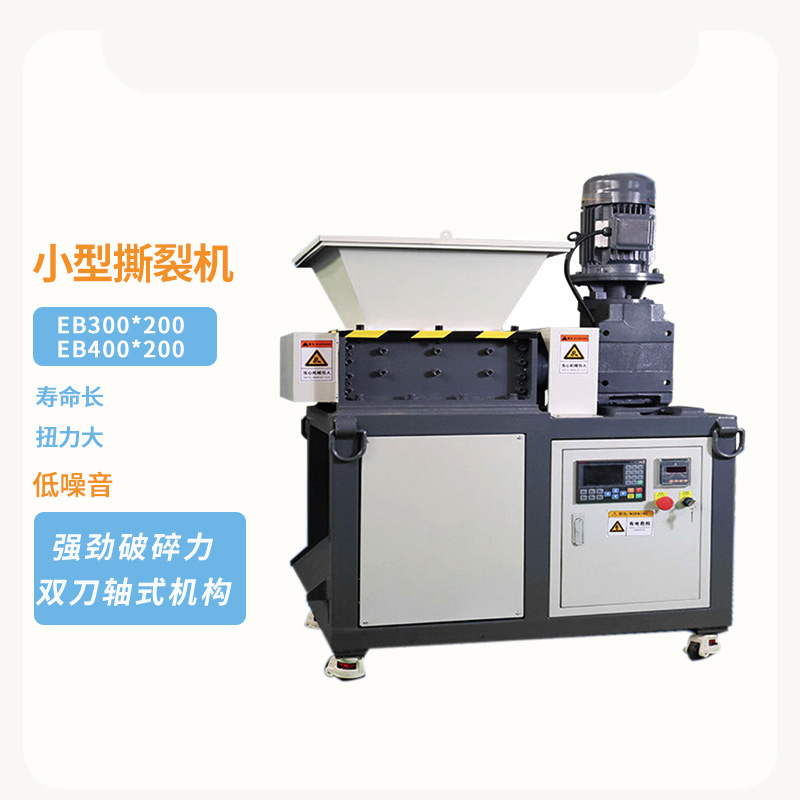
Frequently asked questions
Is it possible to replace a mill with a compact shredder?
No. The shredder performs a preliminary reduction in the size of the cutting and does not provide either fine grinding or homogenization of the sample. Its result is a material suitable for the next stage, and not an analytical size.
Why does a viscous sample heat up and stick?
The reason is a combination of deformation work and friction on the working surfaces. Blunt edges, increased clearance and too fast feeds increase heat. A sharp edge, the correct gap, portioned feeding and pauses in work help.
How to evaluate the size after cutting?
Sieve analysis of the starting material and the product after processing. One value from the description does not replace measurement on a specific sample, since the distribution depends on the material, particle shape and sieve condition.
How to reduce the introduction of impurities?
Check tool material against sample requirements, check for wear, perform a dry run, and thoroughly clean the chamber and screen between samples. It is impossible to completely exclude the transfer of impurities for any material.
Practical selection conditions
Pre-shredding in a compact shredder is a controlled operation rather than “just cutting”. The result is determined by three groups of conditions: properties of the sample, characteristics of the cutting unit and operating mode. When planning selection, it is useful to keep the following logic in mind: first describe the material and the required size, then determine the allowable heat and cleanliness requirements, and only then select the configuration and feed mode.
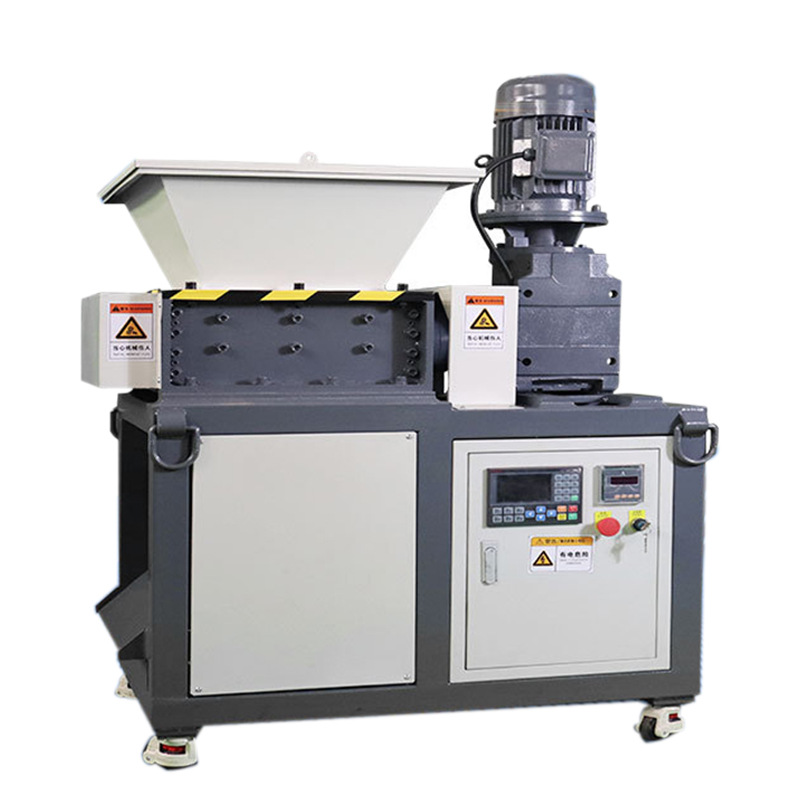
For trial run and final configuration compact shredder It is worth reporting: the nature and hardness of the material, the maximum size and shape of the original pieces, bulk density, humidity, temperature sensitivity, required size after cutting, mass of a single sample, expected serialization of work and requirements for sample purity. This information allows you to compare the problem with the actual characteristics of a specific model and avoid decisions based on guesswork.