
Preparing a sample for analysis rarely ends with grinding itself: it is more important that the sample remains representative and does not acquire foreign components. The ceramic grinding drum is the working element of a roller ball mill, which determines the volume of the chamber, the composition of the contact surfaces and the tightness. The reproducibility of grinding, the amount of impurities introduced and the cost of equipment depend on it.
In the catalog TENCAN ceramic grinding drum is presented as equipment for drum (roller) ball mills — ceramic grinding drum. Below we will talk about practical selection criteria: how the material relates to sample contamination, where wear occurs, how to organize cleaning between samples, and what dimensions really matter. The nominal volume, ceramic brand, geometry and permissible load of a specific position should be confirmed using the current product card, and not transferred from another model.
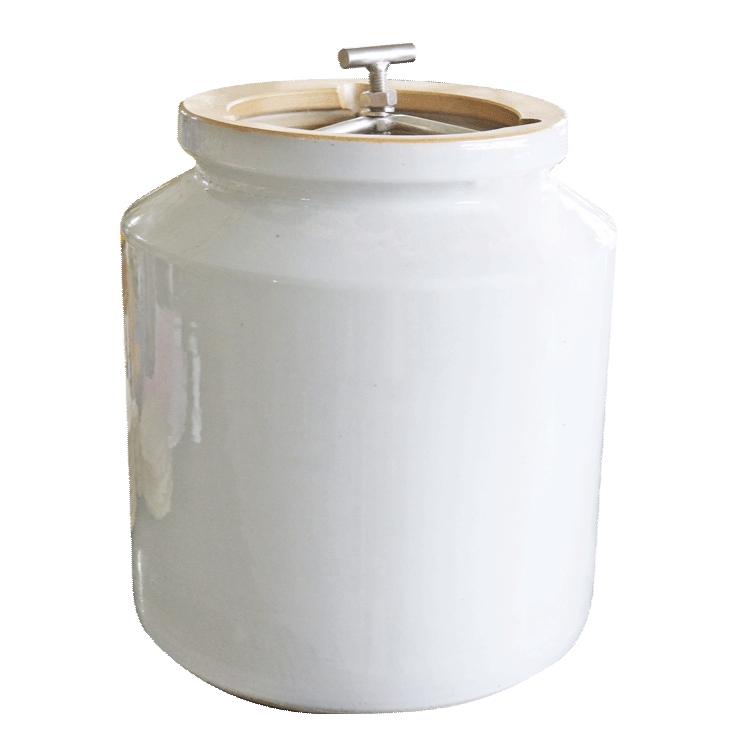
What does the drum decide in the grinding circuit?
The grinding drum is not a universal container, but a working part of the mill. In a roller-type drum machine, it lies freely on the drive rollers and rotates due to friction against them. The grinding bodies rise along the inner wall and then fall or roll down; the material is destroyed by impact and abrasion. The geometry of the chamber and the properties of the internal surface determine how much energy is due to impact and how much is due to shear and abrasion.
Hence the practical consequence: the drum cannot be selected in isolation from the drive. The outer diameter, length, weight and surface condition determine how firmly the drum “sits” on the rollers and what rotation speed can be maintained without slipping. A heavy ceramic drum with a dense loading of grinding media places different demands on the drive than a lightweight container of the same nominal volume.
It is useful to distinguish between classes of equipment. In a planetary ball mill, the drum is fixed in the carrier and operates under centrifugal acceleration, that is, in a field of significantly higher energy. The bead mill uses a stirrer chamber and fine media. A roller crusher destroys material by compression between rollers and has nothing to do with grinding in a drum. The general word "grinding" does not make the equipment interchangeable: a roller mill drum should not automatically be considered suitable for a planetary or bead mill.
Finally, the drum is a consumable item with a limited resource. It wears out, and wear products end up in the sample. That is why the lining material and cleaning organization are no less important than the volume of the chamber. The boundary between the sample and the environment runs along the inner surface of the drum, along the lid and along the seal, and each of these surfaces participates in the formation of the result.
Drum material and additives
The word "ceramics" describes a wide family of materials, rather than just one brand. The behavior of the drum in operation is determined by the main oxide, the amount of impurities, the method of molding and sintering, porosity and roughness of the working surface. Two vessels of the same nominal size can differ in wear resistance several times, so the name of the category in itself is not a guarantee of the purity of the sample.
Aluminum oxide (corundum)
Corundum ceramics is one of the most common materials for grinding equipment. Aluminum oxide is characterized by high hardness and abrasion resistance, so this drum is suitable for long abrasive grinding and moderate impact loads. The downside is fragility: with strong impacts from large and dense grinding bodies, chips are possible on the edges and at the neck.
During grinding, the corundum lining wears out and introduces aluminum into the sample, as well as accompanying impurities, if they are present in the material. For samples in which aluminum is a detectable or interfering element, this limitation must be taken into account in advance. The statement about the complete absence of contamination for wear ceramics is incorrect: any contact surface turns into a grinding product, the only question is the scale of this transition.
Zirconium dioxide
Zirconium dioxide ceramics are typically denser than corundum and have better impact resistance, which is important when using larger grinding media. Such equipment is heavier: a drum of the same volume will have a greater mass, and this is a question for the drive and the installation scheme on the rollers. Accordingly, the nature of the contamination changes - zirconium, as well as hafnium and stabilizing additives, if they are included in the material, can enter the sample.
None of these materials are neutral in all applications. The choice is determined by which element is critical for subsequent analysis and the hardness of the sample.
What to check in the specification and with the supplier
- the main oxide and its content, and not just the general word "ceramics";
- the presence of impurities that may be significant for the planned analysis;
- porosity and roughness of the inner surface - cleaning and retention of residues depend on them;
- the presence of a coating, glaze or other layer and its resistance to the grinding environment;
- nominal volume, internal and external diameter, length, weight;
- material and design of the cover, type of seal;
- permissible load and recommendations for mass ratio.
If the documentation provides only the volume and general name of the material, this is not sufficient to determine the suitability of the drum for contaminant-sensitive samples. You should request exactly those parameters that affect the result.
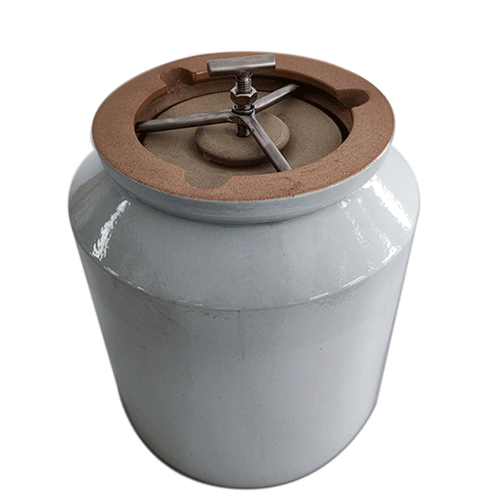
Wear: mechanisms, signs and control
Grinding drum wear rarely occurs due to a single cause. Typically, several mechanisms operate simultaneously, and their contribution varies from task to task.
Basic mechanisms
Abrasion is the most obvious mechanism: solid sample particles and grinding media slide over the surface and gradually remove material. Impact loads appear when grinding media fall and when working with a large fraction; for fragile ceramics this is the main source of chipping. Chemical interaction occurs during wet grinding in aggressive environments: acid or alkali can attack the binder or grain boundaries, accelerating the destruction of the surface. Thermal effects - drying, sudden temperature changes - add thermal cycling, especially if the drum is heated or cooled quickly.
What increases wear
The speed of the process depends on the ratio of the hardness of the sample and the lining, the size of the starting material, the size and density of the grinding media, the duration of grinding and the medium. Dense loading and high rotation speed accelerate material removal; Long grinding under the same conditions gives an accumulated effect. Dry and wet grinding wear out equipment differently: in a liquid environment, some of the small particles act as additional abrasive, but at the same time heat is removed and dust formation is reduced.
Signs to watch for
- change in the appearance of the inner surface: loss of characteristic shine, darkening or local stains;
- a noticeable increase in roughness with the same cleaning procedure;
- chips on the edges, at the neck, on the seating surfaces;
- change in drum mass under the same weighing conditions;
- seal wear, difficult closing, loss of tightness;
- the appearance of foreign inclusions in the sample, noticeable under microscopy or analysis.
The life of the drum is not determined by the calendar period. It is a sound practice to keep a log that records grinding conditions and the results of periodic inspections and weighings. Then the replacement is planned according to condition, and not according to subjective impression.
It is useful to separate the wear of the lining itself and the wear of the grinding media. If the chamber surface remains smooth and the mass of grinding media is noticeably reduced, the source of contamination is not in the drum. And vice versa: matte areas and local depressions on the wall indicate that the drum material is already involved in the formation of the sample.
Cleaning and cross-contamination between samples
In a laboratory where the drum is used for different materials, cross-contamination can be more significant than wear. Residue from the previous sample in pores, on rough surfaces and in compaction areas can significantly distort the result of the next analysis.
Reasonable course of action
- Remove the bulk of the material mechanically, without the use of metal brushes and abrasive powders, which leave their own marks.
- Flush the chamber with a liquid compatible with the drum and seal material; repeat if necessary.
- Rinse with a clean portion of the same or a suitable liquid.
- Dry, ensuring that moisture is removed from hard-to-reach places.
- Keep the drum closed, away from other types of equipment.
Limitations and common mistakes
Detergents are selected according to the manufacturer’s documentation: not all ceramics and not all seals are equally resistant to acids, alkalis and organic solvents. Information about the chemical resistance of a particular item should be confirmed and not inferred from general ideas about ceramics. Similarly, the drying temperature is determined by the material of the drum and seal, and not by the convenience of the procedure.
Drying ovens are sometimes used to remove residual moisture; for example, in the directory TENCAN There is vacuum drying cabinet. This is a separate device, and its suitability for drying a specific drum with a specific seal must be checked separately: the mode, temperature and environment are selected according to the documentation; there is no automatic compatibility here.
If the laboratory is working with different classes of materials, it is useful to assign separate drums to groups of samples. It's cheaper than dealing with unexplained differences in elemental composition. Cleaning the grinding media requires special attention: their surface also retains residues and also wears out. The lid and seal are cleaned no less thoroughly than the chamber itself, since this is where dried material most often remains after wet grinding.
It is convenient to control cleanliness using the same scheme: the same washing liquids, the same number of washings, the same drying. Then the result of the following analysis depends on the material, and not on who and how washed the equipment.
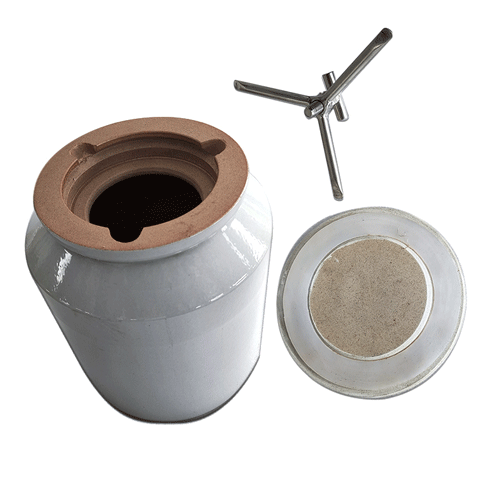
Dimensions, volume and geometry: how to read parameters
The first mistake when selecting is to mix different quantities. The nominal volume of the drum, the total volume of the load, the sample volume and productivity per unit of time are not the same thing. The nominal volume describes the geometry of the chamber. The payload is limited: part of the volume must remain free so that the grinding bodies can move and the material can be poured.
Filling the chamber
In practice, they often focus on filling about one third to half of the volume, but this is a guideline and not the norm for a specific installation. Specific recommendations for the selected model should be taken from the documentation for the equipment and accessories. Excessive loading increases the load on the drive, accelerates wear and impairs mixing; Too little loading reduces the impact efficiency and increases the rate of abrasion.
Geometry and rotation mode
The inner diameter of the drum is associated with the critical speed - the frequency at which the grinding bodies, under the influence of centrifugal force, stop coming off the wall. Operating rates are usually selected below this value, but specific numbers vary by diameter and must be confirmed for the individual machine. The length of the chamber affects the distribution of the material along the axis: too long a drum with weak mixing results in uneven volume.
The ratio of the size of the grinding bodies and the diameter of the drum determines the nature of the impact: larger bodies give impact, smaller bodies give abrasion. This is important for ceramic tooling, since the impact load limits the life of the brittle material.
From sample to batch
The transition from a laboratory sample to a larger batch is not a matter of proportional increase. With a different chamber volume, the trajectories of movement of bodies, the ratio of shock and shear effects, and the thermal regime change. The result obtained in the snare drum is transferred to a larger volume only after verification, and not by volume calculation.
Separately, it is worth distinguishing between the mass of the sample per grinding and productivity over time. Even with the same chamber volume, these values are not directly related: they depend on the cycle duration, the time for loading, cleaning and cooling. When planning the laboratory load, it is reasonable to consider the full cycle, and not just the operating time of the mill.
Compatible with drive, cover and grinding media
The equipment is selected for a specific installation, and details that are easy to miss are important here.
- Roller seating. The outer diameter and length must match the drive rollers; the condition of the outer surface affects the grip.
- Weight. Dense ceramics are heavier, and the maximum load of the drive is determined by the total mass of the drum and grinding media, and not just by volume.
- Rotation speed. Its range is set by the drive; for a heavy drum it may be narrower.
- Cover and seal. For wet grinding, tightness is critical; The seal material must be resistant to the fluid used.
- Grinding bodies. Their material, density and size must correspond to the hardness of the sample and the strength of the drum.
A separate issue is the composition of the pollution. If the lining and grinding media are made of the same class of ceramic, the foreign elements entering the sample are of the same type; if the materials are different, two sets of elements can go into the sample at once. This does not make one pattern correct and the other incorrect, but it does affect the interpretation of the assays.
The ceramic drum should not be assumed to be automatically compatible with any other equipment. Suitability for a planetary mill, bead mill or other installation requires separate confirmation in terms of drive parameters and loads; the coincidence of volume does not prove anything. The same applies to auxiliary devices: a drying cabinet, oven or mixer are independent machines with their own requirements.
Test grinding: what to check and what data to report
It is convenient to complete the selection of equipment through controlled testing rather than guesswork. The minimum plan looks like this.
Check procedure
- Weigh a clean and dry drum and record the weight.
- Grind according to the selected mode: load, medium, rotation speed, time.
- Repeat grinding under the same conditions to assess reproducibility.
- Assess particle size distribution and compare with target.
- Check the sample for added elements if purity is critical.
- Reweigh the drum and inspect the surface for changes.
Such a test answers several questions at once: is the desired size achieved, is the introduction of impurities acceptable, how quickly does wear appear, and is the result reproducible from sample to sample.
Data needed for selection
- sample material, its hardness and initial size;
- target particle size and how it is measured;
- sample weight per grinding and required productivity;
- dry or wet grinding, composition of the liquid medium;
- restrictions on temperature and permissible impurities;
- parameters of the existing drive: diameter and location of rollers, rotation speed range, permissible load;
- requirements for tightness and sealing material.
The more complete this information is, the less likely it is that the selected drum will be formally suitable in terms of volume, but unsuitable in terms of load, resistance to the environment or level of contamination. A general description of the line and its positioning is given on the website TENCAN; Specific parameters must be checked against the card of the selected position.
Practical conclusions
The ceramic grinding drum is an element that simultaneously sets the grinding conditions and determines how much foreign material will enter the sample. Therefore, the choice begins not with volume, but with the sample material and purity requirements: they determine which ceramics are acceptable, which grinding media are compatible and how often replacement will be required.
Wear and tear is a normal part of operation and not a sign of error. The goal is to ensure that it is predictable: clear lining material, fixed cleaning procedures, regular inspections and weighings, separate drums for incompatible sample groups. Then the particle size distribution and elemental analysis results remain comparable from batch to batch.
If there are any doubts about the parameters of a particular item - for example, the exact volume, the composition of the ceramic, or the resistance of the seal to the selected solvent - these values should be clarified before ordering the equipment. Discussions of general principles are not intended to replace installation-specific manuals and drum-specific documentation.