
The ceramic grinding drum is often perceived as a secondary accessory to the mill: it seems that it is enough to select the volume and fill in the grinding media. In practice, it is the drum that sets the limits of the permissible regime, influences the particle size distribution and determines how much foreign material can get into the sample. For a researcher or engineer, this is not an abstract issue: unplanned wear of ceramics can change the result of the analysis, and inappropriate geometry can make grinding irreproducible. Card ceramic grinding drum on the website TENCAN describes a specific product, but the choice cannot be reduced to the category name. Practical criteria are discussed below: material, contamination, wear, cleaning, dimensions and compatibility with the roller mill.
What you really choose: drum, grinding media and boundaries of terms
In the Russian-speaking technical environment, the terms are sometimes confused. The grinding drum for a roller mill is a container that is mounted on rotating rollers; The grinding bodies roll inside and crush the material due to impact and abrasion. The grinding bowl is usually referred to as a planetary ball mill, where the container makes a complex movement in the planetary disk. These are different units with different kinematics, so mechanical transfer of mode or geometry from one system to another is unacceptable without confirmation from the manufacturer.
Another common mistake is to call a drum a “can” and discuss it as a household container. In the technical description, it is not household associations that are important, but wall thickness, material, accuracy of fit, lid tightness and permissible load. A ceramic drum is not just a vessel: its surface is in contact with the sample and grinding media, and therefore participates in the formation of impurities and the distribution of particles. If the product card does not contain a drawing or at least mounting dimensions, selecting a drum only from a photograph is risky.
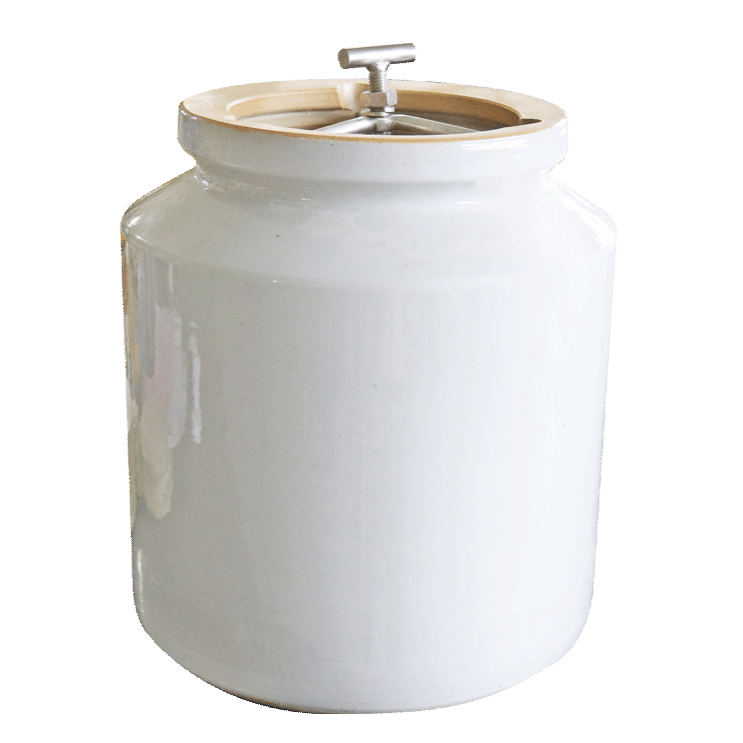
Separately, a distinction should be made between grinding and mixing. A rotating drum with grinding media is designed to reduce particle size, while mixing equipment can only redistribute components without significant grinding. A similar container shape or presence of a drive does not prove interchangeability. For a specific task, you need to look at the purpose of the unit, the type of movement, the lining material and the permissible energy of impact on the sample.
Ceramics as a material: where is the line between wear and contamination?
Ceramics is not just one material
The word “ceramic” in the product name indicates the class of the material, but does not reveal its composition. In the category of ceramic grinding containers, there are various sintered materials, such as corundum, zirconium and other compositions; each of them has its own hardness, brittleness, porosity and resistance to abrasive wear. Therefore, the phrase “ceramics will not contaminate the sample” is not a technical statement. The contribution of the material depends on the specific sample, mode, size of the grinding media and surface condition.
To choose, it is not enough to know the trade name. The exact material of the drum and grinding media, manufacturing method, open porosity, presence of glaze or polish, and acceptable cleaning media should be clarified. If the card only states "ceramics", this is not an error per se, but a critical task requires additional information from the supplier. Otherwise, it is impossible to assess how resistant a material is to acid, alkali, aqueous suspension or dry abrasive powder.
Where does the contribution to the sample come from?
Contamination during grinding is not limited to wall destruction. Sources may include the drum itself, grinding media, cover, seal, environmental dust, and residue from a previous sample. Even durable ceramics gradually wear out, especially at the edges, at the bottom and in the area of contact with the grinding media. Wear products get into the powder, and for a small sample this can be noticeable. At the same time, it is impossible to predict in advance the specific level of contamination without testing: it depends on the hardness of the sample, grinding time, rotation speed and mass of the grinding media.
Tungsten carbide, zirconia, corundum ceramics and other materials do not mean "zero pollution". They only change the composition of possible impurities and the wear rate. For some analyses, iron is critical, for others zirconium, aluminum or tungsten; Therefore, the question is not posed as “which material is the purest”, but as “what impurity is acceptable in this analysis and how to control it.” If the technique is sensitive to a certain element, the material of the drum and grinding media is checked specifically for this element, and not according to general advertising formulations.
What to check on a ceramic drum card
The product card should allow you to go from the name to the specific configuration. It is useful to make your own checklist and compare it with the description, drawing and passport. For ceramic grinding drums, the information given in the table is especially important.
| Parameter | Why is it important | What to clarify |
|---|---|---|
| Type of ceramics and composition | Determines wear, media resistance and possible impurities | The exact name of the material, not just the word “ceramics” |
| Density and Porosity | Related to mass, strength and contaminant retention | Determination method and lot specific values |
| Internal and external dimensions | Determine volume, fit on rollers and gaps | Drawing with tolerances, not just nominal volume |
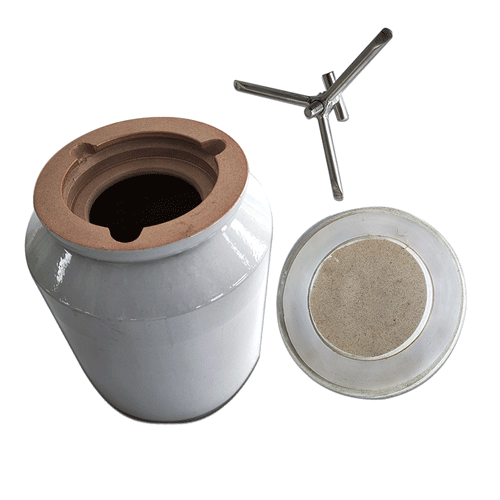
| Cover and seal | Affects sealing and transfer between samples | Seal material, replaceable, cleanable |
| Compatible grinding media | Not all materials are allowed in one drum | Recommendations for a specific model and mode |
| Working load and weight | Differs from full volume and affects load | Loading range, size and density restrictions |
| Cleaning and Maintenance | Aggressive environment can damage the surface | Permitted reagents, temperature, drying methods |
If some data is missing, this is not a reason to substitute typical values from another model. You should request clarification or select a product with a more complete description. Guessing about the fitting dimensions is especially dangerous: an error of a few millimeters can lead to incorrect position of the drum on the rollers, beating, slipping or damage to the cover.
Dimensions, volume and loading: compatibility starts with geometry
Full and working volume
Volume is often mentioned in descriptions, but it is not always clear whether we are talking about the full geometric capacity, the useful volume, or the volume for grinding media and material. These are different quantities. The total volume includes the space up to the edge, but the workload is always less: part of the volume is occupied by grinding media, part must be left for movement and to prevent overflow. The mass of the sample, in turn, depends on the bulk density and is not equal to the volume. You cannot automatically transfer a ratio used on another drum, even if the products are similar in appearance.
For reproducibility, not only the mass of the powder is recorded, but also the mass of the grinding media, their diameter, quantity and material. If a workload range is given on the card, it should be understood as a guideline for specific conditions and not as a guarantee of the same result for all substances. For heavy powders, the load on the walls and drive is higher; for light powders, incomplete energy transfer is possible. Therefore, when moving from one sample to another, the regime is checked, and not simply scaled by volume.
Landing dimensions and weight
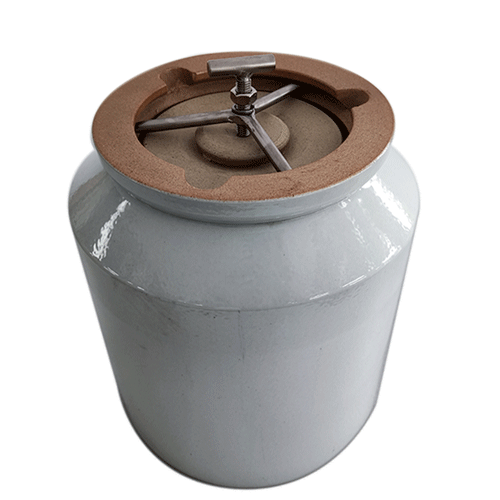
For a roller mill, the outer diameter, the length of the cylindrical part, the distance between the rollers, the height of the flange and the position of the center of gravity are important. A drum that is too light can slip; a drum that is too heavy can create an unacceptable load on the rollers and drive. The cover should not touch the frame elements, and the seal should not be deformed during rotation. These issues can be resolved using the drawing and instructions for the mill, and not from photographs.
Internal geometry also affects grinding. The ratio of diameter to length, the shape of the bottom and the radii of transitions change the nature of the movement of the grinding bodies. Sharp internal corners can trap material and make cleaning difficult, and a wall that is too smooth doesn't always mean better powder pickup. Productivity per hour cannot be derived only from volume: it depends on the size of the source material, the target size, hardness, mode and permissible temperature. For a laboratory sample, reproducibility is more important than maximum single loading.
Equipment compatibility: why one diameter is not enough
The compatibility of a ceramic drum with a roller mill is confirmed not by the coincidence of one size, but by a set of conditions. You need to check the seating surfaces, permissible weight, speed range, fixation method, clearances around the cover and the ability to install in the housing. Even if the drum is physically placed between the rollers, this does not prove that the manufacturer allows such a mode. On the main page TENCAN equipment directions are presented, but the parameters of a specific model should be taken from the current card and documentation, and not transferred from another product.
They separately specify what type of mill the drum is intended for. A planetary ball mill, a roller mill and a bead mill create different loads: the planetary mill experiences complex acceleration, the roller mill experiences long-term rotation with rolling of grinding media, and the bead mill experiences work with a fine medium and a pump. Therefore, you cannot buy a ceramic drum “for grinding at all.” You must indicate the mill type, model, speed, load weight and expected temperature.
What to check before ordering
- Outer diameter and length of the drum, as well as permissible deviations.
- Empty drum weight and maximum working weight with grinding media.
- The method of landing on the rollers, the presence of a shoulder, groove or other fixation.
- Cover type, seal material and permissible clamping pressure.
- The range of rotation speeds at which the manufacturer allows operation.
- Compatible grinding media in terms of material, size and weight.
- Approved cleaning methods and signs of extreme wear.
If at least one point is not confirmed, it is safer to consider compatibility unverified. This is especially important for ceramics: the brittle material may not break immediately, but after several cycles or when overloaded. A crack, chip or disruption of the glaze changes not only the strength, but also the nature of contamination of the sample.
Cleaning, wear and transition between samples
Inspection before each cycle
The ceramic drum is inspected before and after grinding. Pay attention to chipped edges, cracks, discoloration, loss of shine, roughness, traces of rubbing from grinding media and the condition of the seal. A slight darkening in itself does not prove a fault, but persistent local wear requires inspection. If a crack or chip appears, the product cannot be used for critical testing: even if it does not collapse immediately, the risk of sudden loss of tightness increases.
Wear of the grinding media also affects the result. Over time, their mass and shape change, so during repeated experiments it is useful to record not only the mode, but also the condition of the consumable elements. For sensitive assays, blank grinding is performed without sample or with inert material to assess background carryover of impurities. This is not a universal guarantee of cleanliness, but a way to test a specific drum-grinding media pair under selected conditions.
Cleaning procedure
The cleaning must be compatible with the drum and seal material. First, remove any remaining dry powder with a soft tool, then use an approved solvent or detergent if it does not damage the surface. Abrasive powders, hard metal brushes and strong reagents are used only as directed by the manufacturer. After wet cleaning, the drum is thoroughly dried; residual moisture can clump the powder and distort the dosage. The cap and seal are cleaned separately, ensuring that liquid does not get into areas where it may linger.
Between different samples, it is not enough to simply wipe the wall dry. For trace analysis, regulations are required: preliminary cleaning, control washing, drying and, if necessary, a blank cycle. If hazardous or biologically active materials are used in the laboratory, routine cleaning does not replace special decontamination procedures. Safety issues are resolved according to the substance passport and internal instructions, and not according to the article on the selection of equipment.
Trial grinding and questions to the supplier
Test grinding is not needed to formally confirm the purchase, but to verify that the selected “drum - grinding media” pair gives a reproducible result. Before testing, the initial particle size and method of analysis, sample weight, weight and diameter of grinding media, workload, speed, time and permissible heating are recorded. After grinding, not only the average particle size is assessed, but also the width of the distribution, the presence of agglomerates and color changes. For materials that are sensitive to contamination, control analysis for elements that may be carried over from ceramics or grinding media is useful.
It is convenient to build a test plan sequentially: first a short cycle with a minimum load, then checking repeatability, then increasing time or weight within acceptable limits. If the result is unstable, you should not immediately explain it as a “bad drum”. Causes may include uneven loading, insufficient grinding media, too large a feed material, overheating or an inappropriate measuring method. Diagnosis is based on data, not just one observation.
Before ordering, it is useful to ask the supplier specific questions: what ceramic material is used; what dimensions and tolerances are confirmed by the drawing; what model of roller mill the drum is designed for; what workload is acceptable; what grinding media are recommended; how to clean the product and by what signs the wear limit can be determined. If the answers are incomplete, this is a signal to clarify the configuration before purchasing. For current information about the ceramic grinding drum and its design, please refer to product card, rather than with general descriptions from older publications.
The practical conclusion is simple: the ceramic grinding drum is chosen as part of a system, and not as a separate container. The material determines the nature of possible contamination, the geometry determines the compatibility and movement of grinding media, the surface condition determines losses and cleaning, and the confirmed dimensions determine the safety of operation in a roller mill. For your own task, you need to determine in advance the permissible impurity, target size and test conditions. Only after this the name of the material, volume and appearance of the product form an informed choice.