
Preparing a sample for chemical or structural analysis almost always involves grinding: the sample must be brought to a state at which the sample sample becomes representative. At this stage, two challenges are faced. It is necessary to reduce the particle size and obtain a homogeneous powder - and at the same time it is impossible to change the composition of the sample, and this is what happens when the material of the grinding media enters the sample in the form of wear. Agate grinding balls are one of the tools that are being used to solve this problem for relatively soft and medium-hard materials. Practical selection criteria are discussed below: where agate is appropriate, how the size and weight of the balls change the result, how to assess contamination, how to organize cleaning, and what information is needed for test grinding.
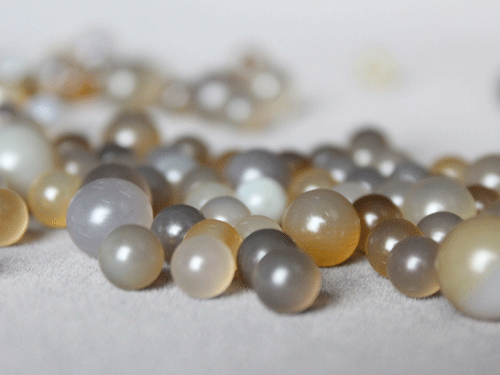
Why are agate balls chosen for some samples?
Typical users of agate grinding media are geological and mineralogical laboratories, ceramics and glass laboratories, and groups working with pigments, catalysts and powder mixtures prior to XRF, XRD or spectral analysis. In all these cases, not only the size is important, but also the preservation of the elemental composition. Metal grinding bodies have convenient mechanical properties, but during grinding they introduce iron, chromium or other elements into the sample, which then distort the results of determining microimpurities.
Agate is attractive because it contains no metals and behaves like a silica material. For samples in which silicon is already present and is not a detectable component, this is acceptable. For samples where it is necessary to determine silicon in trace quantities, the situation is the opposite: wear of the grinding media and the walls of the glass adds the same element that is being analyzed. Therefore, the choice of grinding media material begins with the question of what exactly is determined in the sample, and not with the question of which material is better in general.
The second motive is the moderate hardness of the material. Agate is effective for samples that are softer than itself, and for applications that require fine grinding without the addition of metals. For hard abrasive phases, wear increases and grinding time increases. Therefore, agate balls are more often considered for preparing samples for analysis and for small-volume laboratory tasks rather than for intensive grinding of large masses of strong materials.
Different analytical methods have different sample preparation requirements. For X-ray fluorescence analysis, homogeneity and stable grain size are important: large grains give rise to discrepancies when repeated measurements are made. For X-ray diffraction analysis, it is critical that grinding does not change the phase composition, for example, does not cause the transition of one crystalline modification to another under the influence of mechanical energy. For methods involving sample dissolution, the completeness of decomposition and the absence of poorly soluble inclusions introduced by wear are important. Agate grinding media do not automatically solve these problems, but their contribution to the sample differs in composition from metallic ones and is therefore preferable for some methods.
Before choosing, it is useful to separate the factors: some relate to the sample, others to the grinding medium, and others to the mode. The table below is not a replacement for the manufacturer's documentation, but it does help ensure that key issues are not missed.
| What's changing | How does this affect the sample? | What to clarify |
|---|---|---|
| Ball diameter | Large balls give a stronger blow, small ones - more contacts for abrasion | Available items and their size range |
| Number and mass of balls | Affect the number of contacts and the relative contribution of wear to a small sample | Load weight to sample weight ratio |
| Dry or wet grinding | The mechanics of collision changes, the stage of liquid separation and drying appears | Chemical resistance of the ball material to the environment |
| Glass material | Determines the second, sometimes the main source of introduced impurities | Coordination of the “glass - grinding media” pair |
| Grinding duration | Reduction increases, but at the same time wear and heat increase | Stopping criterion for size and purity |
Agate as a grinding medium material
Agate is a dense variety of chalcedony, that is, a finely crystalline form of silicon dioxide with a characteristic banded texture. In instrument making and laboratory practice, it is used as a material that combines wear resistance with chemical inertness in relation to most media. It is this combination that makes it popular as a grinding medium: the ball must work for a long time, not produce metallic inclusions and not react with the sample or with the liquid during wet grinding.
Composition and hardness
In terms of mineralogy, agate belongs to the quartz group, with a hardness ranging from approximately 6.5 to 7 on the Mohs scale. The practical conclusion is simple: the agate ball wears out material that is softer than it, and itself begins to noticeably wear out on materials of comparable or greater hardness. If the sample contains quartz, corundum, silicon carbide or other abrasive phases, the wear rate of the balls and cup is determined not only by the material of the grinding media, but also by the abrasiveness of the sample itself. The values for a specific batch supplied should be clarified in the manufacturer’s documentation: natural material may differ in density and porosity, and therefore in operating behavior.
Density and grinding energy
Ball milling is a combination of impact and abrasion. The impact energy depends on the mass of the ball and the speed of impact, and the mass depends on the density of the material and the diameter of the ball. Agate is lower in density than metal grinding media and tungsten carbide; the typical value for a material of this type is about 2.6 g/cm³, but for a specific product it must be checked according to the passport. A practical consequence: for the same diameter, an agate ball transfers less energy to the sample than a denser ball of the same size. For soft and brittle materials this is an advantage; for hard materials it is a reason to increase the grinding time or consider a different grinding media material.
Fragility and overload behavior
Agate is a fragile material. It works well in conditions where abrasion and moderate impact predominate, and does not tolerate shock overloads. Signs of problems do not appear immediately: first, these are chips on the surface of the ball, then - fragments of irregular shape. The fragments are dangerous not only mechanically. They change the load distribution in the glass, and their presence means that some of the material has gone into the sample in the form of relatively large particles, rather than uniform fine wear. Therefore, the balls are periodically inspected and damaged ones are rejected, rather than replacing one destroyed ball with two small ones of arbitrary size.
Chemical resistance when wet grinding
Chemical resistance is important for wet grinding. Agate, being a silica material, is resistant to most dilute acids and organic solvents, but is not universally inert: hydrofluoric acid dissolves it, and concentrated alkalis at elevated temperatures can damage the surface. This means that when choosing a liquid for wet grinding and during cleaning, it is necessary to take into account not only the sample, but also the material of the grinding media. If work in an aggressive environment is expected, this issue should be discussed with the supplier, and not resolved by analogy with other equipment.
Sample contamination: mechanisms and real limits
It is useful to start a conversation about pollution with terminology. Adding impurities during grinding is not just about metal. Any contact of the sample with the working surfaces, that is, with the ball, the wall and bottom of the beaker, the lid and the seal, adds material to these surfaces. The contribution is determined by three factors: the abrasiveness of the sample, the duration of contact and the hardness of the working surfaces relative to the sample.
In addition, there is transfer between samples: particles from the previous sample remain in microroughnesses, in the corners of the glass and in the pores of the balls. This contamination is not associated with wear as such, but may be more noticeable in its effect on the result. Therefore, when working with microimpurities, it is important not only the brand of grinding media, but also the cleaning procedure, as well as the order of sample processing - from “cleaner” to “dirtier” composition.
Agate wear and silicon contribution
When the agate ball wears out, a material similar in composition to silicon dioxide enters the sample, along with accompanying elements that are present in natural raw materials. This means that agate grinding media does not produce zero contamination - a condition that, in principle, does not exist for any material. The correct formulation is different: for a number of analytical tasks, the contribution of agate is smaller and, what is important, more predictable in composition than the contribution of metal grinding media, and iron, chromium and tungsten are not introduced into the sample. This contribution must be assessed by measurement, not by guesswork.
In practice, the contribution of wear depends on the mass ratio: the greater the mass of balls working for a small sample, the higher the relative contamination. A small sample ground with a large load of balls over a long period of time will receive more grinding material than a large sample under the same conditions. This is another argument in favor of selecting the load for the task, and not with a reserve.
Control grinding as a method of evaluation
A simple way to evaluate the contribution of the working surfaces is blank, that is, control, grinding: grinding media are loaded into a clean glass and either maintained in a mode without sampling, or a material similar in composition to the one being studied is processed, and then what is transferred into the sample is analyzed. The result will not show an absolute figure for all conditions, but an order of magnitude for a given glass, given balls and the selected mode. If control grinding has not been carried out, any claims of negligible contamination remain speculative.
The question of how much pollution a particular load produces only makes sense when coupled with the question of how it is measured. A practical approach is to compare the result of the analysis of a sample ground under these conditions with the same material ground in another way: manually in a mortar, in a mill with different grinding media, or at a shorter time. The difference will show the contribution of a particular mode. Absolute values from someone else's report say little about another sample because wear depends on material, time and mass ratio.
Size, number and mass of balls
The grinding load is described by more than one number. The diameter of the balls, their number, total mass, volume of the glass and mass of the sample are important. The diameter determines how much energy is applied to the contact; number and mass - how many contacts occur per revolution and what is the total energy transferred to the sample. The range of available diameters and packaging for a specific item should be found in the product description; You cannot substitute standard numbers from other sources.
Large and small balls
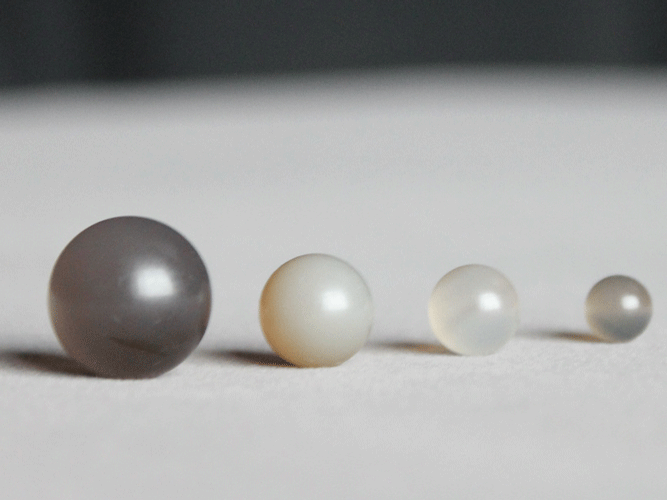
A larger ball carries more mass and provides a stronger impact. Its task is to destroy the original particles, that is, to work at the stage of coarse grinding. Small balls provide more contacts per unit volume and work better for abrasion, that is, at the stage of fine grinding and deagglomeration. A mixed load of balls of different diameters often turns out to be more practical than a single-size load: large fractions are destroyed, small ones bring the size distribution to the desired state.
However, you need to mix diameters consciously. If the difference is too great, small balls fill the gaps between large ones and cease to participate in impact destruction, and large ones lose mobility. In addition, when grinding in a planetary mill, it is important that the load does not create stagnant zones at the walls of the glass and does not interfere with the movement of the balls.
Glass filling and sample weight
Cup fill is a trade-off between performance and quality. Too small a load means infrequent contact and slow grinding. Too large - lack of free volume for the movement of the balls, an increase in temperature and the risk of jamming. Usually, free space is left so that the balls can accelerate and fall; the exact proportion is determined experimentally for a specific mill, glass and material.
The sample mass is set so that it is representative for the analysis and does not exceed the capacity of the glass. Here, confusion often arises between the volume of the beaker, the loading volume and the mass of the sample: these are three different quantities. The nominal volume of the glass is not equal to the volume that can be filled with sample, and the mass of the sample depends on the bulk density of the material and on whether grinding is carried out in dry form or in the form of a suspension.
Dry and wet grinding are different mechanical processes. In a liquid medium, particles move more easily, aggregates are destroyed more efficiently, and dust formation and adhesion are reduced. At the same time, the liquid changes the nature of the impact, adds the stage of separation and drying, and introduces its own requirements for the material of the grinding media and the glass. The choice of environment should be justified by the purpose of the analysis, and not by convenience.
You also need to check the grinding result correctly. Particle size distributions obtained by sieve analysis, laser diffraction and microscopy give different pictures, especially for aggregated powders. Some of the measured large particles may not be primary grains, but agglomerates that form during drying or storage. Therefore, when selecting a mode, it is useful to record not only the device, but also the method of preparing the suspension, the time of ultrasonic treatment and the measurement conditions. Without this, a comparison of two grinds may end up being a comparison of two measurement techniques.
Compatible with glass and equipment
Grinding media do not work on their own, but in conjunction with a glass and in a specific mill. Three conditions must be met simultaneously: the balls are suitable in diameter to the internal dimensions of the glass and the design of the mill, the material of the balls is compatible with the material of the glass and the sample, the mill operating mode does not exceed what the balls can withstand. Compatibility does not follow from the appearance of products alone; it is confirmed by documentation and trial grinding.
A separate issue is the material of the grinding bowl. Even well-chosen balls will not help if the glass is made of a material that wears out intensively under given conditions: then it will make the main contribution to pollution. The glass material and the material of the grinding media should be considered as a single pair with comparable hardness and abrasive resistance. In addition, the dimensions of the glass determine the permissible diameter of the balls: a ball that is too large in a small glass works mainly along the walls, and not along the sample.
It is worth mentioning separately the limits of application. Grinding media are loaded into grinding devices - planetary and drum ball mills, vibration and bead mills - where their movement is part of the working process. Mixing equipment e.g. horizontal trough type mixer, solves a different problem: it mixes the components rather than grinding them. It is not possible to load grinding media into it, and compatibility of such solutions is not assumed by default.
It is convenient to check the directions of equipment and the composition of the assortment at website TENCAN, and the characteristics of a specific position are in its description. If you plan to move from a laboratory sample to a larger batch, not only the volume changes. A different mill, a different beaker, a different ratio of the masses of the balls and the sample - all this affects the particle size distribution. Scaling cannot be accomplished by simply multiplying the sample; it is necessary to check whether the regime and comparable size are maintained.
Wear, cleaning and cross-contamination
Wear on agate balls manifests itself as mass loss and surface changes. It is convenient to measure it by periodic weighing on laboratory scales: this gives an objective picture instead of assessing it by eye. If the mass loss over a series of grindings becomes noticeable in comparison with the mass of the sample, the contribution of the ball material to the sample can no longer be considered negligible.
Temperature is another factor related to wear and the condition of the sample. During intensive grinding, a significant part of the mechanical energy is converted into heat. Heat affects soft, fusible and thermally sensitive materials and can also increase wear on work surfaces. An air-cooled setup reduces the temperature of the workspace, but this is not the same as controlled sample temperature. If the material is sensitive to heat, the mode is selected with pauses and shortened cycles, and not only by cooling the case.
Cleaning between samples
Cleaning has two purposes: to remove remnants of the previous sample and not to damage the surface of the balls. Abrasive cleaning with a wire brush or coarse powder is not suitable for agate: it creates scratches, which then accumulate material from subsequent samples. The usual sequence is mechanical removal of residues with a soft instrument, rinsing with a suitable solvent or water, rinsing and drying. The solvent is chosen taking into account the chemical resistance of the agate and the nature of the sample; aggressive environments and concentrated alkalis at elevated temperatures are undesirable for this material.
After wet grinding, it is important to make sure that there are no small particles left in the glass and on the balls, which, after drying, form a film that is difficult to remove. If the laboratory works with microimpurities, it is reasonable to assign a separate set of grinding media to a certain type of sample or to a certain device, so as not to transfer contamination between areas of work.
Storage and accounting
Balls are stored separately from dissimilar materials, in a clean, closed container so that dust and moisture do not settle on the surface. It is useful to keep a simple log: the date of commissioning, the number of grindings performed, weighing results, comments on the condition of the surface. Such accounting allows you to notice accelerated wear in time and associate it with a specific material or mode, rather than explaining it with guesswork.
What to check before trial grinding
The list of information that determines the selection looks like this:
- type of sample material, its hardness and abrasiveness;
- initial size and target state of the sample;
- the mass of the sample and its representativeness for the chosen method of analysis;
- determined elements and permissible level of introduced impurities;
- type and model of the mill, volume and material of the grinding bowl;
- required range of ball diameters and expected quantity;
- dry or wet grinding, liquid used;
- duration and mode: rotation speed, cycles, pauses;
- method of monitoring the result: granulometry, microscopy, control grinding;
- cleaning requirements and sample handling procedures.
The information listed is not needed for formality. The diameter of the balls, their number and grinding time are interconnected: changing one parameter requires a revision of others. If the initial size or hardness of the sample is unknown, selection turns into a search of options, and the result is difficult to reproduce. Therefore, it is better to plan the first trial grinding as a series of short experiments with a gradual change in one parameter, rather than as one long run.
It is worth agreeing on the criteria for success in advance. For one task this is the achieved fineness, for another it is the absence of noticeable contamination, for a third it is reproducibility from sample to sample. The criterion determines what to measure and when to stop. Without it, it is easy to obtain a fine powder that cannot be used in analysis due to introduced impurities.
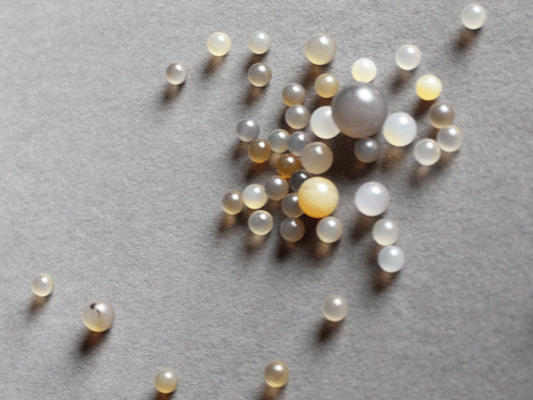
Available items are described on the product page agate grinding balls. Specific diameters, packaging and characteristics of the batch must be confirmed with the supplier, since natural material is heterogeneous, and the parameters of one batch are not automatically transferred to another.
Agate grinding balls are not a universal solution, but a tool with a defined area of application: relatively soft and medium-hard materials, tasks where the introduction of metals is unacceptable, and modes with moderate impact loads. Their strengths appear where the requirements for sample size and purity are clear in advance, and the mode is selected for a specific material. Reliable results are not achieved by the individual consumable element itself, but by the coordinated combination of grinding bowl and grinding media together with a reproducible cleaning and control procedure.