
The selection of grinding media for a laboratory mill rarely comes down to the question “which balls to buy.” First you need to understand what is happening to the sample: destruction of large particles, regrinding, disagglomeration or mixing. The diameter and number of balls, the material of the glass, the ratio of the mass of the sample and the grinding load, and the duration of the operation depend on this. 304 stainless steel is a practical option for applications where corrosion resistance and affordability are important, but it is not a one-size-fits-all solution. Below are material limitations, wear, cleaning, sizing and compatibility testing.
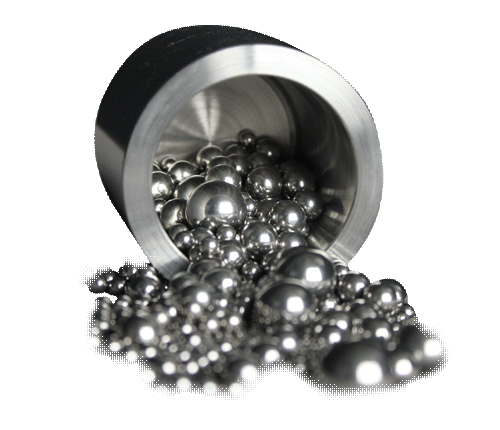
What is known about 304 balls and what needs to be clarified
In the product details provided "304 stainless steel grinding balls" material specified. This is a starting point, but not a complete specification. For engineering selection, not only the words “stainless steel” are important, but also diameter, tolerance, surface condition, batch weight, hardness, packaging method and specific delivery documentation. If this data is not available in the available description, it should be queried rather than retrieved by analogy with another type of grinding media.
Grade 304 is a common austenitic stainless steel containing chromium and nickel. Under normal laboratory conditions, it resists corrosion better than carbon steel and is easier to clean. At the same time, 304 is not a hard alloy or ceramic: its abrasive resistance is usually inferior to special materials, and its corrosion resistance depends on the environment. Therefore, the expression “stainless balls” cannot be read as “balls without wear and without the transfer of impurities.”
Grinding media as part of the grinding system
The ball does not work in isolation. Energy is transferred from the mill drive to the grinding bowl, then to the grinding charge and sample. The result is influenced by the internal diameter of the cup, the shape of the lining, the presence of a seal, rotation speed, mass ratio, properties of the powder and liquid phase. The same ball in different mills will give different results, so it is impossible to transfer the mode from one installation to another without checking.
Wet grinding adds suspension viscosity, powder wettability, and aggregation tendency. In dry conditions - dust formation, sticking to walls and local overheating. Grinding balls are only one element of this system. Their material and size should be assessed together with the glass and mode, and not separately according to the catalog.
Limits of applicability 304
304 stainless steel is appropriate where moderate corrosion resistance, affordability, and cleanability between samples are desired. It can be considered for grinding many mineral, ceramic and organic powders if the sample material is not sensitive to iron, chromium and nickel. But the decision depends on the chemistry of the sample, not just the name of the steel.
Increased caution is needed in several cases: the sample contains aggressive chlorides or acids; minimal transfer of metal impurities is required; the glass already has a ceramic lining, and the mixing of materials has not been tested; The product is sensitive to magnetic or metallic inclusions. 304 may not be suitable for such applications, but replacing it with ceramic or carbide also does not mean “zero contamination” - other materials have their own mechanisms of wear and brittle failure.
In the general catalog TENCAN Various areas of equipment and accessories are presented. The mere presence of an item in the catalog does not prove the compatibility of balls with a specific mill, beaker or technological process. Compatibility is confirmed by geometry, load capacity, material and trial grinding.
Wear and transfer of impurities: what to evaluate
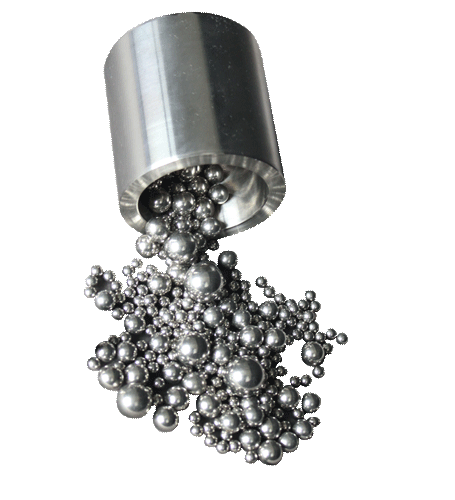
Wear of grinding media manifests itself in two ways. The first is a change in the balls themselves: loss of mass, change in diameter, appearance of abrasions, edges or dark areas. The second is the ingress of ball material into the sample. For laboratory sample preparation, the second effect is often more important because even small amounts of iron, chromium or nickel can change the analytical result or the properties of the powder.
304 stainless steel contains iron, chromium, nickel and other elements. During abrasive and impact wear, these elements can transfer into the sample. The statement “stainless steel does not pollute” is technically incorrect: corrosion resistance and wear resistance are different properties. Depending on the sensitivity of the analytical method, even trace amounts of metal can be significant.
The intensity of wear depends on the hardness and shape of the particles, the size of the starting material, the speed and time of grinding, the diameter of the balls, the filling of the glass, the presence of liquid and temperature. Abrasive powder with hard particles wears the surface differently than soft organic material. Impact mode with large balls gives a different picture than slow abrasion with small balls.
Corrosion should also be taken into account. In aqueous environments with chlorides, in acidic or strongly alkaline conditions, the durability of 304 may be insufficient. You cannot transfer experience with a neutral suspension to a concentrated solution of salt or acid. If the chemistry of the medium is unknown or unstable, it is best to rule out this option before consulting with a materials specialist.
Several techniques are useful for practical assessment of wear. The balls are weighed before and after control grinding, the surface is inspected, and the appearance of wear products in the sample is recorded. A blank test without a sample or with an inert medium helps evaluate background wear, but does not replace method validation. If the product is sensitive to metals, elemental analysis rather than visual inspection becomes decisive.
Diameter and loading: trade-off between energy and number of contacts
The information provided does not contain a range of diameters and tolerances, so it cannot be stated that any ball from this category is suitable for a particular mill. Before ordering, please inquire about available diameters, tolerance limits, batch weight and handling recommendations. If the supplier doesn't confirm the size, fitting becomes a guesswork.
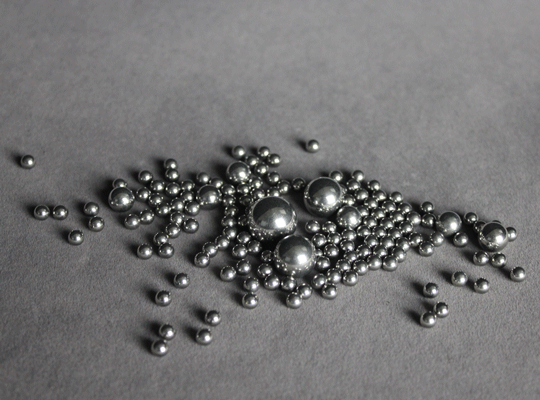
Large balls provide higher impact energy and are better at destroying large particles. Small balls create more contact and work primarily by abrasion, which is useful for fine grinding and deagglomeration. But small balls are less able to capture large particles, and large ones can over-grind soft material and increase wear. The optimal diameter depends on the initial particle size, target particle size distribution and acceptable contamination.
A mixture of balls of different diameters can sometimes help balance coarse fracture and fine abrasion, but this is not a universal rule. The mixture changes the load packaging, the number of contacts and the nature of movement. It should be used only after trial grinding and comparison with the monofraction.
Filling a glass with balls cannot be copied from another mill. Too large a load limits the free path of the balls and can overload the drive; too low reduces efficiency and increases wear on individual balls. Specific limits depend on mill model, beaker volume, speed and lid design. This data must be in the manual or confirmed by the equipment supplier.
The ratio of the mass of the balls to the mass of the sample also requires verification. It affects the likelihood of contact, grinding speed, heating and contamination. One number cannot be called universal: for dense mineral powder and light organic material, the conditions will be different. It is important to distinguish between the volume of the glass, the total volume of the load, the mass of the balls, the mass of the sample and the productivity of the finished product - these are different quantities.
| What to check | Why is this important | What to request |
|---|---|---|
| Diameter and tolerance | Affects impact energy and gap in the glass | Available diameters, tolerance, minimum quantity |
| Material and surface condition | Detects wear and contaminant transfer | Steel grade, hardness, surface treatment |
| Weight and quantity | Related to cup loading and drive load | Weight of one batch, spread in weight |
| Glass compatibility | Ensures free movement and no damage | Inner diameter, lining material, seal |
| Cleaning and packaging | Reduces cross-contamination during storage | Recommendations for cleaning, packaging, labeling |
Dry and wet grinding: different requirements for the ball and glass
Dry grinding is simpler in terms of equipment, but produces dust, sticking and local overheating. Wet grinding reduces dusting, improves dispersion and often reduces aggregation, but adds liquid, the need for drying and the risk of corrosion. For 304 balls, the aqueous environment is not automatically safe: pH, chloride content, temperature and contact time are important.
It is necessary to distinguish between grinding and disagglomeration. If the goal is to destroy aggregates rather than crush primary particles, large balls may be redundant. Sometimes a soft mode with small bodies is sufficient, but the boundaries are determined by trial grinding. You cannot promise to achieve a given size just because the “right” ball material is selected.
The temperature during the grinding process depends on energy, time, heat dissipation and powder properties. Air cooling of a mill is not the same as cryogenic cooling with liquid nitrogen. Drying equipment, including vacuum drying ovens, is a different step and does not replace the mill's cooling system. If the description does not confirm the cryogenic mode, you should not call conventional grinding cryogenic.
After wet grinding, the balls and glass need to be cleaned and dried. Residual liquid may cause corrosion during storage or alter the following experience. Water with dissolved salts leaves marks after drying, so rinsing alone may not be enough. The compatibility of the washing liquid with the material of the balls and glass is checked separately.
Cleaning and cross-contamination
Cross contamination doesn't just come from balloons. Its sources are the glass, lid, seal, sieve, brush, storage container and operator's hands. If you clean only the balls and leave the glass with the remnants of the previous sample, controlling impurities becomes meaningless. It is helpful to have a separate set of tools or at least a documented cleaning procedure for each material.
A reasonable sequence includes bulk powder removal, mechanical cleaning with a soft brush, rinsing with a compatible solvent, drying and inspection. Aggressive acids, abrasive pastes and carbon steel wire brushes can damage the surface or leave their own particles. Chloride-containing cleaners are especially undesirable for 304 if they remain on the surface.
After cleaning, check for dents, burrs, dark spots and powder residues. It is better to remove heavily worn balls with changed geometry from work: they are less predictable and can produce more impurities. The balls should be stored in dry, labeled containers, away from samples and tools that may leave metal shavings.
For sensitive applications, control grinding with an inert medium or without a sample, as well as comparison of several successive purifications, are useful. This does not guarantee the absence of contamination, but it does indicate the level of contamination. If a procedure requires validation, control procedures should be described and validated, and not replaced by a general phrase about “thorough cleaning.”
Compatible with mill and grinding bowl
Compatibility has three levels: geometric, mechanical and chemical. Geometric - the ball fits into the glass, does not jam in the seal and does not damage the lid. Mechanical - the drive can withstand load weight and shock loads. Chemical - the material of the ball, glass, sample and liquid does not enter into unwanted reactions. An error on even one level renders the test meaningless.
If the glass is ceramic and the balls are steel, wear will occur on both materials. This is not necessarily a bad thing, but requires evaluation: ceramics can chip, steel can produce metal particles. If the bowl is stainless steel and the balls are 304, there may be sticking and increased wear in the contact area, especially when dry grinding. The same material does not guarantee a better result, and different materials do not guarantee the absence of contamination.
Before starting, you need to clarify the internal diameter and volume of the bowl, the permissible load weight, the maximum speed, the type of seal, the ability to work under pressure or in a gas atmosphere, as well as recommendations for the diameter of the grinding media. For a horizontal drum mill, the lining and length distribution of the balls are important; for planetary - balancing and overload. There is no universal compatibility table.
Separately, check whether the balls do not fall into the gap between the lid and the glass, whether they block the sensor and whether they create dangerous vibration. If the mill is not designed for impact use, large balls may not be appropriate. These issues are addressed by the specific installation manual rather than by a general category description.
Test grinding: how to check the solution
The trial grind must be reproducible. Record the mass of the sample, the initial size, the material and volume of the glass, the diameter and number of balls, the total mass of the load, the presence of liquid, speed, time and temperature. After the experiment, the particle size distribution is measured, contamination, losses and completeness of extraction are assessed. Only after this can we talk about the suitability of the option.
Start with short intervals to see the dynamics and not overheat the material. Between approaches, the balls and glass are inspected. If signs of corrosion, chips, or an unexpected color of the powder appear, the test is stopped and the cause is determined. Increasing speed and time without analysis may increase wear but not improve results.
When moving from a laboratory sample to a larger batch, you cannot mechanically scale the time and number of balls. The heat dissipation, the path of the balls, the filling and the probability of contact change. First, reproducibility is checked at a small volume, then the load is increased stepwise. If the target size is not achieved, the reasons may be in the source material, loading, medium or measurement, not just the grinding media.
To request a selection, it is useful to prepare a short set of data: sample material, initial and target size, sample weight, mill model, beaker volume and material, permissible contamination, dry or wet mode, cleaning requirements. This information allows discussion of a specific configuration rather than the general properties of the steel. Grinding ball card 304 serves as a starting point for clarifying sizes and delivery conditions.
304 stainless steel grinding balls can be a workable solution for laboratory grinding as long as sample chemistry, wear, cleanup, and beaker geometry are taken into account. But choosing by material name is not enough. We need confirmed dimensions, compatibility testing and trial grinding with measurement of the result. This approach reduces the risk of hidden contamination and does not turn a general brand characteristic into a promise for a specific product.