
Powder sample preparation rarely begins with mill selection. First, more specific conditions are formulated: what material is crushed, what is the initial size, what result is needed, how much of the sample can be lost and what elements cannot be added. In this chain, the grinding balls are not just a “filler” for the glass. They transfer energy to the material, wear out themselves and are in constant contact with the sample. Therefore, the choice of 304 stainless steel grinding balls is simultaneously a choice of material, geometry, mode and method of contamination control. Product card TENCAN helps clarify execution, but does not replace checking the conditions of a specific laboratory: 304 stainless steel grinding balls.
The task begins with a sample, not with a catalog
The properties of the sample determine what kind of wear is acceptable. Brittle mineral, polymer, metal powder, ceramic mixture and hygroscopic raw materials behave differently. Some materials quickly split and produce fragments, others are deformed and stick to the balls, and others abrade both the ball and the glass. For a plastic material, not only the hardness of the grinding media is important, but also the tendency to form a film on the surface. For abrasive powder, wear rate comes to the fore. For hygroscopic - the possibility of dry grinding and subsequent cleaning. The same ball cannot be equally convenient in all cases.
Next, the goal is clarified. Coarse crushing, fine grinding, disagglomeration and mixing are different operations, although outwardly they can be performed in the same apparatus. If agglomerates need to be broken, excessive impact may compact the material; If you need to reduce coarseness, you cannot do without sufficient energy. The final particle size depends on the initial particle size, material properties, medium, time and method of measurement. Therefore, the standard minimum from the catalog cannot be automatically transferred to any sample.
Representativeness is taken into account separately. If the sample is heterogeneous, a small sample may not reflect all the material, and prolonged grinding may change the distribution of particles. Before grinding, it is useful to average the sample and record how it was selected. For comparative tests, take the same samples and the same loading of balls, otherwise the difference between the results may be due not to the material, but to the procedure.
The analytical task is no less important. If the powder is then examined for trace elements, small metal transfer from the grinding media can be significant. If only the shape or bulk density is controlled, the cleanliness requirements may be different. The weight of the sample also matters: with a large load of balls, a small sample is lost in the gaps and on the walls, and too large a sample can overload the glass. The mass of the powder and the mass of the grinding media are different parameters and cannot be mixed in one calculation.
The practical conclusion is simple: first describe the sample and limitations, then select the material, diameter and mode. 304 stainless steel is an option, not a one-size-fits-all solution. It is appropriate where its behavior is confirmed by the grinding conditions and the acceptable level of impurity transfer.
What does grade 304 mean for a grinding ball?
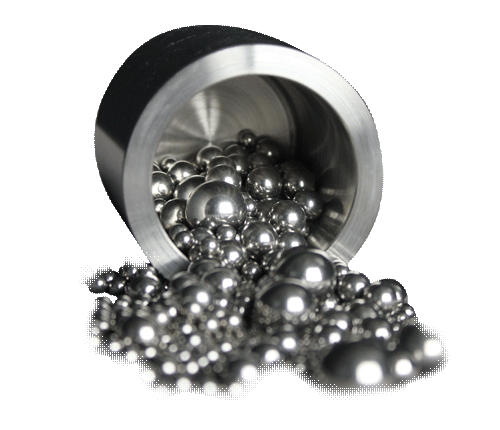
In the product name TENCAN the material and type of product are indicated: grinding balls made of stainless steel 304. Grade 304 refers to stainless steels, but the word “stainless” does not mean “wear-free,” much less “inert.” In grinding, the ball acts as a body that repeatedly collides with the material, glass and other balls. Even with moderate wear, its surface changes, and wear products can become powdery. Therefore, 304 should be considered a construction material with certain limitations and not a pollution-free guarantee.
It is important for the analytical laboratory to distinguish between three phenomena. The first is the mechanical separation of small metal particles. The second is the dissolution or corrosive transition of elements into the liquid phase during wet grinding. The third is the adhesion of the sample to the ball, due to which the subsequent sample may receive the remainder of the previous one. All three processes depend on the material, medium, time, temperature and cleaning. You cannot evaluate only by the appearance of the ball after grinding: the surface may look shiny, but already have a microrelief that retains particles.
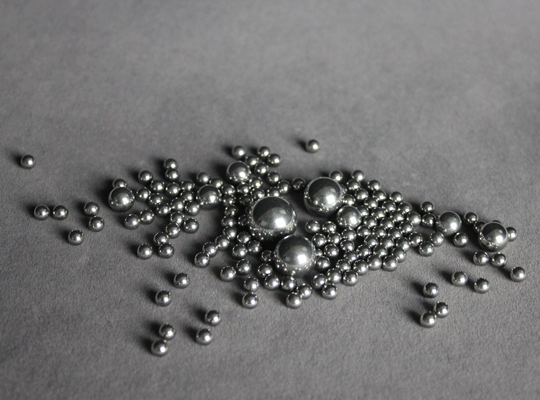
The geometry of the ball is no less important than the brand. An uneven surface, ovality or different masses of balls in a batch change the nature of the load. For laboratory work, it is more convenient when the batch is homogeneous and the loading can be repeated. If the balls are supplied in bulk, before testing it is useful to separate them according to visible signs and not mix questionable specimens with suitable ones.
The brand does not specify the diameter. Diameter, tolerance, batch weight, surface condition and packaging are delivery parameters that need to be checked against the current card and coordinated with the task. You should not choose a ball based only on a photograph: the geometry and uniformity of the batch are more important than the advertising angle. Defects - cracks, burrs, dents, traces of rough processing - increase wear and can become a place for jamming or sticking. Before the first use, it is useful to inspect the batch, make sure there is no contamination and, if necessary, remove the preservative lubricant in a manner permitted by laboratory regulations.
Finally, 304 should not be confused with harder or more corrosion resistant materials. If the sample is abrasive, contains chlorides, acids or strong oxidizing agents, labeling alone is not enough. We need to check a specific environment and, if we are talking about trace analysis, a blank experiment. This doesn't make the material "bad"; this means that its use must be justified.
Compatibility: glass, mill and mode
The compatibility of grinding balls with equipment is not confirmed by the name of the material alone. It is checked at three levels. Mechanical level: the diameter and mass of the balls must correspond to the internal geometry of the bowl and the permissible load of the mill. Chemical level: the ball, beaker, sample, liquid and atmosphere should not form an unwanted pair. Operating level: speed, time, temperature and cleaning method must remain within the limits specified for the specific device.
If the mill is designed for ceramic grinding media, replacing them with steel ones changes the load, the nature of the impact and the heating. This does not mean that replacement is not possible, but it requires confirmation by the mill manufacturer or testing. You cannot transfer the parameters of one installation to another just because the volume of the glass is the same. Rotation speed, energy transfer, cup fastening and permissible load weight are important.
The material of the glass affects the source of contamination. The soft lining may wear out faster than the ball, and then the glass will make the main contribution to the sample. A hard lining, on the contrary, shifts wear towards the grinding media. If the glass and balls are made of different materials, the sample potentially contains wear debris from both. Therefore, when assessing contamination, you cannot look only at the balls.
The seals, cover and discharge device also come into contact with the powder. Residues in corners and threads may be carried over to the next sample. Therefore, when assessing compatibility, they look not only at the inner surface of the glass, but also at the entire trajectory of the material. If the glass has a replaceable lining, its material and condition must be taken into account separately.
Separately, it is worth mentioning the atmosphere. A glove box with a cleaning system solves the problem of isolating and purifying the gas environment, but is not a mill and does not confirm the compatibility of the balls with the glass. The presence of a box can be useful for oxygen-sensitive powder, but mechanical and chemical compatibility are still checked separately. Boxing does not replace load calculation and does not eliminate wear and tear.
Chemical compatibility is especially important when grinding wet. Water, solvent, pH, chlorides and temperature can change the surface condition of stainless steel. 304 cannot be considered universally stable in all environments. If the environment contains chlorides or has a low pH, resistance should be assessed for specific conditions and not by the general name "stainless". If in doubt, a contact test or trial grinding is carried out followed by analysis.
The mode also affects compatibility. Prolonged operation at high speed increases temperature and accelerates wear. Short pulses with pauses can reduce heat, but increase the total time. For brittle materials, the nature of the impact is important; for plastic materials, shear and adhesion are important. There is no universal recommendation: the parameters are selected for the sample and the apparatus.
Size, quantity and loading
The diameter of the grinding ball is not a constant grinding characteristic, but a variable of choice. Large balls transmit impact energy better and are suitable for larger particles, but they place more stress on the cup and may cause more wear. Small balls increase the contact area and the number of points of impact, but they transfer energy worse and are more difficult to separate from the finished powder. Therefore, the diameter is selected together with the initial particle size, target particle distribution, beaker volume and allowable grinding time.
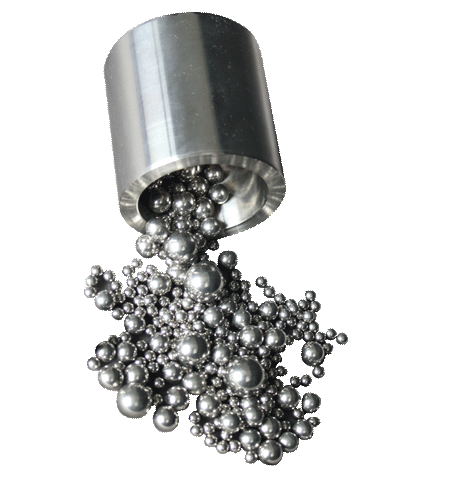
Sometimes a mixture of balls of different diameters is considered. It may change the packaging and distribution of impacts, but is not automatically the best. The mixture complicates reproducibility, cleaning, and wear accounting. If it is used, the composition of the mixture must be recorded and checked by trial grinding. You cannot transfer someone else’s loading recipe without taking into account the properties of the sample and the geometry of the glass.
The number of balls and their total mass are related to the working load of the glass. Do not confuse the volume of one glass, the total volume of grinding media, the working load and the sample weight. Loading too high increases heat, wear and the risk of warping; too low reduces efficiency and may cause slippage. The optimal loading depends on the apparatus and material, so it is confirmed by testing, and not just by calculation.
The ratio of the mass of the balls to the mass of the powder is a convenient technological guideline, but not a universal constant. It depends on the machine, material and target size. It's wise to start with a conservative load that doesn't overload the glass, and then change one setting at a time. If the grinding is too slow, increasing the load does not always help: some of the energy may go into heating and wear.
When ordering, it is useful to indicate not only the diameter, but also the purpose: type of mill, beaker volume, sample material, dry or wet grinding, estimated load weight. If the diameter is unknown, the supplier is advised of the initial and target sizes, as well as contamination limits. You should not choose one diameter “for all cases”: the requirements for coarse and fine grinding are different. It is also important that the balls can be separated from the powder by a suitable sieve or other means without destroying the sample.
Before use, check that the balls have no visible defects, do not contain packaging residues and correspond to the declared batch. If there are several sets in the laboratory, they are labeled so as not to mix balls from different materials. This is an easy way to reduce the risk of cross-contamination.
Wear, contamination and analytical background
Grinding ball wear is a combination of abrasion, impact, corrosion and adhesion. In dry grinding, mechanical abrasion and impact are more noticeable; in wet grinding, dissolution, electrochemical processes and the influence of pH are added. Wear products can remain in the form of separate particles, or they can go into solution. Both are important for the analytical result, but they are controlled in different ways.
304 stainless steel does not provide "zero pollution". This expression is generally unsuccessful for describing grinding media: any contact material contributes something. The question is whether the contribution exceeds the acceptable limit for a particular analysis. If the sample is then used to determine elements similar in composition to the material of the balls, the risk is higher. If an organic matrix or coarse fractions are analyzed, the effect may be smaller but still needs to be assessed.
The blank experiment helps to separate the contribution of the grinding media from the contribution of the beaker and procedure. It is performed according to the same scheme as the main grinding, but without the test sample or with a control load consistent with the method. Comparing the blank and working experiments shows whether elements appear that were not present in the original material. At the same time, it is useful to weigh the balls before and after grinding: the change in mass, although not a substitute for chemical analysis, indicates the intensity of wear.
It is convenient to summarize the sources of pollution in a table.
| Source | What can be observed | What to check |
|---|---|---|
| Grinding balls | Abrasion, chips, dents, metal transfer | Weight, surface condition, material and lot |
| Grinding glass | Lining wear, foreign particles | Material, internal surface condition, compatibility |
| Try | Sticking, agglomeration, loss of fines | Completeness of extraction, sieve analysis, washing |
| Liquid medium | Corrosion, dissolution, pH change | Medium composition, pH, chlorides, temperature |
| Service | Remains of the previous sample | Cleaning procedure, kit markings, log |
The appearance of a ball does not prove its brand or guarantee its purity. A shiny surface can hide a microrelief, and a stain can be a trace of a reaction with the environment. If cavities, cracks, deep scratches or persistent deposits appear, the ball is taken out of service until the cause is determined. You should not grind it “for cleanliness”: changes in geometry and roughness can increase wear.
Documenting the batch helps not to lose the connection between the result and the consumable item. Record supplier, material, diameter, date of entry, lot number, usage history and inspection results. If an unwanted element appears later, it is easier to check whether this coincided with replacing the balls or glass. Without such a record, reasons are sought at random.
For metal-sensitive samples, other grinding media materials are sometimes considered. However, the replacement must be justified not only by the lower content of the element, but also by the grinding behavior. Ceramic or carbide may produce different particle sizes and wear on the cup. No material can be promised to be free from impurities; we can only talk about a controlled level and a proven procedure.
Dry and wet grinding, cleaning and reuse
Dry grinding places demands on the balls regarding dust formation, adhesion and sample loss. The fine fraction can settle on the surface and in gaps, and during unloading it can be carried away with the air. The balls should be easy to clean and not retain residue in imperfections. If the material is prone to agglomeration, it is useful to control not only the coarseness, but also the flowability. Heating during long-term dry grinding can change the properties of the sample, so the mode and pauses are selected separately.
Wet grinding adds liquid. It may reduce dust and improve dispersion, but it also increases corrosion risks and makes cleaning more difficult. For 304 balls, fluid composition, pH, chloride presence and temperature are important. Water cannot automatically be considered neutral: dissolved salts and acidity change the situation. After wet grinding, the balls must be separated, washed in a compatible manner and dried; the remaining liquid may affect the next sample.
Cleaning is part of the technique, not a secondary operation. First, remove the bulk of the powder, then apply a wash approved for the material and equipment, rinse and dry. It is better not to use abrasive brushes and coarse powders that change the surface. Cleaning agents should not be mixed without checking: a chemical reaction with sample residue may create new contaminants. For trace analysis, a separate set of balls and glasses is identified, marked and logged.
Drying should not leave water or solvent on the surface. Residual moisture can change the flowability of the sample and accelerate corrosion during storage. The drying method is chosen so as not to overheat the balls and not contaminate them with the drying cabinet material. After drying, it is useful to visually check the surface and make sure that there is no plaque in the recesses.
Reuse is possible, but not infinite. The service life depends on the abrasiveness of the sample, time, speed, medium and quality of cleaning. There is no universal number of cycles. Signs of replacement include changes in mass, persistent surface defects, deterioration in grinding reproducibility, and the appearance of undesirable elements in the blank experiment. If the ball has been used in an aggressive environment, its continued suitability requires separate assessment.
A glove box with a cleaning system, if used for sensitive powders, dictates its own rules for handling balls: cleaning and drying must be compatible with the box atmosphere. But the box itself does not make the grinding media suitable for any mill. These are different nodes of the process, and they need to be checked separately.
What to check during test grinding and what data to transfer to the supplier
Test grinding is not needed for formality, but in order to simultaneously see coarseness, sample loss, heating and wear. First, select a small load, record the mass of the balls, the mass of the sample, the volume of the glass, speed and time. Then the original and resulting powder are compared by particle distribution, and, if necessary, by chemical composition. Blank experience helps evaluate background. You should not immediately change the diameter, load and speed: then it is not clear what exactly affected the result.
The test report must be sufficiently detailed to be repeatable. It includes not only speed and time, but also loading method, unloading order, ball sieve, room temperature and cleaning method. If the result is measured by laser diffraction or sieve analysis, the measurement method is also recorded: different methods give different distributions.
When testing, it is helpful to answer a few questions. Is it possible to separate the balls without losing the fine fraction? Does the powder remain on the surface after cleaning? Are there visible defects or plaque? Does the result match the target size? Is the glass overheating? If the answers contradict each other, the regime is adjusted according to one factor.
To select balls, the supplier is informed of: the sample material and its initial size; target size or technological task; sample weight; type and volume of grinding bowl; glass material; mill model, speed and time; dry or wet grinding; composition of the liquid medium, pH and presence of chlorides; permissible level of contamination and method of analysis; cleaning requirements. If only the sample material is known, the selection remains approximate.
The product card is a starting point, not a replacement for testing. U TENCAN You can clarify the design of the grinding balls and related positions, but compatibility with a specific mill and sample is confirmed by the documentation of the device and the results of trial grinding. It is also useful to check the general catalog on website TENCANso as not to confuse the type of equipment and consumables.
Bottom Line: For 304 stainless steel grinding balls, the solution revolves around three checks. The first is mechanical compatibility with the glass and mill. The second is chemical resistance in a specific environment and acceptable transfer of impurities. The third is the reproducibility of cleaning and wear from batch to batch. If at least one of them is not confirmed, you cannot promise a stable result just because the material is called stainless. Trial grinding with a blank run and subsequent analysis remains the most reliable way to move from a general description to a working configuration.